In conversation · Rutamfi
Ruth “Rutamfi” Burotte on 3D Character Art and Diaspora
From street art to digital sculpture, Ruth “Rutamfi” Burotte builds characters with their own stories. A conversation about play, identity, and community.
Interview by David Rozenfeld
· 5 min read
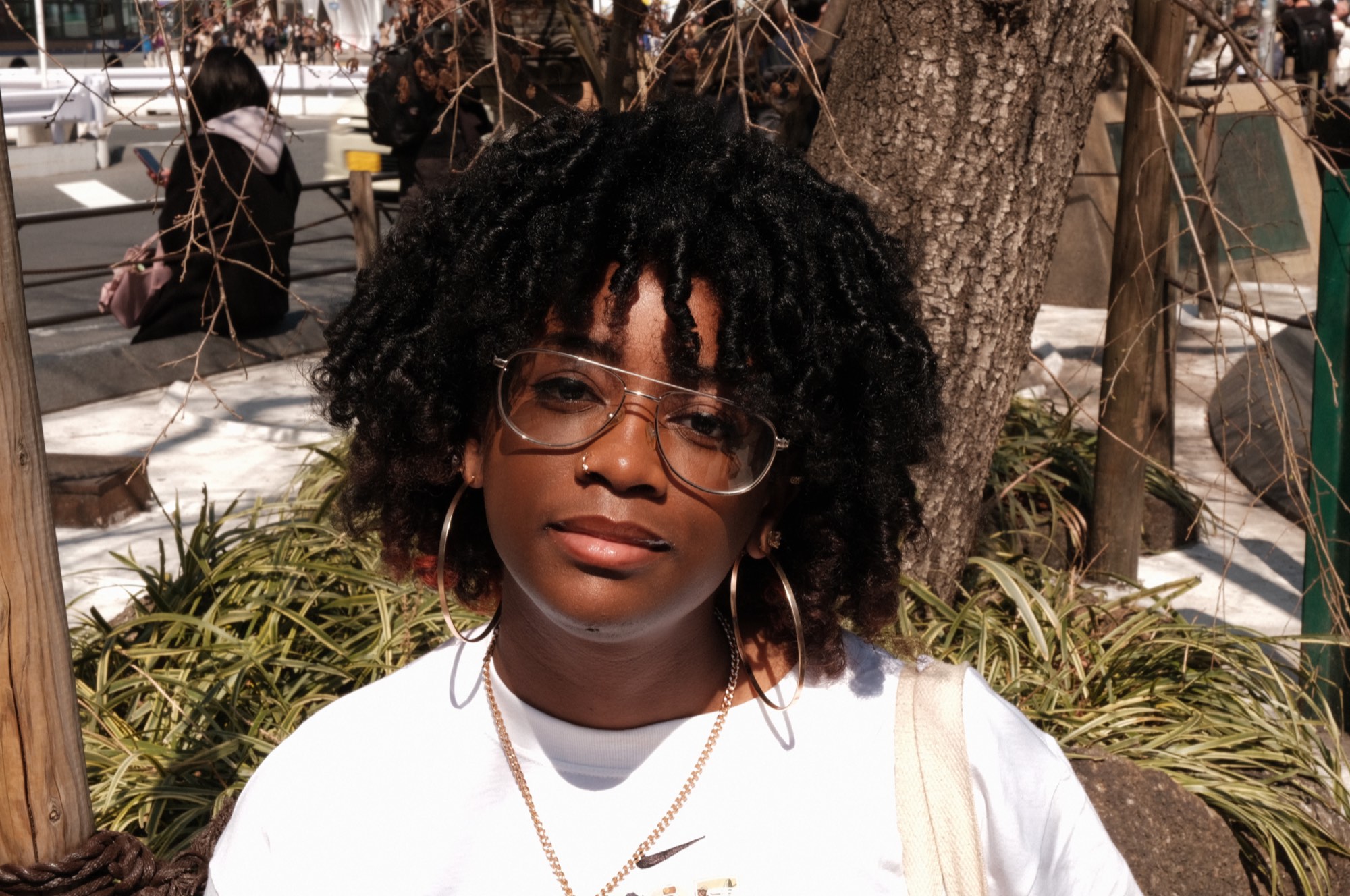
“My family’s American dream didn’t account for internet culture.”
Born in New York and raised in Georgia as a first-generation Haitian-American, Ruth Burotte has been a digital native since the first grade, often serving as the "tech support" for her family. Her work is a bridge between the traditional expectations of her heritage and the hyper-saturated world of 2000s internet culture.

The Full Interview: Ruth “Rutamfi” Burotte
The "Caveman" Era of Digital Art
David: You’ve been doing digital art since before it was a staple in classrooms. How did you first bridge that gap between paper and screen?
Rutamfi: I was doing it the caveman way! I would draw by hand, then use our family’s fax machine to scan the drawings into our computer. My cousin had installed Photoshop for me, and I’d just use the paint bucket tool to fill them in. I eventually begged my mom for a $200 tablet in middle school because I saw artists using them to create the anime and TV shows I loved. For a long time, I was the only digital artist in my school.

Inspiration: The Sacred and the Surreal
David: You've mentioned that your family’s background plays a role in your work. Was there someone specifically who inspired your path as a creator?
Rutamfi: My grandmother was a huge inspiration to me. Growing up, I’d spend time with her at church and watch her at her shrine doing daily prayers. She collected religious figures and saints, and I realized that we weren't that different: I was collecting anime figures while she was collecting her own "figures". Seeing the way she curated her space with these meaningful objects inspired me to create something of my own. It made me see the connection between the spiritual world she inhabited and the digital, "surreal" world I was building.
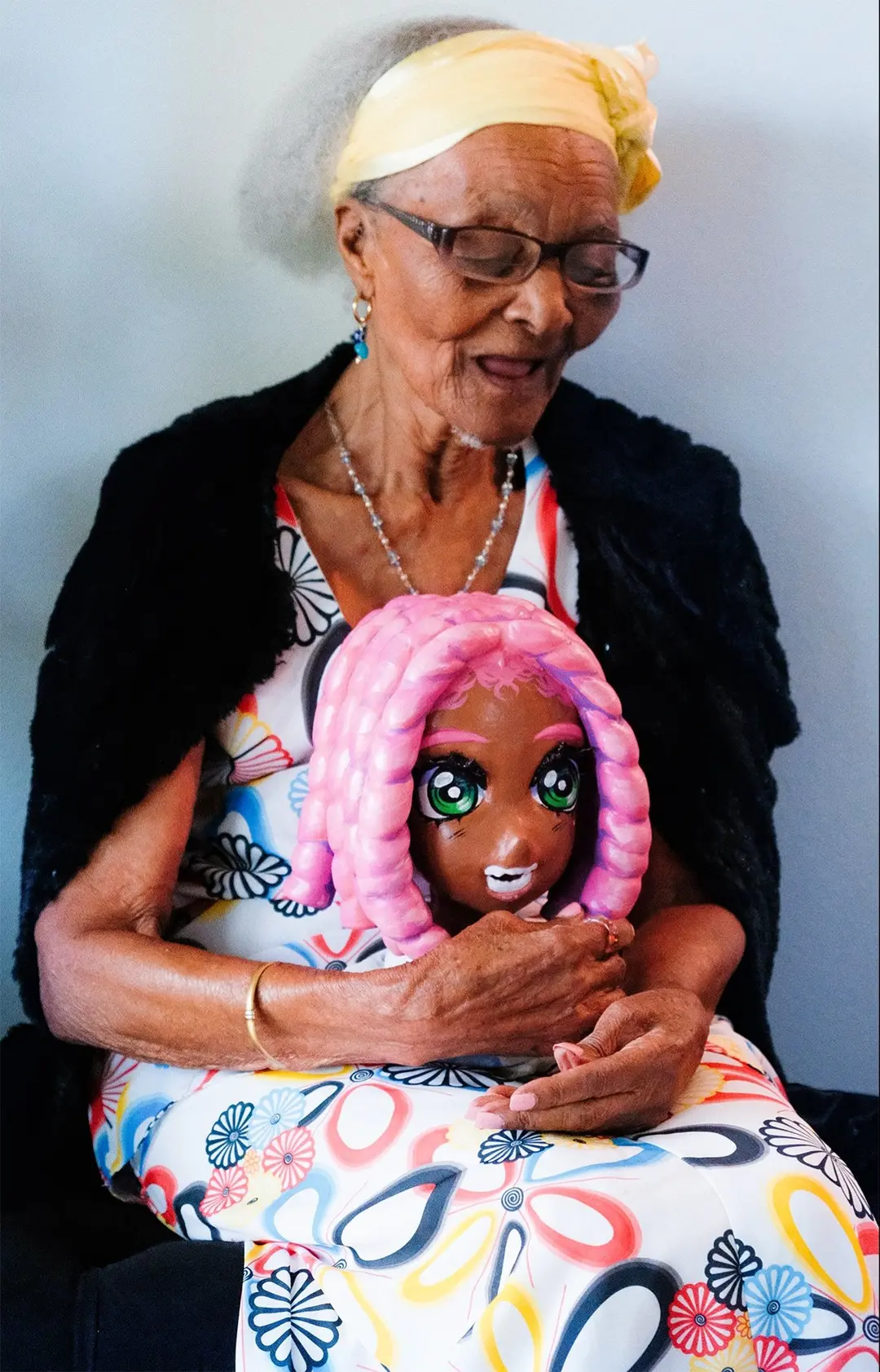
3D print PLA, Acrylic · 10 in
Technical Evolution: From Maya to Nomad Sculpt
David: You’ve moved from 2D illustration into some incredibly complex 3D work. What was that learning curve like?
Rutamfi: It wasn't easy! I tried learning Blender about eight times before it finally clicked a year ago. In college, I found Maya too complex, but I really took to Cinema 4D. Now, I do most of my sculpting in Nomad Sculpt on the iPad. It’s so intuitive. It makes sculpting characters feel natural, and it’s what allowed me to start seeing how my characters could exist in a physical, 3D space.

Character Profile: "The Insomniac"
David: One of your standout pieces is the silver chrome sculpture behind you. Who is she?
Rutamfi: That’s The Insomniac. She’s a 13-inch 3D-printed piece I painted silver to give it a chrome look. She has these really tired, baggy eyes and oversized pajamas. I wanted to create someone relatable, someone who looks like they stay up all night, which is something I definitely do.
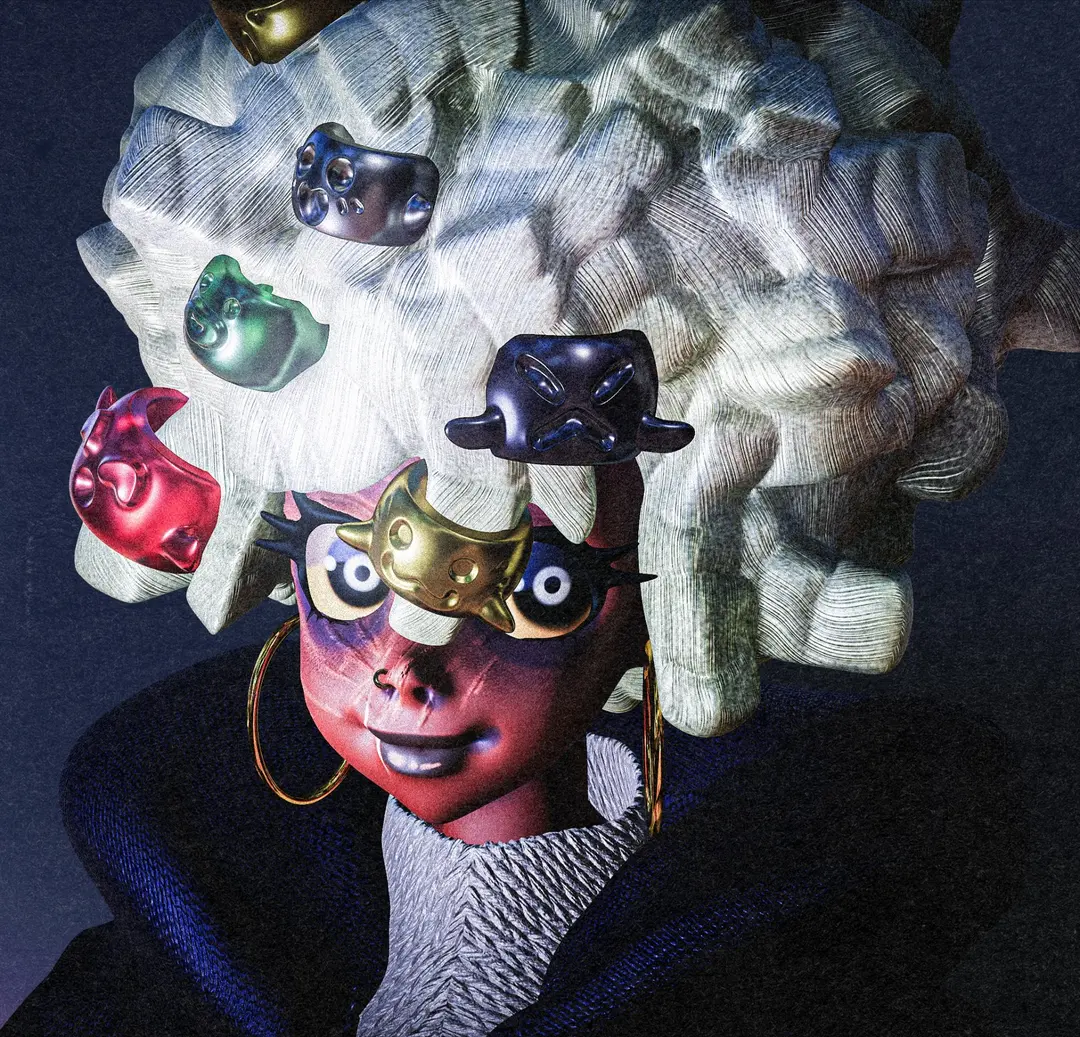
Digital, 3D printed PLA, Paint · 14 in H
Character Profile: The Collected Messiah
David: I also love The Collected Messiah on your profile. I think that's really cool.
Rutamfi: That is actually my favorite piece! The Collected Messiah was one of the first 3D sculpts I ever did. I practiced it over and over again, from the pants to the shoes and the hair, until I felt like it was finally in a good place. It holds a special place for me because it was such a major milestone in my technical journey.
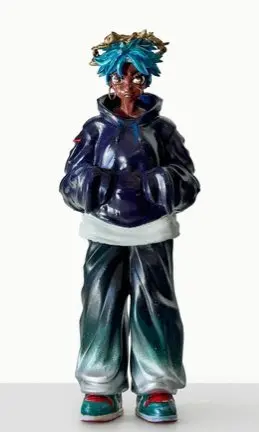
3D Print, Resin, Acrylic · 13 in H
The 5-Year Vision: High Fashion & Film
David: Where do you see "Rutamfi" in five years?
Rutamfi: I want to be a Creative Director. I’d love to lead the visual language for a film studio or collaborate with a high-fashion house like Louis Vuitton or a major sneaker brand. I also want to produce an animated series, not just for TV, but as an art form that people might have to go to a museum to experience in full.
Explore Rutamfi’s World
See her full portfolio, including her 3D-printed sculpts and more, on her Artsume profile. For digital and time-based work, the guide to organizing an artist portfolio covers how to group series that do not sit still.
Solving the "Networking Glitch": Artsume Spotlight
During the interview, David and Ruth discussed the friction of meeting people at art fairs like Art Wynwood.
David demonstrated how artists can now add their professional profile directly to their phone's digital wallet (Apple/Google Pay). Instead of carrying business cards that get lost, Ruth can double-click her phone and let someone scan her QR code to see her formatted artist resume and 3D portfolio.
Ruth is also officially linked to organizations like Mad Arts on their Artsume profiles, so her work shows up alongside theirs.
“That’s sick! Having it right there in the wallet to scan is a big deal for artists meeting people at events. It’s better than Instagram because they don’t have to scroll through everything you’ve ever done. They see your professional resume immediately.”