Art Grant Application Tips: What Reviewers Want to See
Write grant applications that panels fund. What reviewers look for, how to structure one, which work samples to send, and the mistakes that sink them.
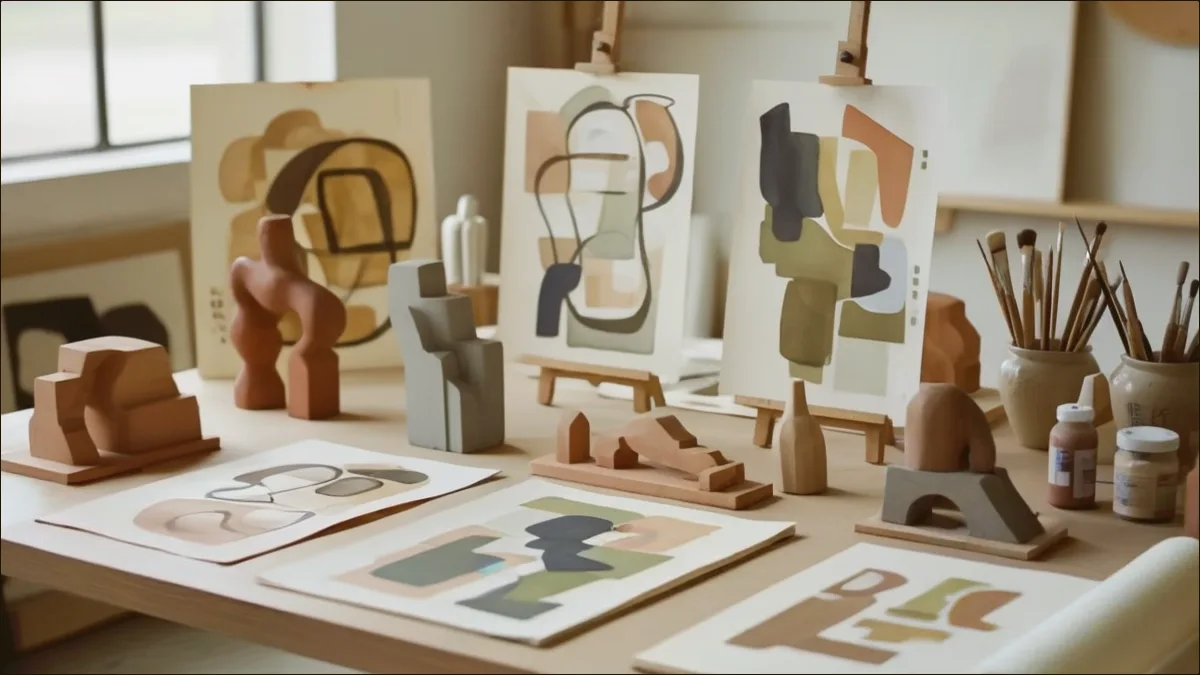 Artist project sketches and maquette for grant application proposal
Grant funding buys the two things a practice runs short on: money for ambitious projects and time to make them. But acceptance rates often sit below 10%. So how do you write an application that gets read twice?
Mostly by being specific. Reviewers read hundreds of applications, and "I will create 12 large-scale photographs" survives that reading where "I will continue my photography practice" does not. Your work samples carry more weight than your prose. A detailed budget signals you can actually execute. And fit decides more outcomes than quality does, because a strong application to the wrong funder still loses to a decent application to the right one.
What follows is what reviewers actually look for, and the mistakes that sink otherwise strong applications.
Quick Answer
- Be specific and concrete about what you'll do with the funding
- Show that your budget is realistic and well-researched
- Make your work samples do the heavy lifting - they matter most
- Follow instructions exactly (seriously, exactly)
- Apply to grants that genuinely fit your practice
How Grant Review Actually Works
Understanding the review process helps you write better applications.
The Review Panel
Most grants use peer review panels: artists, curators, arts administrators, and community members who read applications in batches. A typical panelist might get through 50-200 in a cycle at five to ten minutes each on the first pass, looking for reasons to advance an application and equally for reasons to set it aside. Your opening paragraph and your work samples are doing almost all of the work in those first minutes.
Applications that survive the first pass get discussed as a group, and panelists argue for the ones they believe in. That is worth knowing, because it means your proposal has to be clear enough for a stranger to defend on your behalf. Panelists who know applicants personally typically recuse themselves from those reviews.
What Panelists Are Evaluating
While criteria vary by grant, most panels assess:
-
Artistic merit and quality - Is the work excellent? Does it demonstrate skill, vision, and development?
-
Project clarity and feasibility - Is the proposal clear? Can this actually be accomplished?
-
Budget appropriateness - Is the budget realistic? Does it match the proposed activities?
-
Fit with grant priorities - Does this align with what the funder wants to support?
-
Artist trajectory - Does funding at this moment make sense for this artist's development?
The Application Components
Grant Application Components
| Component | Weight | Common Length | What Reviewers Look For |
|---|---|---|---|
| Work Samples | 40-50% | 10-20 images | Quality, vision, skill |
| Project Description | 25-30% | 500-1500 words | Clarity, feasibility, impact |
| Budget | 10-15% | Line-item detail | Realism, research, completeness |
| Artist Statement | 10-15% | 250-500 words | Voice, context, authenticity |
| CV | 5-10% | 2-4 pages | Relevant experience, trajectory |
Project Description / Proposal
Your project description is your pitch. It should answer:
- What will you create or do?
- Why does this project matter (to you, to audiences, to the field)?
- How will you accomplish it?
- What will the outcomes be?
Structure for a Strong Proposal:
-
Opening hook (1-2 sentences): What is this project, stated clearly and compellingly?
-
Context and motivation (1 paragraph): Why this project now? What drives it?
-
Detailed description (2-3 paragraphs): What specifically will you do? Be concrete.
-
Methodology (1 paragraph): How will you accomplish this? What's your process?
-
Outcomes and impact (1 paragraph): What will exist at the end? Who will experience it?
-
Timeline (brief): Key milestones and when they'll happen.
Example - Weak vs. Strong Opening:
Weak: "I am seeking funding to continue developing my interdisciplinary practice that explores themes of memory, place, and belonging through various media."
Strong: "I will create a series of 15 large-scale cyanotypes using soil samples from sites of historical significance across the Gulf Coast, documenting erasure and persistence in landscapes shaped by slavery, industry, and climate change."
The strong version is specific, visual, and gives reviewers a clear picture of what will be created.
Work Samples
Your work samples often carry more weight than your written materials. Panelists assess your artistic merit primarily through the work itself.
Selection Strategy:
- Choose your strongest work; recency matters less than quality
- Select work relevant to the proposed project when possible
- Show range within coherence (depth, not scatter)
- 10-15 excellent images beat 20 mediocre ones
Technical Quality:
- Professional documentation is non-negotiable
- Proper lighting, clean backgrounds, accurate colors
- Follow exact file specifications (format, size, dimensions)
- Poor documentation undermines strong work
Annotations/Descriptions:
- Title, date, medium, dimensions for each work
- Brief descriptions if helpful for understanding
- Installation views for spatial work
- Don't over-explain - let the work speak
Two guides go deeper here: portfolio best practices for selection and sequencing, and building a portfolio for grants for what review panels specifically want to see. If your images are the weak link, start with documenting your artwork.
Artist Statement
Your artist statement provides context for your work and proposal. For grants, it should:
- Explain what you make and why
- Connect to the proposed project
- Be accessible to non-specialist readers
- Avoid jargon that obscures meaning
Keep it concise (typically 250-500 words). Reviewers read many statements; clarity and authenticity stand out.
For detailed guidance, see our artist statement guide.
Budget
Your budget tells reviewers whether you understand what your project actually requires. A realistic, detailed budget signals competence and planning.
Budget Categories:
- Personnel: Your time (artist fee), collaborators, assistants
- Materials and supplies: Specific to your project
- Equipment: Purchase or rental
- Travel: Research, production, or presentation
- Documentation: Photography, video
- Other direct costs: Permits, insurance, shipping
Budget Principles:
-
Be specific: "$500 for materials" is weak; "$200 for archival paper (20 sheets @ $10), $150 for pigments, $150 for stretcher bars" is strong
-
Research actual costs: Get quotes, check prices, know what things cost
-
Pay yourself fairly: Include an artist fee. Grants expect this.
-
Show your math: Line items should add up and make sense
-
Match your narrative: Budget should reflect what you described in your proposal
Sample Budget Format:
| Category | Item | Cost |
|---|---|---|
| Artist Fee | 200 hours @ $35/hr | $7,000 |
| Materials | Archival paper (50 sheets) | $500 |
| Materials | Pigments and inks | $300 |
| Equipment | Lens rental (3 months) | $450 |
| Travel | Research trip (transport + lodging) | $800 |
| Documentation | Professional photography | $400 |
| Contingency | 10% | $945 |
| Total | $10,395 |
CV/Resume
Your artist CV documents your professional history. For grant applications:
- Keep it current and properly formatted
- Emphasize relevant experience (exhibitions, previous grants, related projects)
- Follow length guidelines (often 2-3 pages maximum)
- Use CAA standard format
Keeping it current is the hard part, not the formatting. Artsume's artist CV builder holds your exhibitions, awards, and education in one place and exports a formatted PDF whenever a deadline needs one; the CV walkthrough covers setting it up.
Letters of Support / References
Some grants require letters of support or references. Choose people who:
- Know your work well (not just your personality)
- Can speak specifically to the proposed project or your capabilities
- Have relevant credibility (curators, established artists, community partners)
- Will submit on time (confirm before listing them)
Provide recommenders with:
- The deadline and submission method
- Your proposal summary and work samples
- Specific points you'd like them to address
- Enough lead time (minimum 3-4 weeks)
Writing Strategies That Work
Be Specific and Concrete
Vague proposals lose to specific ones. Compare:
Vague: "I will explore themes of identity through my sculptural practice."
Specific: "I will create five life-size ceramic figures depicting members of my grandmother's quilting circle, using historical photographs and oral histories to reconstruct their likenesses and stories."
Specificity shows you've actually thought through the project.
Write Clearly, Not Academically
Grant panelists come from diverse backgrounds. Clear, jargon-free writing reaches everyone.
Academic: "My practice interrogates the liminal spaces between phenomenological experience and socially constructed narratives of place."
Clear: "I make photographs and installations about how we experience places that are changing: neighborhoods being demolished, landscapes being developed, communities being displaced."
Both might describe similar work, but the clear version communicates to anyone.
Show, Don't Just Tell
Instead of claiming your work is important, show why:
Telling: "This project is important because it addresses urgent social issues."
Showing: "This project will bring together 50 formerly incarcerated artists for a public exhibition and symposium at [Venue], creating visibility for artists typically excluded from mainstream art spaces."
Address the Specific Grant
Generic applications fail. For each grant:
- Reference the funder's stated priorities
- Explain why your project aligns with their mission
- Show you understand what they're trying to accomplish
Generic: "I am applying for this grant to support my artistic practice."
Specific: "The [Foundation] supports artists whose work engages communities in dialogue about social issues. My project directly addresses this priority by..."
Anticipate Questions
Read your application as a skeptical reviewer might:
- Is the timeline realistic?
- Does the budget make sense?
- Can this artist actually do this?
- Why should we fund this now?
Address potential concerns proactively in your narrative.
Common Mistakes to Avoid
Application Errors
- Missing deadlines: Set reminders 2+ weeks ahead
- Ignoring instructions: Follow word counts, file specs, required components exactly
- Incomplete applications: Check every required field before submitting
- Poor proofreading: Typos and errors suggest carelessness
Proposal Weaknesses
- Vague objectives: "Explore my practice" isn't a project
- Unrealistic scope: Proposing too much for the time/budget
- Missing outcomes: What will actually exist when you're done?
- Disconnected budget: Budget doesn't match described activities
Work Sample Problems
- Poor documentation: Bad photos undermine good work
- Wrong file format: Follow specifications exactly
- Irrelevant selections: Choose work related to your proposal
- Too much or too little: Follow the stated limits
Strategic Mistakes
The strategic failures are quieter than the technical ones. Applying to everything wastes your time and the panel's; sending the same materials to every funder guarantees none of them feel addressed; and quitting after a first rejection ends a process that most funded artists went through several times. If a program offers feedback, ask for it, because almost nobody does and it is the cheapest improvement available. The habits behind all four are covered in best practices for applying to art opportunities.
Finding the Right Grants
Research Strategies
By discipline: Search for grants in your specific medium or field
By career stage: Some grants target emerging artists; others require track record
By project type: Production grants, research grants, travel grants, presentation grants
By geography: Local, state/provincial, national, international
By focus: Some funders prioritize specific communities or themes
Grant Resources
- Browse open grants and deadlines on Artsume
- Foundation Center - Large funder database
- NYFA Source - National grant listings
- Your state/provincial arts council - Local funding programs
- Artist communities and networks - Word-of-mouth recommendations
Grants are one funding route among several. How to get funding for your art projects covers the others, including crowdfunding and residencies, and how to find art opportunities maps where calls surface in the first place.
Evaluating Fit
Before applying, ask:
- Does my work align with their stated priorities?
- Am I eligible (geography, career stage, discipline)?
- Is my project appropriate for this funding level?
- Do I have time to prepare a strong application?
- Would I be excited to receive this grant?
Don't apply to grants that don't fit just to increase volume. Tailored applications to appropriate funders beat scattered applications everywhere.
After You Apply
If You're Awarded
Congratulations! Now:
- Respond promptly to award notification
- Review requirements for reporting and documentation
- Understand the timeline for receiving funds
- Track expenses carefully from the start
- Document your project throughout (photos, notes, receipts)
- Fulfill reporting requirements on time
- Thank funders appropriately
- Add to your CV with correct formatting
If You're Not Awarded
Rejection is normal, even for excellent artists and strong applications. Request feedback if the program offers it, then read your own application honestly and decide which part was weakest: the samples, the writing, or the budget. Fix that one part, apply again next cycle if you're eligible, and send the improved version to other appropriate funders in the meantime. Panels make difficult choices between applications they mostly like, and many successful grantees were rejected several times before an award landed.
Building Your Grant-Readiness Over Time
The strongest grant applications come from ongoing professional practice, and almost all of that work happens between deadlines rather than during them.
Update your CV the week a project finishes, not the week an application is due. Photograph significant work while it is still in the studio. Revise your artist statement as your practice changes, so it never has to be written from scratch under pressure. Keep the photos, budgets, timelines, and final reports from past projects, because next year's budget is much easier to write when you can see what the last one actually cost.
The other half is knowing what is out there. Note deadlines, requirements, and outcomes somewhere durable; Artsume's application tracker keeps that history attached to the opportunities themselves. And go to funder info sessions, meet program officers, and stay in your artist communities. Emerging artists in particular should look at grants and residencies aimed at early-career practices, which have shallower applicant pools than open-to-all programs.
Frequently Asked Questions
What's the most important part of a grant application?
Work samples typically carry the most weight. Panelists assess artistic merit primarily through the work itself. However, a clear, specific proposal and realistic budget are essential for advancing past initial review. Think of it as: work samples get you considered, proposal and budget get you funded.
How many grants should I apply to?
Quality over quantity, but don't put all eggs in one basket. Applying to 5-10 well-matched grants per year is reasonable for most artists. Tailor each application rather than sending generic materials to many funders. Research fit carefully before investing time in applications.
Do I need previous grants to get grants?
No. Many grants specifically support artists who haven't received significant funding. Your work quality and project clarity matter more than your grant history. Previous grants help but aren't required. Everyone starts somewhere.
How important is the budget?
Very important. A realistic, detailed budget signals that you understand what your project requires and can execute it. Vague or unrealistic budgets raise red flags. Research actual costs, show your math, and make sure the budget matches your narrative.
Should I apply for grants that aren't a perfect fit?
Generally no. Poor-fit applications waste your time and reviewers' time. Apply to grants where your work genuinely aligns with funder priorities. That said, don't be too narrow. If your work has reasonable connection to a grant's mission, consider applying.
How do I handle rejection?
Accept that rejection is normal. Even excellent applications face stiff competition. Request feedback if available, honestly assess what could be stronger, improve weak areas, and apply again. Many successful grantees were rejected multiple times before receiving awards.
Can I apply to the same grant multiple times?
Usually yes, unless guidelines say otherwise. Many artists receive grants after multiple applications. Use feedback from previous cycles to strengthen your application. Some funders appreciate seeing artists' development over time.
Should I include artist fee in my budget?
Yes. Grant funders expect you to pay yourself for your time. Including an artist fee shows you value your labor and understand professional practice. Calculate based on hours and a reasonable hourly rate for your experience level.
What Actually Improves Your Odds
Grant writing is a skill that improves with practice. Start with clear, specific proposals. Invest in real documentation. Research funders before you write a word.
Rejection is part of the process, and strong artists face it regularly. What matters is applying again next cycle with materials you already have on hand.
Ready to get grant-ready? Create your free Artsume profile to maintain your CV, portfolio, and artist statement - so you're always prepared when the right opportunity appears.
Track your applications
Find grants, residencies, and open calls, and track every application in one place.