How to Get Funding for Your Art Projects: A Complete Guide
Fund your art projects through grants, residencies, crowdfunding, commissions, and sales. How each source works and how artists combine them in a career.
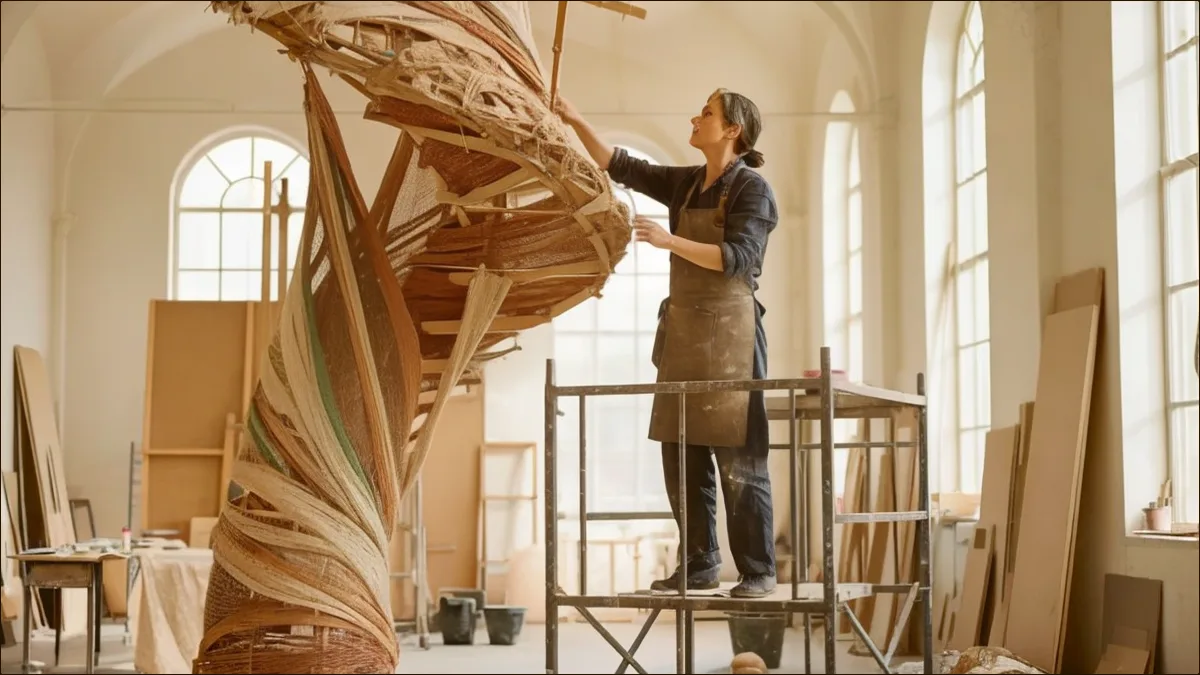 Artist working on large-scale installation project in studio funded by grant
Money shouldn't be the barrier between you and the art you want to make. It usually is anyway. Materials, studio rent, research travel, and the months of uninterrupted time a serious project needs all cost something, and none of it arrives on its own.
Artists fund their work from several directions at once: grants, residencies, crowdfunding, commissions, and teaching. No single stream is reliable enough to lean on entirely, different project types suit different kinds of money, and most of it has long enough lead times that the work you do this month pays out next year. Here is where to find each, and how to piece them into something that covers a year.
Quick Answer
- Grants and fellowships provide direct funding for projects or career development
- Residencies offer time, space, and sometimes stipends to create work
- Crowdfunding works best for projects with built-in audiences
- Commissions and sales fund work while building collectors
- Multiple income streams create more stable support than any single source
Art Funding Sources Comparison
| Source | Amount Range | Competition | Best For |
|---|---|---|---|
| Government Grants | $5,000-150,000 | High | Established artists |
| Foundation Grants | $1,000-100,000 | Medium-High | Mid-career artists |
| Artist Fellowships | $10,000-50,000 | Very High | Career support |
| Crowdfunding | $500-50,000 | Depends on network | Community projects |
| Corporate Sponsorship | $1,000-50,000 | Medium | Public events |
| Residencies | In-kind + stipend | Medium | Production time |
What to Expect Before You Apply
Five facts shape every funding decision you'll make. Most grants have 5-15% acceptance rates, so a rejection tells you almost nothing about the work. Major grants run on annual cycles, so missing a deadline costs you a year rather than a week. Program officers remember applicants, which makes the relationship worth more than any single application. Early grants make later grants easier, so starting with achievable opportunities is a strategy rather than a compromise. And nothing here is dependable on its own, which is why the rest of this guide is organized around stacking sources rather than picking one.
Types of Artist Funding
Grants and Fellowships
Grants provide direct financial support, typically without requiring repayment or giving up ownership of your work. They're the gold standard of arts funding.
Project Grants: Fund specific creative projects with defined outcomes
- Typical range: $1,000-$50,000+ (varies widely)
- Require detailed proposals and budgets
- Must complete the proposed project and report on outcomes
- Examples: Foundation for Contemporary Arts, Creative Capital, MAP Fund
Career Development Grants: Support your practice broadly rather than a single project
- More flexibility in how funds are used
- May support materials, travel, professional development
- Less reporting typically required
- Examples: Pollock-Krasner Foundation, Adolph and Esther Gottlieb Foundation
Emergency/Relief Grants: Address urgent financial needs
- Faster turnaround than typical grants
- Lower amounts but quicker access (often $500-5,000)
- Often for unexpected expenses or hardships
- Examples: Artists' Fellowship, Craft Emergency Relief Fund, Artist Relief funds
Fellowships: Prestigious awards often with fewer restrictions. Amounts usually run $10,000-$100,000+, competition is severe (often under 3% acceptance), and they recognize achievement and potential rather than funding a defined deliverable. Guggenheim, USA Fellowship, Rome Prize, and MacArthur are the names everyone knows; there are many more, and the guide to artist fellowships covers how they differ from project grants and who is actually eligible.
State and Local Arts Grants: Often more accessible than national programs
- Your state or provincial arts council
- City arts commissions
- Regional arts organizations
- Often designed for local artists, less competition
Whichever category you're applying to, the reviewers are reading for the same things. Grant application tips covers what panels look for, and assembling a portfolio for grant review covers the work samples that carry most of the decision.
Artist Residencies
Residencies provide time and space, and sometimes money, to focus on creative work. The non-monetary benefits are often as valuable as any stipend.
Fully Funded Residencies:
- Cover housing, studio, meals, and provide stipends ($500-5,000+/month)
- Most competitive (often <5% acceptance)
- Prestigious and career-building
- Examples: Skowhegan, MacDowell, Yaddo, Headlands Center for the Arts
Partially Funded Residencies:
- Provide studio and/or housing but no stipend
- You cover travel and living expenses
- Still valuable for dedicated creative time
- Less competitive than fully-funded
Fee-Based Residencies:
- Artists pay for the experience ($500-5,000+ depending on duration)
- Less competitive but still selective
- Can be excellent if offerings match your needs
- Common for international programs and specialized facilities
Beyond the money, a residency buys uninterrupted time away from daily life, a new environment, a cohort of other artists, access to equipment you don't own, a CV line with real weight, and introductions to curators and critics who visit. For how to choose among programs and what a strong application looks like, see the residency application guide. If you're considering programs abroad, working internationally as an artist covers the visa and logistics side that residency listings tend to skip.
Crowdfunding
Crowdfunding raises money from many small contributions, typically through online platforms. It's fundamentally different from grants: you're building audience investment rather than convincing a jury.
Best for:
- Projects with built-in audiences
- Work with clear, tangible outcomes (books, films, public projects)
- Artists with engaged social media followings
- Community-based or collaborative projects
- Products that can be pre-sold (editions, prints, recordings)
Platforms:
- Kickstarter - All-or-nothing model; strong for creative projects
- Indiegogo - Flexible funding options
- GoFundMe - Better for personal/emergency needs
- Patreon - Ongoing support vs. single campaigns
Crowdfunding Realities:
- Requires significant promotional effort (plan for 20-40 hours of campaign management)
- Success correlates strongly with existing audience size
- Platform fees (5-8%) plus payment processing (3%)
- Fulfillment of rewards takes time and money (budget for this)
- Failed campaigns can be discouraging and time-wasting
- The average successful campaign raises less than $10,000
Keys to Success:
- Set realistic goals based on your network size (calculate: if everyone you know gave $50...)
- Create compelling video content (campaigns with video raise 105% more)
- Offer meaningful rewards at various price points
- Build momentum in first 48 hours (campaigns that hit 30% early usually succeed)
- Update backers regularly throughout campaign
- Promote consistently across all channels
Commissions and Sales
Direct sales and commissioned work generate income while building collectors and relationships. Unlike grants, these create ongoing revenue streams.
Gallery Representation:
- Galleries take 40-60% commission on sales
- Provide access to collectors, handling sales and promotion
- Relationships take time to develop
- Not all artists benefit from gallery representation
Direct Sales:
- Keep full sale price (minus payment processing)
- Requires self-promotion and sales infrastructure
- Platforms: Your website, Artsy, Saatchi Art, Instagram
- Build collector relationships directly
Direct sales are their own discipline, and the practical end of it (platform fees, listing quality, shipping, and what actually converts) is covered in selling art online.
Private Commissions: Work made for a specific client, which can command premium prices and requires clear contracts, deposit schedules, and a shared understanding of revisions. That negotiation is where most commission income is won or lost, and how to get, price, and manage commission work covers it in detail.
Public Art Commissions: Larger projects for public spaces, usually awarded through competitive application, ranging from $5,000 to millions for major works and often carrying a fabrication budget on top of the artist fee. Percent-for-art programs and local arts councils are the main sources, along with the Americans for the Arts Public Art Network. The public art commissions guide walks through how these processes run, which is unlike any other funding on this page.
Teaching and Workshops
Teaching generates income while building community and clarifying your own practice. Academic positions pay steadily (adjunct work runs $2,000-5,000 per course; full-time roles $40,000-100,000+) and come with facilities and, if full-time, benefits, but they're competitive and slow to secure. Community workshops at art centers and museums pay $50-200/hour with flexible scheduling and tend to lead to other local work. Private instruction pays more, $50-150+/hour, and costs you the promotion and scheduling. Online courses on Skillshare, Teachable, or YouTube are the only scalable version, and they require real upfront investment before they earn anything.
The guide to teaching art as income covers how artists actually assemble these into a living.
Other Income Streams
Art-Adjacent Work:
- Art handling and installation ($20-40/hour)
- Fabrication and studio assistance
- Arts administration
- Graphic design or illustration
- Photography services
Passive Income:
- Print-on-demand products (Society6, Redbubble)
- Licensing artwork for products/publications
- Royalties from previous work
Artist Talks and Lectures:
- Honoraria for speaking engagements ($100-2,000+)
- Conference presentations
- University visiting artist fees
Competitions and prizes sit somewhere between funding and recognition, and for some artists they're a meaningful line item; see art competitions and prizes for which ones are worth the entry fee.
Finding Funding Opportunities
Grant Resources
- Artsume Opportunities - Curated listings with deadlines
- NYFA Source - Large grant database
- Foundation Center/Candid - Funder research tools
- Submittable - Open opportunities across platforms
- Your state/provincial arts council - Local programs
- Artist communities and social media - Word-of-mouth recommendations
Open grants on Artsume
View allCreate your Artsume to keep your work and experience ready for applications.
Residency Resources
- ResArtis - Global residency network
- Alliance of Artists Communities - US programs
- TransArtists - European and international
- Artsume Opportunities - Curated residency listings
Commission Opportunities
- Local and state percent-for-art programs
- CODAworx - Commissioned art opportunities
- PublicArtist - Public art listings
- Local arts councils and chambers of commerce
Strategies for Different Career Stages
Emerging Artists (0-5 Years)
Focus on:
- Emerging artist grants and fellowships
- Fee-waived residency programs
- Building your CV through exhibitions
- Developing grant-writing skills
- Creating professional documentation
Realistic expectations:
- Most funding will be small ($500-5,000)
- Rejection is normal - keep applying
- Time investment in applications builds skills
- Focus on fit over prestige
Where to start:
- State and local arts council grants
- Emerging artist-specific programs
- Juried exhibitions with prizes
- Residencies that welcome emerging artists
For more guidance, see our opportunities for emerging artists guide.
Mid-Career Artists (5-15 Years)
By this stage the track record from earlier grants, the relationships with funders and curators, and an established body of work do real work for you. Use them to move up: larger project grants, more competitive residencies, teaching positions, gallery relationships, and public art commissions.
Established Artists (15+ Years)
Major fellowships, institutional and museum commissions, lecture fees, consulting and mentorship, and licensing income all become available, and the mix shifts away from application-driven funding. The habits that got you here still matter: keep applying for the significant opportunities, keep diversifying, and support the artists coming up behind you.
Combining Funding Sources
Most major projects require multiple funding sources. Here's how to combine them strategically:
Project Funding Stack Example
For a $25,000 project:
| Source | Amount | Status |
|---|---|---|
| Foundation grant | $10,000 | Confirmed |
| State arts council | $5,000 | Confirmed |
| Crowdfunding | $3,000 | In progress |
| Personal savings | $2,000 | Available |
| In-kind residency | $5,000 value | Confirmed |
| Total | $25,000 |
Best Practices for Combined Funding
- Start with anchor funding: Secure one significant grant before approaching others
- Check funder policies: Some funders don't allow combining; others encourage it
- Be transparent: Disclose other funding sources when required
- Keep detailed records: Track what funds go where
- Acknowledge all supporters: Credit funders appropriately
- Phase large projects: Complete portions as funding comes in
When Funders Ask About Other Support
Many applications ask about other funding. Be honest: list what's confirmed, describe what's pending, show that you've costed the whole project, and make clear why this funder's contribution matters to it. A budget that only works if every pending application lands is a budget the panel will not believe.
Tax Considerations
Grant income and art sales have tax implications. Key points:
Grant Income:
- Generally taxable as income (US)
- Some exceptions for certain fellowships
- Track and report on tax returns
- Set aside 20-30% for taxes on grant income
Deductible Expenses:
- Materials and supplies
- Studio rent and utilities
- Professional development (workshops, conferences)
- Travel for art purposes
- Home office (if applicable)
- Professional services (accounting, legal)
Record Keeping:
- Save all receipts
- Track mileage for art-related travel
- Document business use of equipment
- Consider accounting software (Wave, QuickBooks)
Tax rules vary by location and situation, and artists have unusual ones. An accountant who works with artists is worth the fee, and Volunteer Lawyers for the Arts and local arts organizations can help if that's out of reach. The guide to artist taxes and business structure covers deductions, quarterly payments, and when incorporating starts to make sense.
Building Long-Term Funding Sustainability
Maintain Grant-Ready Materials
Always have these current and ready:
- Updated CV in proper format
- Professional work documentation (portfolio guide)
- Current artist statement (review annually)
- Bio in multiple lengths (50, 100, 250 words)
- Recent project documentation
- Budget templates for typical projects
A CV builder that stays current removes the pre-deadline formatting scramble, which is the point at which most artists decide to skip an application.
Track Everything
Keep records of applications submitted and their results, funder contacts and where each relationship stands, reporting requirements and their deadlines, project documentation, and the financial records the reporting will demand. An application tracker holds the first three in one place, including applications you submitted somewhere other than Artsume. The docs on applying to programs cover how submissions and statuses work once you're using it.
Build Relationships
With funders:
- Attend info sessions and events
- Meet program officers when possible
- Submit strong final reports
- Stay in touch between applications
- Don't just appear at deadline time
With fellow artists:
- Share information about opportunities
- Collaborate on projects
- Support each other's applications
- Build community
Plan Long-Term
Identify the major grants twelve months out, budget for the application costs and the hours they'll take, set a funding target you actually believe, and review at the end of the year what worked. Over a longer horizon, ask how your funding needs change as the practice develops, which income streams you can build that don't require reapplying every cycle, and where you're currently too dependent on one source.
Frequently Asked Questions
What's the easiest type of funding to get as an emerging artist?
Local and state arts council grants often have less competition than national grants. Emerging artist-specific programs are designed for artists without extensive track records. Some residencies specifically support emerging artists. Start local and build your track record.
How much time should I spend on grant applications?
A strong grant application typically takes 10-40 hours depending on complexity. Budget time for research, writing, work sample preparation, and revision. Quality applications to well-matched grants beat many rushed applications. Consider grant writing an investment in your practice.
Can I apply for multiple grants at once?
Yes, and you should. Diversify across funders and opportunity types. Apply to 5-15 well-matched grants per year. Check each funder's policies about multiple submissions and simultaneous applications. If you receive multiple grants, verify you can accept both before committing.
Is crowdfunding worth it for artists?
It depends on your audience and project. Crowdfunding works best when you have an engaged following and a project with clear, tangible outcomes. Expect to spend 20-40 hours on campaign management. For projects without built-in audiences, grants may be more efficient.
How do I fund ongoing practice rather than specific projects?
Career development grants (like Pollock-Krasner) support practice broadly. Fellowships often have few restrictions. Teaching provides steady income. Sales and commissions build over time. Combining multiple smaller streams creates sustainable support for ongoing practice.
Should I take a day job or focus on funding applications?
There's no single answer. Many successful artists maintain part-time work that provides stability while pursuing grants and sales. Art-adjacent work (teaching, handling, administration) can support your practice while building relevant skills. Find what works for your situation.
How do I fund a really large project?
Large projects typically require combined funding from multiple sources. Start with one anchor grant, then approach others with that commitment in place. Consider phased approaches where you fund and complete portions sequentially. Partner with institutions that can provide resources or matching funds.
What if I keep getting rejected for grants?
Rejection is normal. Even excellent artists face it regularly. Request feedback when available. Have trusted colleagues review your applications. Ensure you're applying to well-matched opportunities. Improve work samples and documentation. Keep applying; persistence pays off over time.
Do I need to report how I spend grant money?
Most grants require some form of reporting, usually a final report describing what you accomplished and how funds were used. Some require interim reports for longer projects. Read grant agreements carefully and track all expenditures. Good reporting helps with future applications to the same funder.
Can I apply for grants if I don't have a nonprofit fiscal sponsor?
Many grants are available directly to individual artists without fiscal sponsors. However, some require 501(c)(3) status, which means you'll need a fiscal sponsor. Organizations like Fractured Atlas provide fiscal sponsorship for artists for a small percentage of funds received.
Conclusion
No single source will fund a practice. Grants, residencies, sales, teaching, and everything else here are components, and the artists who keep working for decades are the ones who assembled enough of them that losing any one isn't fatal.
Start with the foundation, because everything else depends on it: professional documentation, a current CV, a statement you'd stand behind in a room. Then research opportunities that match the work and the stage you're at, apply deliberately rather than broadly, track what happens, and adjust.
That's a system, and building it is the part you control. Browse open grants and residencies to see what's currently accepting applications, and start with the deadlines far enough out that you can do the application properly.
Track your applications
Find grants, residencies, and open calls, and track every application in one place.