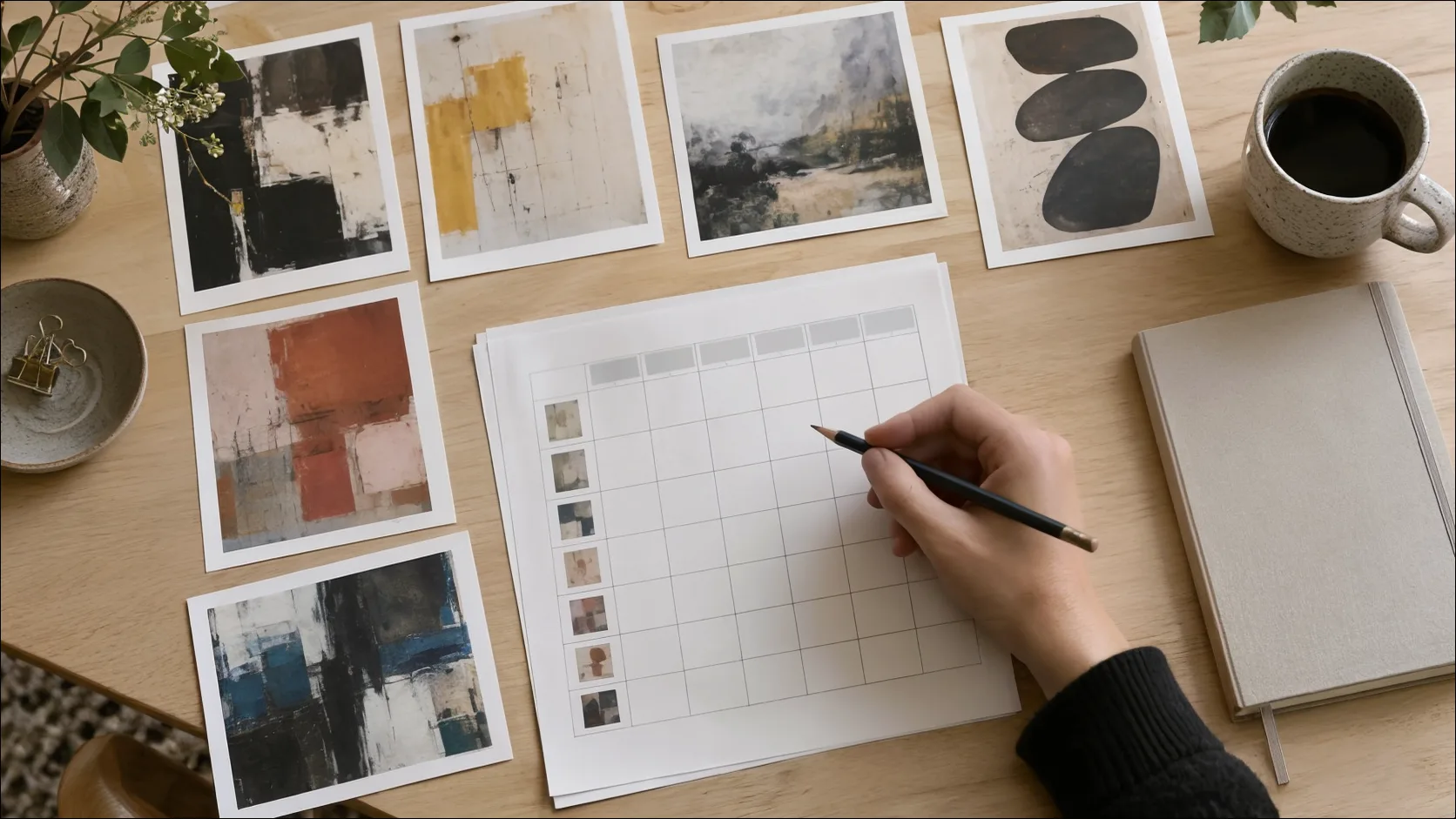
Art Insurance for Artists: Protecting Your Work and Studio
Insure your artwork and studio. Types of coverage, policy options, claims process, and what artists need to know about protecting their work.
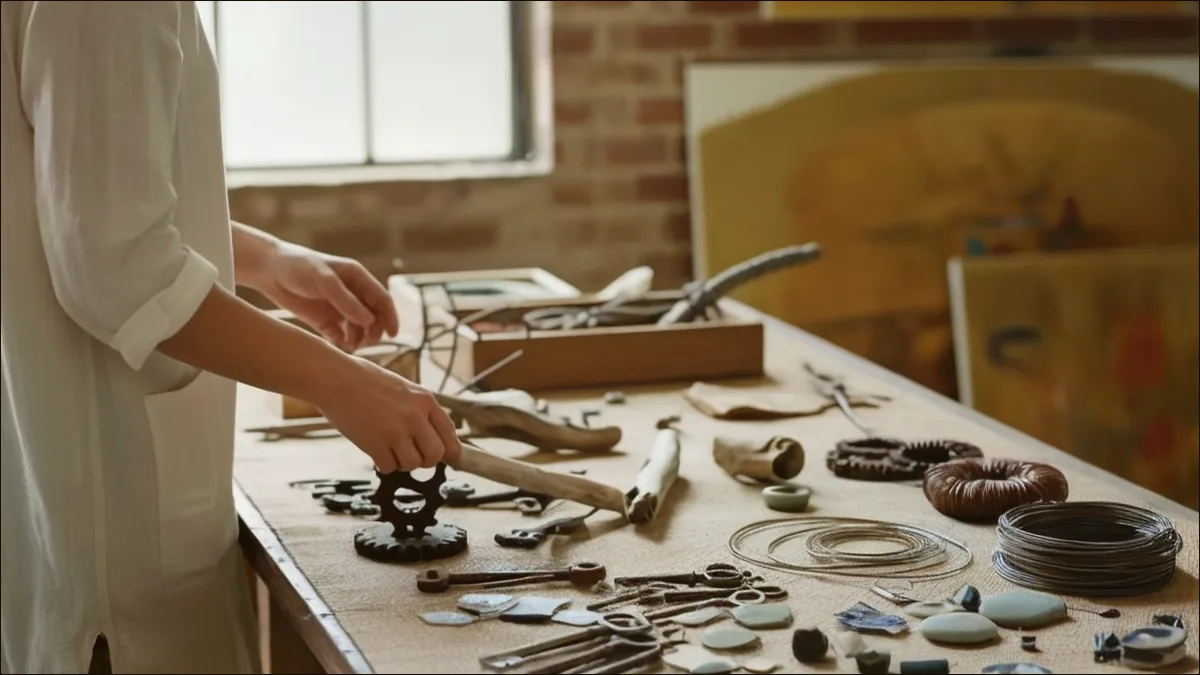 Artist reviewing art insurance documents and coverage options for studio protection
One studio flood, one shipping accident, one theft can destroy years of work. Yet many artists carry no insurance at all. Here is what coverage exists and how to work out what you need.
Most artists who think they are covered are not. Standard home policies exclude professional use, and property, liability, and transit are three separate things covering three separate risks. Whichever you buy, claims are settled on documentation, so the record you keep matters as much as the policy you sign.
Quick Answer
- Homeowner/renter policies often exclude professional artwork
- Studio policies cost $300-1,500/year for basic coverage
- Transit insurance covers shipping; get it for valuable shipments
- Document everything: photos, receipts, appraisals
- Review policies annually as your inventory and practice change
This guide describes insurance practice in the United States. Terms, exclusions, and prices differ by country, by state, and by insurer. It is general information from our own research, not legal or insurance advice. Check any policy with a licensed broker before you buy.
Why Artists Need Insurance
What Standard Policies Miss
Homeowner and renter insurance typically excludes business property, which is what your artwork becomes the moment you sell any of it. It also tends to exclude professional liability, off-premises coverage for work in transit or on exhibition, and high-value individual items above a stated per-item limit.
Here is how that plays out. Your renter insurance covers $30,000 in personal property. You have $50,000 of artwork in your home studio. A fire destroys everything, and the insurer denies the artwork claim because it was business property excluded from personal coverage. Nothing about that denial is unusual.
Types of Losses Artists Face
- Fire, flood, or water damage in studio
- Theft from studio, vehicle, or exhibition
- Damage during shipping or transit
- Damage at galleries or during installation
- Visitor injury in studio (liability)
- Damage to others' property while installing
Types of Insurance Coverage
Property Insurance
Covers physical damage to or loss of property you own: artwork in your studio, materials and supplies, equipment and tools, and finished inventory.
Three valuation terms decide what a claim actually pays. Replacement cost pays to replace an item at current prices. Actual cash value pays the depreciated value, which is much less useful for art. Agreed value fixes a number for specific items in advance, which is usually what you want for significant pieces.
Inland Marine / Transit Insurance
Covers property while in transit or temporarily at other locations: work shipped to galleries, pieces at exhibitions, art in transport to clients, and work sitting at a framer or other vendor.
This is the coverage artists skip and then need. If you ship frequently, exhibit at multiple venues, or send valuable work out to galleries, transit coverage is doing more for you than a studio policy alone. See how to ship artwork safely for what carriers actually cover before you add your own.
Liability Insurance
Covers claims against you for injury or damage you cause. General liability handles injury to visitors and damage to other people's property. Professional liability covers claims arising from your professional services. Product liability covers claims from artwork you sold causing harm.
You need it once other people are in your space or your work is in theirs: open studio events, installation at client sites, teaching in your studio, and public art projects.
Coverage Types Comparison
| Coverage | What It Covers | Typical Cost |
|---|---|---|
| Studio property | Art and equipment in studio | $300-800/year basic |
| Transit/inland marine | Work in shipping and at exhibitions | $200-500/year or per-shipment |
| General liability | Injury to visitors, damage to property | $300-600/year |
| Comprehensive art policy | All-in-one coverage | $800-2,000+/year |
Getting Coverage
Art-Specific Insurers
Specialty insurers understand artist needs better than general insurers. The established names in fine art coverage are AXA Art Insurance, Chubb's fine art division, Huntington T. Block, and AICA (Artists' Insurance Coverage Associates).
There is also a route through membership. Fractured Atlas provides insurance access alongside fiscal sponsorship, various artist guilds and associations negotiate group rates, and some co-ops carry policies covering their members. If you are already part of a collective or considering one, ask what its policy covers before buying your own.
What to Look For in Policies
Three questions decide whether a policy fits.
Where is the work covered? Studio, transit, and exhibition are separate coverages, and a policy may include one and not the others. Check the geographic limits too, since domestic-only coverage is common. Then check which types of loss are named: fire, theft, water, and breakage do not always travel together.
How is the work valued? Agreed value for specific pieces, blanket coverage across inventory, or some combination. Ask how new work gets added, because a policy that requires a call before each addition will quietly leave your newest pieces uncovered.
What is excluded? Read that section first, along with the deductibles for different loss types and any conditions that void coverage entirely.
Questions to Ask
- Does the policy cover work while at galleries or exhibitions?
- How is work valued for claims purposes?
- What documentation is required?
- Is work covered during shipping? Internationally?
- Are materials and works-in-progress covered?
- What are the deductibles?
- How do I add new work to coverage?
Documentation for Insurance
Without documentation, claims fail. To be paid, you have to prove the item existed, what it looked like, what it was worth, and that you owned it. All four.
For each piece, keep high-resolution photographs (front, back, and details), dimensions and medium, the date created, its current location, and a value with a basis behind it: cost to make, sale price, or appraisal. Across the practice, keep an inventory spreadsheet, sales records and receipts, appraisals for valuable pieces, and your exhibition history.
Store all of it in more than one place, including somewhere outside the studio. A cloud record you can reach from a phone is worth more than a perfect binder that burned with the building. Documenting your artwork covers the photography side; a maintained portfolio doubles as a dated visual record with dimensions and details already attached, and the portfolio walkthrough covers setting one up.
Update your documentation at least quarterly. After a loss, you cannot photograph work that no longer exists. Make documentation a regular habit.
Valuation and Appraisals
How Artwork Value Is Determined
Insurers work from one of three figures. Replacement cost is materials plus labor at a reasonable rate. Fair market value is what a willing buyer would pay a willing seller. Retail replacement is what it would cost to buy comparable work. Which one your policy uses changes your settlement substantially, so it is worth knowing before a loss rather than after.
When to Get Appraisals
Formal appraisals are worth commissioning for individual pieces worth $5,000 or more, for a total inventory over $50,000, for work with a documented sales history, and for estate planning or donation.
Budget $150-500+ per piece, though some appraisers charge hourly instead. Update every three to five years, or sooner if your prices move significantly.
Self-Valuation
Emerging artists without a sale history can still put a defensible number on the work: materials cost, plus a reasonable hourly labor rate, plus an allocation for overhead. Keep notes on how you arrived at it. That reasoning is what an adjuster will ask for, and it is the same arithmetic behind pricing your artwork for sale.
Making Claims
When Loss Occurs
Move quickly. Secure the scene to prevent further loss, document the damage with photos and video, contact your insurer the same day if you can, and file a police report if there was theft or vandalism.
Just as important, do not throw away damaged items before the adjuster has seen them, do not make repairs before documenting, and do not admit fault or make statements about the loss without guidance from your insurer.
The Claims Process
- Report: Notify insurer of loss
- Document: Provide proof of loss, damage, and value
- Assess: Adjuster reviews claim
- Negotiate: Discuss valuation if disagreement
- Settle: Receive payment
Claims fail for four recurring reasons: documentation that cannot prove the item existed or what it was worth, a valuation dispute where the insurer's number lands below yours, a policy exclusion covering the loss type or the location, and late reporting, which can jeopardize an otherwise valid claim on its own.
Cost Considerations
Premiums move with the total value insured, your location and its crime rate, the security measures in place, your claim history, and the limits and deductibles you choose. You can pull them down by raising deductibles, improving security, bundling policies, using an artist organization's group rate, and reviewing annually to drop work you have already sold.
Before deciding it is too expensive, price the alternative. Add up the value of your studio contents, your potential liability from visitors, the value of work in transit at any given time, and what replacing your equipment would cost. ArtGuard puts the annual premium at 1% to 5% of the art's total value (checked September 2026), which is the number to compare that total against.
Special Situations
Shipping Valuable Work
For each shipment, confirm the shipper's liability limits and buy additional coverage where those limits fall short. Document the condition before it goes out, photograph the packaging, and get a signature on delivery.
Exhibition Insurance
Ask the gallery about their insurance and get the answer in writing. Gallery policies routinely carry exclusions, deductibles, or limits below the value of the work they are holding, so identify the gap and decide whether your own floater policy should cover it. The same question applies at art fairs, where work sits in an unfamiliar space with heavy foot traffic for several days.
Home Studio Considerations
If you work from home, tell your home insurer about the business use. That usually means adding a business endorsement or taking a separate policy, and it is what makes the difference between a covered claim and the fire scenario above. Confirm the coverage extends to business property and check what it says about liability for studio visitors. Your contracts and your tax setup should reflect the same reality; treating the studio as a business in one place and a hobby in another is where problems start.
Frequently Asked Questions
Will my renter or homeowner insurance cover my artwork?
Usually not adequately. Standard policies often exclude business property, have low limits on individual items, and may not cover work outside your home. If you sell your work, it is likely considered business property and excluded. Review your policy carefully or get a professional assessment.
How much does art insurance cost?
Basic studio coverage starts around $300-500/year. Comprehensive policies with transit and exhibition coverage run $800-2,000+ annually. Cost depends on total value insured, location, and coverage types. ArtGuard puts the annual premium at 1-5% of the art's total value. These are US figures.
What if I cannot afford insurance?
Consider partial coverage for highest-value items or greatest risks. Transit insurance for individual shipments is often affordable. Document everything carefully so you have options later. As your practice grows, budget for insurance as a business expense.
How do I determine the value of my work for insurance?
For emerging artists: calculate materials plus labor at a reasonable hourly rate. For artists with sales history: use comparable sales or gallery prices. For valuable pieces: get professional appraisals. Document your methodology and keep records of all sales.
Does gallery insurance cover my work while on exhibition?
Sometimes, but not always adequately. Gallery policies may have exclusions, deductibles, or limits below your work's value. Always ask galleries about their coverage specifics in writing. Consider your own floater policy for valuable work out on loan.
What if my insurance claim is denied?
Review the denial reason carefully. Check policy language. Gather additional documentation. Appeal in writing. Consider hiring a public adjuster for large claims. For significant disputes, consult an insurance attorney. Document all communications.
Protect Your Work
Start before you buy anything. Documentation is the part you control entirely, it costs nothing but time, and no policy pays out without it. Photograph what you have, record dimensions and dates, and keep the record somewhere that survives the studio. A free Artsume profile gives you a dated, image-based record of your work you can reach from anywhere.
The habit is easier to keep as part of a working routine than as an annual chore; studio practice and productivity covers building that kind of routine.