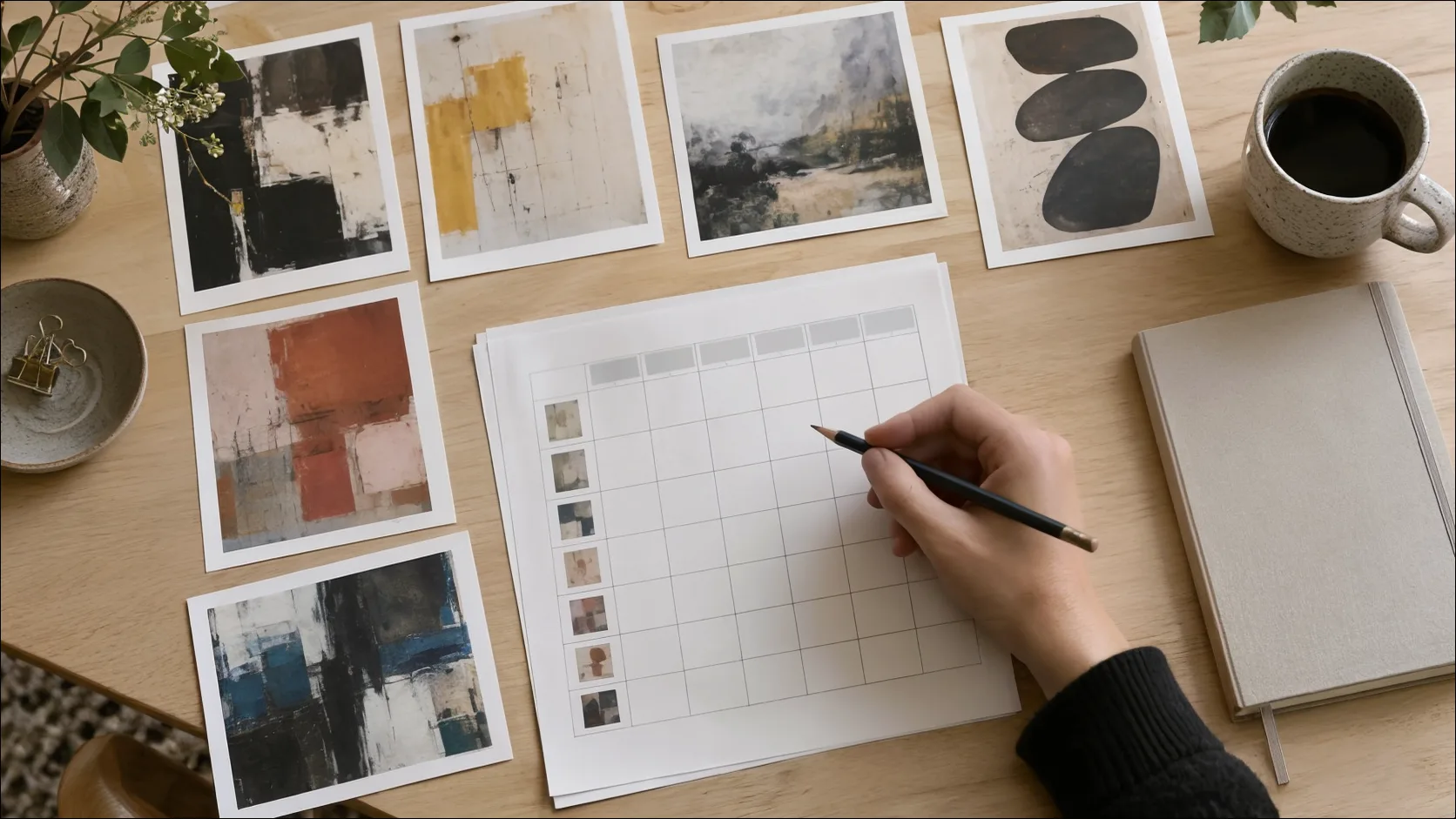
DIY Exhibitions and Pop-ups: Organize Your Own Art Shows
Organize your own exhibitions and pop-up shows. Venue finding, budgeting, promotion, installation, and making self-organized shows successful.
 Artists organizing a DIY pop-up exhibition event in an alternative gallery space
You do not need gallery representation to show your work. Self-organized exhibitions put you in control of how your work is seen and who sees it. Here is how to plan one and actually get something out of it.
Two things are worth knowing before you start. A limited-run show creates a deadline and a reason to turn up, which is why pop-ups often sell better than the same work sitting on a wall indefinitely. And the whole thing lives or dies on documentation, because the exhibition lasts one night and the photographs last for years.
Quick Answer
- Pop-ups can cost $200-2,000+ depending on venue and duration (our own US-dollar estimates)
- Start with one-night events before attempting longer shows
- Partner with other artists to share costs and expand audiences
- Documentation is as important as the event itself
- Treat the opening like the main event; it often is
Why Organize Your Own Shows
Benefits of DIY
The obvious benefit is control. You curate the hang, set the timeline, decide who gets invited, and keep 100% of any sales rather than handing over a gallery's 40-50%. Nobody tells you a piece is too large or too difficult to place.
The less obvious benefit is that it builds a record. A self-organized show is a real exhibition line on your CV, a reason for local press to write about you, and a direct route to collectors who would otherwise only meet your work through an intermediary. It is also the cheapest way to find out whether your work holds a room before you ask a gallery to bet on it, which is useful to know before you start approaching galleries.
And it is sociable in a way most studio practice is not. Organizing alongside other artists expands everyone's audience at once, and one show people remember does more for your standing in a local scene than a year of posting.
When DIY Makes Sense
- Emerging artists building exhibition history
- Artists between gallery representation
- Work that does not fit traditional galleries
- Testing new bodies of work
- Building local community presence
- Creating buzz before approaching galleries
If what you actually want is to get selected for shows other people organize, how to get into art exhibitions covers that route instead.
Types of DIY Shows
One-Night Events
The cheapest and lowest-risk format, and the one every first-time organizer should start with. The opening is the show, so everything rides on promotion. If nobody comes on the night, there is no second chance. The upside is the energy: a room full of people in a four-hour window feels like an event in a way a quiet Tuesday afternoon never will. Good for testing a concept, building buzz before a bigger project, or simply getting a lot of the right people in one place.
Weekend Pop-ups
Two or three days, usually with an opening on the first night and quieter viewing hours afterwards. Costs go up and you need someone in the room during opening hours, but you get both the event and the time for serious buyers to come back without a crowd. This is the format for sales-focused shows, multi-artist projects, holiday markets, and anyone who has looked at art fair booth fees and decided against them.
Extended Pop-ups
One to four weeks. Venue costs climb, you need a real staffing rota, and the whole thing starts to resemble running a small gallery, which is exactly why it suits artist collectives and artists testing whether they want to operate independently. Worth it when the goal is sustained sales or building a relationship with a neighborhood rather than a single night's attention.
The costs below are our own planning estimates in US dollars for North American cities, not quoted prices. Venue cost moves the total more than anything else.
Pop-up Types Comparison
| Type | Duration | Typical Cost |
|---|---|---|
| One-night event | 4-6 hours | $200-800 |
| Weekend pop-up | 2-3 days | $500-1,500 |
| Week-long show | 5-7 days | $1,000-3,000 |
| Month-long exhibition | 4 weeks | $2,000-5,000+ |
Finding Venues
Non-Traditional Spaces
Think beyond galleries.
Retail:
- Empty storefronts
- Shops with compatible aesthetics
- Cafes and restaurants
- Boutiques and design stores
Commercial:
- Office lobbies
- Co-working spaces
- Hotels
- Real estate showrooms
Community:
- Community centers
- Libraries
- Churches
- Schools and universities
Industrial:
- Warehouses
- Lofts
- Factory spaces
- Garages
Approaching Venues
Research first:
- Visit during business hours
- Understand their audience
- Know what you are asking for
- Identify decision-maker
Make the pitch:
- Brief explanation of your project
- What is in it for them (foot traffic, buzz, beauty)
- Clear logistics (dates, setup, cleanup)
- Professional presentation
Sample approach: "I am an artist organizing a one-night exhibition and looking for unique spaces. I noticed your [storefront/space] and thought it would be perfect. The event would bring 50-100 art-interested visitors to your space on a Saturday evening. I handle all setup and cleanup. Would you be open to discussing this?"
Negotiating Terms
What to discuss:
- Duration of access
- Cost (rent, percentage of sales, or free)
- Insurance requirements
- Utilities and facilities
- Alcohol policies
- Noise restrictions
- Setup and breakdown timing
Get it in writing: Even informal agreements should be documented.
Planning Your Show
Timeline
6-8 weeks before:
- Confirm venue
- Set date
- Finalize participating artists
- Create budget
4-6 weeks before:
- Plan installation
- Design promotional materials
- Create event listings
- Invite press and influencers
2-4 weeks before:
- Promote heavily
- Finalize all logistics
- Prepare artwork labels and prices
- Arrange catering/drinks
Week of:
- Install work
- Final promotion push
- Confirm all vendors and helpers
- Test all systems
Budgeting
Typical expenses. These ranges are our own planning estimates in US dollars for a North American city. Venue rental is the line that swings the total.
| Item | Range |
|---|---|
| Venue rental | $0-2,000 |
| Insurance | $100-300 |
| Promotional materials | $50-200 |
| Food and drinks | $100-500 |
| Installation supplies | $50-200 |
| Documentation | $0-500 |
| Miscellaneous | $100-300 |
Reducing costs:
- Partner with other artists to split
- Find free or exchange-based venues
- DIY catering and promotion
- Borrow equipment
Revenue sources:
- Artwork sales
- Ticket sales (for special events)
- Sponsorships
- Artist contributions
Price the work before you print a single label, not on the night when someone asks. How to price your artwork covers the arithmetic, and it matters here because a pop-up price becomes your public price, and collectors remember. So do galleries.
Legal Considerations
Most venues will require liability insurance, and you should think separately about coverage for the work itself while it is off your premises; our insurance guide covers what short-term event policies actually include. On top of that, check whether you need an alcohol permit, what the occupancy limit is, whether there is a noise ordinance, and where a hundred people are supposed to park.
Get three things in writing: the agreement with the venue, the agreement with any participating artists, and your sales terms. Handshake deals between friends are exactly the ones that go wrong, usually over money after a good night. Artist contracts and legal basics covers the clauses worth including.
Installation
Display Essentials
Lighting:
- Critical for artwork presentation
- Bring supplemental lights if needed
- Test before opening
Hanging:
- Know wall materials
- Bring appropriate hardware
- Have backup solutions
- Level everything
Labels:
- Artist name, title, medium, dimensions, year
- Price (or "inquire" or "NFS")
- Consistent design
Flow: walk the room before you hang anything and work out where people will enter, where they will bottleneck, and what they see first. Give the strongest piece a wall of its own, and leave more space between works than feels necessary. Crowded hangs read as amateur faster than anything else on this list. If pieces are going up framed, framing artwork covers what presentation choices cost.
Equipment Checklist
- Hammer, nails, screws, anchors
- Level and measuring tape
- Wire and hooks
- Labels and price tags
- Extension cords
- Lighting (clip lights, track lighting)
- Pedestals or display surfaces
- Guest book
- Sales materials
Promotion
Building Your List
Start with people who care about you: friends and family, anyone who has bought work before, fellow artists, professional contacts. That list will carry the first hour of the opening. Then work outward through social followers, email subscribers, the local art community, and the people who simply live nearby and walk past the window.
The list is the asset, not the show. Every event you run should add names to it, which is why the sign-up sheet at the door matters more than the wine. Email marketing for artists covers turning that list into something that keeps working after the show comes down.
Promotional Channels
Digital:
- Instagram (primary for visual art)
- Email announcement
- Facebook events
- Local event listings
- Art blogs and calendars
Physical:
- Postcards in relevant locations
- Posters in neighborhood
- Cards at other openings
Press:
- Local newspapers and magazines
- Art blogs and websites
- Radio community calendars
- Influencer invitations
See our social media guide and press coverage guide for more details.
The Opening
The opening often IS the event for pop-ups.
Essentials:
- Drinks (wine, beer, or non-alcoholic)
- Light snacks
- Music (not too loud)
- Someone at door to greet
- Someone near work to discuss
- Payment processing ready
- Guest book or email signup
Energy management:
- Create buzz with early arrivers
- Peak energy in first 1-2 hours
- Wind down gracefully
- After-party for inner circle
During the Show
Staffing
Someone should always be present.
Responsibilities:
- Greet visitors
- Discuss work and answer questions
- Prevent damage or theft
- Process sales
- Collect contact information
If extended show:
- Create schedule with participating artists
- Train anyone handling sales
- Have emergency contact list
Sales
Be prepared:
- Clear prices on all work
- Payment options (cash, card, payment apps)
- Sales records
- Receipt capability
- Red dots or "sold" indicators
Sales process:
- Discuss work before discussing price
- Have collector information ready
- Arrange delivery or pickup
- Follow up after purchase
Documentation
Capture:
- Installation shots (empty space with work)
- Opening night crowd shots
- Detail shots of individual works
- Behind-the-scenes process
- Video walkthrough
Shoot the empty room before anyone arrives. That is the shot you will use for the next three years, and it is impossible to get once there are forty people holding wine glasses in front of the work. Everything else (crowd shots, details, process, a walkthrough on your phone) is a bonus. Documenting your artwork covers the technique.
Documentation is what converts one night into a permanent asset: content for social media, portfolio images, press materials, and work samples for the next round of applications. Undocumented shows effectively did not happen.
After the Show
Wrap-Up Checklist
- Return venue to original condition
- Collect all artwork and materials
- Send thank-you notes (venue, helpers, buyers)
- Share documentation on social media
- Add to CV and website
- Follow up with interested parties
- Collect any outstanding payments
- Debrief with collaborators
The CV line is the item people forget. Add the show, with venue, city, dates, and whether it was solo or group, while the details are still in front of you, because reconstructing it two years later is how exhibitions go missing from careers. Artsume's CV builder keeps it in the format grant panels expect, and the CV walkthrough explains which section a self-organized show belongs in.
Building on Success
The point of doing this once is doing it again more easily. That means keeping the relationships warm: new collectors go on your list, the venue owner hears from you again before you need them, the artists you organized with become the ones you organize with next time, and any press contact who turned up gets thanked.
It also means banking the assets. Professional photos, any press clips, sales records, and whatever people said about the work are the raw material for your next application or gallery approach. With a documented show behind you, the follow-up question is only whether to run it again, scale the format up, or use the documentation to start a conversation with a gallery.
Group Shows and Collaborations
Collaboration splits the cost and the labour, combines audiences, and puts a wider range of work in the room, which draws a wider range of visitors. It also means you are not carrying the whole thing alone at 11pm the night before.
Making It Work
Choose partners on professionalism as much as aesthetics. You need compatible work, a shared idea of what the event is for, roughly equal commitment, and people who answer messages. One collaborator who disappears for three weeks can sink a show that four other people are counting on.
Then define who does what, how decisions get made when you disagree, who is liable for which costs, and how credit and promotion are shared. Put the cost split, any sales commission, documentation rights, and cancellation terms in writing before money is spent. If this is becoming a recurring arrangement rather than a one-off, artist collectives covers the structures worth formalizing.
Frequently Asked Questions
How much does a pop-up cost?
Ranges from nearly free to several thousand dollars. The figures here are our own planning estimates in US dollars for North American cities. One-night events in borrowed spaces might cost $200-500 for drinks and promotion. Weekend pop-ups in rented spaces typically run $500-1,500. Extended shows with real estate costs can reach $2,000-5,000+. Start small and scale up as you learn.
How do I find other artists to collaborate with?
Start with artists you already know and respect. Attend openings and studio visits in your area. Join local artist groups or organizations. Look for artists whose work complements (not competes with) yours. Propose specific collaboration ideas rather than vague suggestions.
Should I charge admission?
For standard pop-ups, usually no. Free admission maximizes attendance and reduces barriers. For special events (performance, limited capacity, premium experience), ticketing can work. Consider suggested donation as middle ground. If charging, offer value beyond just seeing art.
What if nothing sells?
Sales are a bonus, not the only measure of success. Focus on other outcomes: CV addition, collector contacts, documentation, press, community building. Analyze why sales did not happen (pricing, audience, work, presentation) and adjust for next time. Most shows are not profitable; treat marketing costs as investment.
Will galleries take me less seriously if I do my own shows?
No. Well-executed DIY shows demonstrate initiative, audience, and professionalism. Document them well. What matters is quality, not venue prestige. Many gallery artists continue self-organized projects. What galleries notice is whether you can draw an audience and sell work.
How do I handle insurance for a pop-up?
Many venues require liability insurance. Short-term event policies run about $100-300 in the US, on our own estimate. Some artist organizations offer coverage to members. Your personal policy likely does not cover professional events. Ask your venue what they require and document their existing coverage.
Ready to Show Your Work?
Build Your Exhibition History
Every show, including self-organized ones, belongs on your CV. Professional documentation makes DIY shows count.
Create your free Artsume profile to maintain your exhibition history, portfolio, and CV. Be ready to share your work with galleries, curators, and collectors.
Related Guides: