How to Apply for Artist Residencies: A Complete Guide
Apply to artist residencies and get in. What programs look for, how to write the application and project proposal, and where to find ones worth your time.
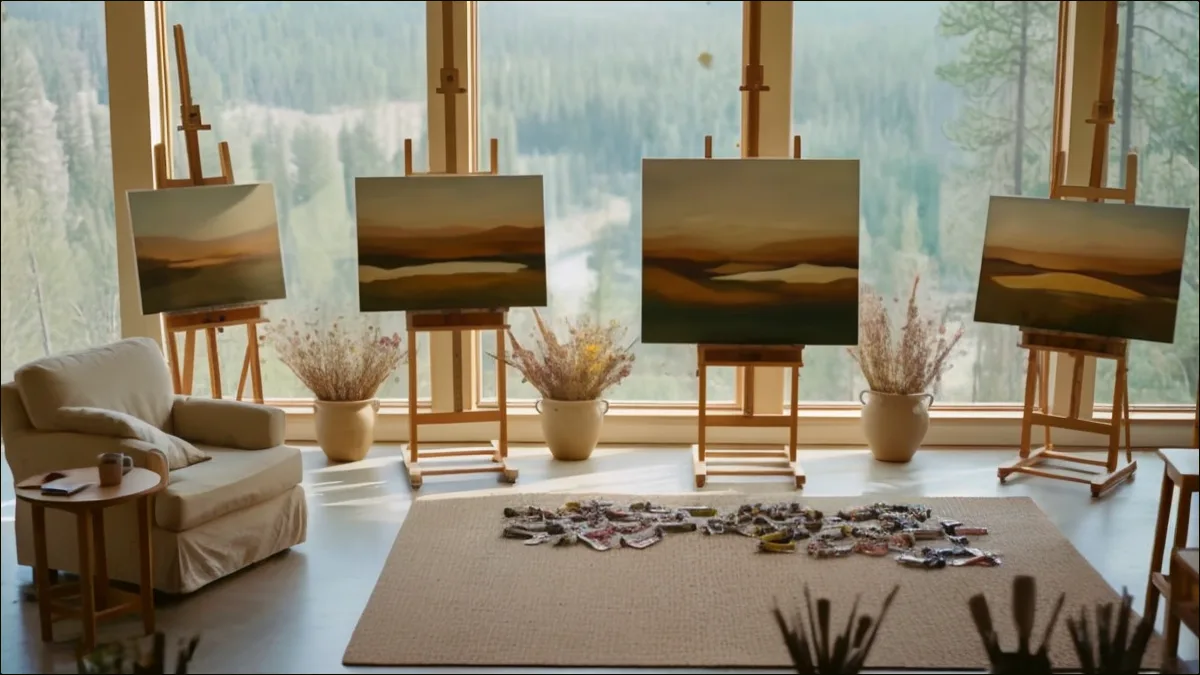 Bright artist residency studio with large windows and natural light
Artist residencies offer something rare: dedicated time and space to focus entirely on your creative practice. A rural retreat, an urban studio, a few months abroad. The format varies, but the value is the same uninterrupted stretch of working time.
But competition is fierce. Top programs receive hundreds or thousands of applications for a handful of spots. Here is the whole process, from building a shortlist to submitting.
Quick Answer
- Start your search 6-12 months before you want to attend (application deadlines are often 4-8 months ahead)
- Tailor each application to the specific program's mission and environment
- Your work samples matter most, but a compelling artist statement and clear project proposal can set you apart
- Apply to 10-20 programs; acceptance rates are low even for strong work (browse open residencies)
Six things decide most applications, and none of them are talent. Research, because every residency has a distinct culture and the fit shows. Work samples, where 10-15 excellent images beat 20 mediocre ones and good documentation does more work than any sentence you write. A project proposal specific enough that a panel can picture the months passing. References who know the work well enough to be specific about it. Volume, because even strong artists get rejected and one application is a coin flip you'll lose. And timing, since the CV and portfolio you need in October are built in April.
What Is an Artist Residency?
An artist residency is a program that provides artists with time, space, and often resources to focus on creative work away from daily life demands. Residencies vary enormously in what they offer:
Time: From 2 weeks to 2 years (most commonly 1-3 months)
Space: Private studio, shared workspace, or access to specialized facilities
Accommodation: On-site housing, stipend for housing, or self-arranged
Funding: Fully funded (stipend + housing), partially funded, or fee-based
Community: Solo retreats, cohort-based programs, or integration with local communities
Focus: Open-ended exploration, project-based, community-engaged, or production-focused
The "right" residency depends entirely on what you need at this stage of your career and creative practice.
Why Apply for Residencies?
The professional case is straightforward. A residency removes the commute, the day job, and the domestic obligations that eat studio time, and replaces them with a stretch long enough to develop a body of work or finish a major project. New surroundings change what you make. The other residents become collaborators and friends for decades. A competitive program on your CV signals that a selection panel invested in you, which matters to the next panel. And many programs end in open studios, an exhibition, or a publication, so the time produces something public as well as something made.
The personal case is harder to put in an application and often matters more. External structure gives you permission to prioritize the work without justifying it to anyone. Physical distance from routine creates mental distance from it. Intensive time reveals things about your practice you can't see while fitting it around a schedule. And a residency in a new city or country is an experience in its own right, independent of what comes out of the studio.
Residency Types Comparison
| Type | Duration | Cost to Artist | Best For |
|---|---|---|---|
| Fully Funded | 1-12 months | Free + stipend | Career development, major projects |
| Partially Funded | 2-8 weeks | Materials/travel only | Focused production time |
| Fee-Based | 1-4 weeks | $500-5,000+ | Networking, new environments |
| Exchange Programs | 1-6 months | Varies | International experience |
| Community-Based | 2-12 weeks | Often free | Social practice, public engagement |
| Production Residencies | 1-3 months | Often free | Fabrication, technical resources |
Types of Artist Residencies
By Funding Model
Fully Funded Residencies
- Cover housing, studio, and provide a stipend
- Most competitive (often <5% acceptance rate)
- Examples: Skowhegan, MacDowell, Headlands Center for the Arts
Partially Funded Residencies
- Provide studio and/or housing, but no stipend
- Moderate competition
- May require artists to cover travel and living expenses
Fee-Based Residencies
- Artists pay for the experience (from $500 to $5,000+/month)
- Less competitive but still selective
- Can be excellent if the program offers what you need
Fee-based residencies aren't inherently worse than funded ones. Some outstanding programs charge fees to sustain their offerings. Evaluate on what you'll gain, weighed against what you'll pay.
If cost is the deciding factor, a residency is one funding stream among several and can be stacked with others. The guide to funding art projects covers how artists combine grants, stipends, and savings to make a fee-based or partially funded program work.
By Focus
Open Studio Residencies
- Time and space for self-directed work
- No specific project requirements
- Best for artists who need unstructured creative time
Project-Based Residencies
- Accept artists with specific proposals
- May provide resources tailored to your project
- Best for artists with clear goals
Community-Engaged Residencies
- Expect artists to interact with local communities
- May include teaching, public programs, or collaborative projects
- Best for artists whose practice involves social engagement
Production Residencies
- Focus on creating finished work
- Often culminate in exhibitions or publications
- Best for artists ready to produce a body of work
By Location
Rural Residencies
- Isolation and natural environments
- Focus on retreat and reflection
- Examples: Vermont Studio Center, Jentel Foundation
Urban Residencies
- Access to cultural institutions, galleries, and diverse communities
- Focus on engagement and production
- Examples: ISCP (New York), 18th Street Arts Center (Los Angeles)
International Residencies
- Cultural exchange and new perspectives
- Often require passport and visa arrangements
- Examples: Cité Internationale des Arts (Paris), ZK/U (Berlin)
The visa question is the one that catches people out, since some countries require a work or cultural visa even for an unpaid residency and the lead times are long. Sort that out before you accept rather than after: international opportunities for artists covers the logistics, and if you're coming to the US, the O-1 visa guide covers the route most artists take.
Finding the Right Residencies
Research Platforms
Artsume Opportunities - Browse curated residency listings with application deadlines
ResArtis - Global network of residency programs with searchable database
Alliance of Artists Communities - US-focused network with member directory
TransArtists - European focus with extensive international listings
Wooloo - Artist-to-artist residency network
Open residencies on Artsume
View allCreate your Artsume to keep your work and experience ready for applications.
Questions to Ask When Researching
- What does the program actually provide? (Studio size, housing quality, equipment access)
- What is the community like? (Number of residents, shared meals, programming)
- What's expected of residents? (Open studios, community engagement, documentation)
- What's the surrounding area like? (Rural isolation vs. urban access)
- What do alumni say? (Search for reviews, blog posts, social media)
- What are the hidden costs? (Travel, materials, food if not provided)
Building Your Shortlist
Create a spreadsheet with these columns:
- Program name and location
- Application deadline
- Duration options
- Funding (fully funded, partial, fee-based)
- What they provide
- What they expect
- Fit with your practice (rate 1-5)
- Notes
Aim to identify 15-25 programs that genuinely interest you, then narrow to 10-20 applications based on deadlines and fit. If you're doing this for the first time, how to apply to art opportunities covers the research and shortlisting habits that carry across grants, open calls, and residencies alike.
The Application Components
Most residency applications include these elements:
1. Artist Statement
Your artist statement should explain:
- What you make and why
- The ideas, themes, or questions driving your work
- Your materials and processes
- Where your work sits in broader conversations
For residency applications specifically:
- Keep it focused (250-500 words unless otherwise specified)
- Connect your practice to what you'd do at the residency
- Avoid jargon that obscures meaning
For detailed guidance, see our guide to writing artist statements.
2. Project Proposal
Many residencies ask what you plan to do during the residency. A strong proposal:
Is Specific: "I will develop a series of 10 large-scale paintings exploring memory and domestic space" beats "I will continue my painting practice"
Is Realistic: Propose what you can actually accomplish in the time available
Connects to the Program: Show why this residency specifically supports this project
Allows Flexibility: Acknowledge that creative work evolves while demonstrating clear intent
Sample Proposal Structure:
- Project overview (1-2 sentences)
- What you plan to create (specific outputs)
- Why this residency (what the program offers that supports the work)
- What you hope to learn or discover
- How the work will continue after the residency
3. Work Samples
Your work samples are the most important part of your application. Programs want to see the quality and trajectory of your practice.
Image Requirements:
- Usually 10-20 images (follow exact specifications)
- Recent work (typically last 2-3 years)
- High-quality documentation (proper lighting, clean backgrounds)
- Consistent presentation across images
Selecting Work:
- Choose pieces that represent your current practice and direction
- Lead with your strongest work even if it is a few years old
- Show range within coherence (variation that demonstrates depth, not scattered interests)
- Consider the narrative your images tell in sequence
Technical Specifications:
- Follow exact file format, size, and naming requirements
- Typically JPEG, 1920px on longest side, 72dpi, under 5MB
- Name files as instructed (often: LastName_FirstName_01.jpg)
For complete portfolio guidance, see our artist portfolio best practices guide.
4. CV/Resume
Your artist CV documents your professional history. For residency applications, emphasize:
- Previous residencies (shows you understand the format)
- Exhibitions and projects relevant to your proposal
- Education and training
- Awards and grants
Keep it current and formatted to CAA standards. Residency panels read a CV differently than grant panels do, and what residency programs actually want to see on it is worth reading before you decide what to lead with.
5. References/Recommendations
Most residencies require 1-3 references or recommendation letters.
Choose recommenders who:
- Can discuss the work itself, in detail
- Can speak specifically about your practice and potential
- Will respond by the deadline (confirm before listing them)
- Have relevant credibility (curators, professors, established artists)
Provide recommenders with:
- Deadline and submission instructions
- Your artist statement and work samples
- Specific program details and why you're applying
- Any points you'd like them to address
6. Application Questions
Many programs include specific questions:
- Why do you want to attend this residency?
- How will you use the time/space/resources?
- How does this fit into your larger practice?
- What will you contribute to the community?
Tips for application questions:
- Answer the actual question asked
- Be specific about this program (not generic residency language)
- Show you've researched the program
- Be honest about your goals and expectations
Writing a Winning Application
Research the Program Thoroughly
Before writing anything, understand:
- The program's mission and values
- What past residents have done
- The physical environment and facilities
- The community and programming
- What makes this residency distinct
This research should infuse every part of your application.
Tailor Every Application
Generic applications get rejected. For each program:
- Reference specific aspects of the residency
- Explain why your work fits their mission
- Describe how you'll use their particular offerings
- Show awareness of their community and context
Be Specific and Concrete
Vague applications lose to specific ones.
Vague: "I hope to develop my practice and explore new directions."
Specific: "I will create a series of cyanotypes using native plants from the surrounding landscape, building on my investigation of place-based photography and ecological documentation."
Show Self-Awareness
Demonstrate that you:
- Understand your practice and where it's heading
- Know what you need at this stage of your career
- Have realistic expectations for the residency
- Can articulate why this program specifically serves your goals
Address Potential Concerns
If there are gaps or questions in your application, address them proactively:
- Career changers: Explain your transition and commitment
- Limited exhibition history: Emphasize other relevant experience
- Unconventional practice: Help reviewers understand your work
Common Mistakes to Avoid
On the Application Itself
- Missing deadlines - Set reminders at least 2 weeks before
- Ignoring instructions - Follow specifications exactly (file formats, word counts, etc.)
- Generic applications - Tailoring matters more than volume
- Weak work samples - Better to apply to fewer programs with strong images
- Typos and errors - Have someone proofread everything
In How You Choose Programs
Applying only to the famous ones is the most common strategic error, and it produces a season of rejections that teaches you nothing. Include mid-tier programs where you're genuinely competitive. Skip prestigious programs that don't fit your practice, because a wrong-fit acceptance wastes a season of your life and a spot someone else needed. Don't rule out fee-based programs on principle. And don't undersell the work in the application itself; confidence about what you've made reads as clarity, not arrogance, while overcommitting in the proposal reads as inexperience.
The mindset errors are quieter. Rejection is about the shape of a cohort as much as the quality of an application, so taking it personally distorts what you learn from it. Applying to a single program is a coin flip. Waiting until you're "ready" postpones indefinitely, since panels fund work that's still developing. And letting documentation slide is the one that compounds: photograph work when you finish it, while the setup is still up, or you'll be rebuilding it under deadline a year later.
Application Timeline
12 Months Before Desired Start
- Research programs and create shortlist
- Document recent work properly
- Update CV and artist statement
- Identify potential references
6-8 Months Before
- Confirm application deadlines
- Request reference letters (give 4+ weeks notice)
- Draft project proposals
- Finalize work sample selections
2-4 Months Before Deadlines
- Complete application drafts
- Get feedback on statements and proposals
- Finalize and submit applications
- Confirm references submitted
After Submission
- Track application statuses
- Respond promptly to any requests
- Plan logistics if accepted
- Reflect on process for future applications
Tracking is the part that falls apart when you're running fifteen applications across a dozen platforms. Keeping every submission, deadline, and outcome in one application tracker is what makes the following year's round easier, and the docs on applying to programs cover how statuses move from submitted to decided.
If You're Accepted
Congratulations! Now prepare for a successful residency:
- Confirm logistics - Housing, studio, travel, dates
- Plan finances - Budget for living expenses, materials, travel
- Prepare materials - Ship supplies if needed, plan what to bring
- Set intentions - What do you want to accomplish? Stay flexible but have goals
- Communicate - Inform day job, family, and collaborators of your schedule
- Research the area - Museums, galleries, studios, restaurants, nature
If You're Not Accepted
Rejection is normal, even for excellent artists, and selection committees make impossible choices between applications that all deserve a spot. Ask for feedback if the program offers it, then read your own application cold and look for the weak link: usually it's the documentation or a proposal that stayed abstract. Strengthen that, and apply again. Many accepted artists applied to the same program more than once, and more applications in more places is the only reliable way to improve the odds.
Building Your Application Over Time
Strong residency applications come from ongoing professional practice, and almost all of that work happens outside application season.
Add each CV entry the week it happens, while you still remember the exact venue name and dates. Photograph every significant piece properly when it's finished. Revise your artist statement as the practice changes rather than the night before a deadline. Keep relationships alive with the people who'll write your references, so the ask isn't cold. And record what you applied to and what came back, so the next round starts from evidence instead of memory.
If you're just starting out and the residency shortlist looks thin, opportunities for emerging artists covers the grants, shows, and programs designed for exactly that stage.
Where to Find Residency Opportunities
Platforms
- Artsume Opportunities - Curated listings with deadlines
- ResArtis - Global residency network
- Alliance of Artists Communities - US programs
- TransArtists - European and international
By Category
Fully Funded (Highly Competitive)
- Skowhegan School of Painting and Sculpture
- MacDowell
- Yaddo
- Headlands Center for the Arts
- Rauschenberg Foundation
International
- Cité Internationale des Arts (Paris)
- ISCP (New York)
- Künstlerhaus Bethanien (Berlin)
- Banff Centre (Canada)
- MASS MoCA (Massachusetts)
Emerging Artist Focused
- Vermont Studio Center
- Ox-Bow School of Art
- Penland School of Craft
- Anderson Ranch Arts Center
Frequently Asked Questions
How competitive are artist residencies?
Very competitive. Top fully-funded programs often have acceptance rates below 5% (Skowhegan, MacDowell). Mid-tier programs typically accept 10-20% of applicants. Fee-based programs are less competitive but still selective. Apply to multiple programs to increase your odds.
Do I need an MFA to get into residencies?
No. While MFA programs provide valuable training and connections, many successful residency applicants are self-taught or have non-traditional backgrounds. Programs evaluate your work and potential, not your credentials. A strong portfolio matters more than degrees.
How many residencies should I apply to?
Plan to apply to 10-20 programs per year if you're seriously pursuing residencies. This accounts for the low acceptance rates while ensuring you're not spreading yourself too thin on application quality. Tailor each application rather than sending generic ones to many programs.
Are fee-based residencies worth it?
It depends on what you need. Some excellent programs charge fees to sustain their offerings. Evaluate what you'll gain: dedicated time, facilities, community, location, and career impact. If the program offers what you need and you can afford it, fees don't diminish the experience.
What if I have a day job and can't take months off?
Many residencies offer shorter durations (2-4 weeks) or flexible scheduling. Some programs run in summers or offer weekend intensives. Remote residencies and part-time models are also growing. Don't assume residencies require quitting your job. Research programs that fit your constraints.
How important are recommendation letters?
Important but not decisive. Strong recommendations from people who know your work well can support your application, but they won't compensate for weak work samples or a poor fit with the program. Choose recommenders who can speak specifically about your practice and potential.
Can emerging artists with limited exhibition history get residencies?
Yes. Many programs specifically support emerging artists. Your work samples and potential matter more than your CV. Strong work, a clear artistic vision, and a thoughtful application can overcome limited exhibition history. Some programs even prefer artists at earlier career stages.
What should I do if I'm rejected from all my applications?
First, recognize this is common even for strong artists. Request feedback from programs that offer it. Review your application materials critically. Are work samples professional? Is your statement clear? Did you tailor applications to each program? Strengthen weak areas and apply again next cycle.
How far in advance should I apply?
Most residency deadlines are 4-8 months before the program starts, sometimes longer for competitive programs. Begin researching 12 months before you want to attend, and have applications ready 2-4 months before deadlines. Some rolling-admission programs accept applications year-round.
Do I need a specific project to apply?
Not always. Some residencies require detailed project proposals, while others welcome open-ended exploration. Read each program's requirements carefully. Even for open-ended programs, having a general direction for your time demonstrates intention and makes for a stronger application.
Conclusion
Residency applications take real effort. The payoff is a stretch of uninterrupted working time, which is hard to buy any other way.
Start with the foundation: a current CV, properly documented work, and a statement you can stand behind. Then research programs and tailor every application.
Rejection is part of the process. Keep applying and keep sharpening the application. The right residency at the right time changes what you are able to make.
Ready to start your residency search? Create your artist profile on Artsume to maintain your CV and portfolio, then browse current opportunities to find programs accepting applications.
Track your applications
Find grants, residencies, and open calls, and track every application in one place.