Artist CV for Residency Applications: What Programs Want
Structure your artist CV for residency applications. What programs actually evaluate, how to highlight community fit, and section-by-section guidance.
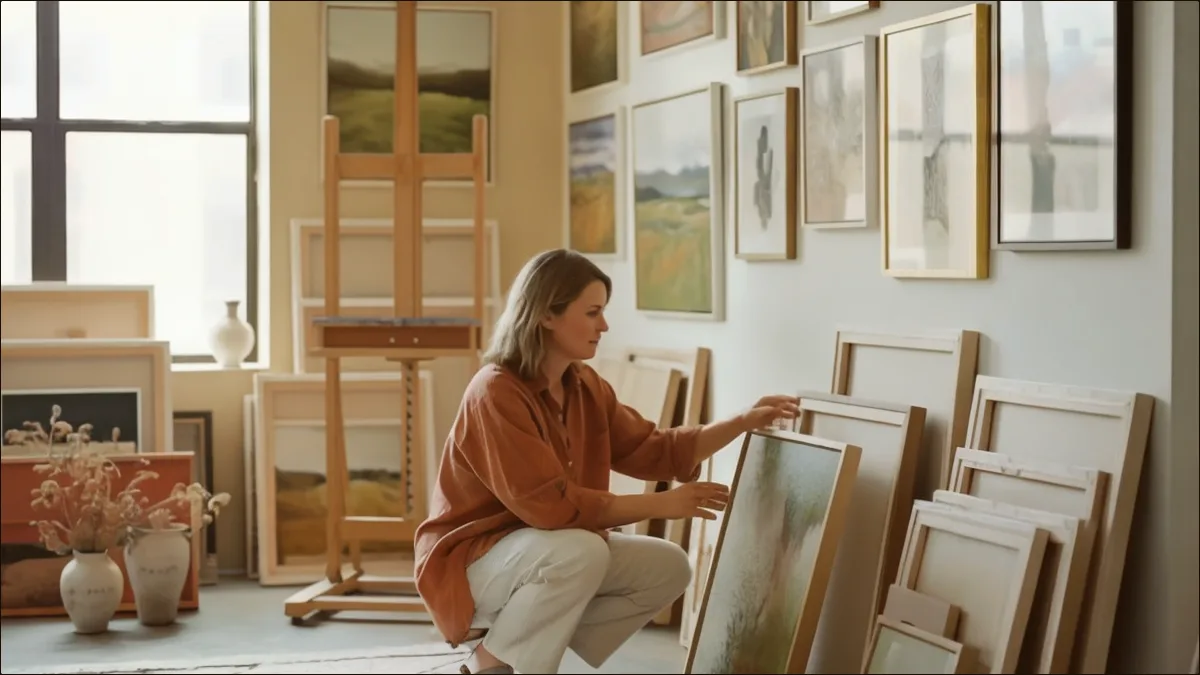 Artist selecting artwork and preparing materials for residency application
Residency programs evaluate different qualities than galleries. They want artists who will thrive in their environment and contribute to their community. A strong exhibition record is not the thing they weigh most heavily.
That difference is the whole reason to rewrite the CV rather than resend it. Sales records and gallery relationships mean little to a selection committee choosing who to house for two months. Teaching, workshops, and collaborative projects mean a great deal, because they are evidence you will be good to live and work alongside. Recent activity carries more weight than a long back catalogue, and a clean two-page document reads better than a cramped five-page one every time.
What follows is the structure to use and where applicants tend to lose points.
Quick Answer
- Residencies prioritize creative potential and community fit over exhibition history
- Lead with previous residencies/fellowships if you have them
- Emphasize teaching, workshops, and collaborative experience
- Keep it to 2-3 pages focused on recent work (last 5-10 years)
- Tailor emphasis based on residency type (production vs. community-engaged)
Residency Application Components
| Component | Priority | What Programs Look For |
|---|---|---|
| Project Proposal | Very High | Fit with program, feasibility |
| Work Samples | Very High | Quality, relevance to proposal |
| Previous Residencies | High | Experience in residency settings |
| Exhibition History | Medium-High | Active practice |
| Artist Statement | High | Clear articulation |
| References | Medium | Professional relationships |
What Residency Programs Actually Evaluate
For general guidance on applying, see our complete residency application guide.
Unlike galleries focused on exhibition history and market positioning, residency selection committees evaluate:
Creative Potential
Where is your work heading? Programs invest in your development, so they want to see:
- Evidence of artistic growth and evolution
- Curiosity and willingness to experiment
- Clear direction without being rigid
Community Fit
Will you engage with other residents and contribute to the program's culture?
- History of collaboration and community engagement
- Teaching or workshop experience
- Collegiality and openness to feedback
Professional Development Stage
Is this the right residency at the right time for you?
- Career stage appropriate to the program
- Clear articulation of what you'd gain
- Realistic understanding of the opportunity
Practical Readiness
Can you actually participate fully?
- Availability for program dates
- Ability to work independently
- Professional reliability
Your CV should speak to all four of these, exhibitions being only one.
Residency-Optimized CV Structure
Contact Information and Links
Include your website prominently. Reviewers often check your online presence before reading further. If you need a professional presence, see our guide on building an artist website or create a free Artsume profile.
Example:
MARIA GONZALEZ
Los Angeles, CA
maria@mariagonzalez.art
mariagonzalez.art
@mariagonzalez.art
Artist Statement (Brief)
Some residencies request this separately, but a 2-3 sentence summary on your CV helps reviewers understand your practice quickly. See our artist statement guide for detailed help.
Example:
Working across sculpture and installation, I investigate the relationship
between domestic objects and collective memory. My practice involves
community engagement and site-responsive work.
Previous Residencies and Fellowships
If you have residency experience, highlight it near the top. This shows you understand the format and have thrived in similar environments before.
Example:
RESIDENCIES & FELLOWSHIPS
2024  [Skowhegan School](https://www.skowheganart.org/) of Painting & Sculpture, ME
2023  [Vermont Studio Center](https://vermontstudiocenter.org/), Johnson, VT (Fellowship)
2022  Elsewhere Artist Collaborative, Greensboro, NC
If you have no prior residencies, skip this section entirely. Many programs specifically welcome first-time residents. Fellowships count here too, and artist fellowships are often easier to win at an early stage than the better-known residencies.
Education
Standard format. Include relevant workshops or intensive programs if they strengthen your application.
Example:
EDUCATION
MFA, Sculpture, UCLA, 2021
BA, Art History, UC Berkeley, 2018

ADDITIONAL TRAINING
2023  Fabrication Intensive, Anderson Ranch Arts Center, CO
2022  Community Art Practice Workshop, Skowhegan, ME
Exhibition History
Use standard CV format. If your list is long, select exhibitions most relevant to the residency or trim to "Selected Exhibitions" (last 5-7 years).
For detailed formatting guidance, see our complete CV guide.
Awards and Grants
Shows that others have invested in your development, directly relevant to residency committees making similar decisions.
Example:
AWARDS & GRANTS
2024  Individual Artist Grant, California Arts Council ($5,000)
2023  Emerging Artist Award, Los Angeles Art Association
2022  Graduate Research Fellowship, UCLA
Teaching and Community Engagement
This section is especially important for residencies. Many programs value artists who will engage with their broader community, lead workshops, or mentor emerging artists. If you have been building this side of your practice, teaching art as income covers the kinds of positions and workshops that belong here.
Example:
TEACHING & COMMUNITY ENGAGEMENT
2024  Guest Artist, LA Public Schools (6-week residency)
2023  Workshop Facilitator, Community Arts Center, LA
2022-23  Teaching Assistant, UCLA Sculpture Program
2022  Youth Mentorship Program, Hammer Museum, LA
Related Professional Experience
Include technical skills, languages, or other experience relevant to the specific residency.
Example:
RELATED EXPERIENCE
Fluent in Spanish; conversational Portuguese
Trained welder and woodworker
Experience with large-scale fabrication and installation
Tailoring Your CV by Residency Type
The structure stays the same across applications. What changes is which section you move up and which experience you spell out.
Community-engaged residencies want the teaching and workshop experience first, followed by public art or socially-engaged projects, collaborative and participatory work, and any history with the specific communities the program serves.
Production-focused residencies want the opposite emphasis: technical skills and equipment experience, large-scale or technically complex projects, fabrication and materials expertise, and a clear signal that you can work the facilities without supervision.
International residencies add a layer of practical detail. Include passport or visa information where it is requested, note international exhibition or travel experience, list your languages prominently, and mention previous collaborations abroad. International opportunities for artists covers the visa and logistics questions that follow acceptance.
Remote and digital residencies are assessing whether you can work unsupervised. Include online exhibitions and digital projects, note the software and platforms you actually use, link to strong online documentation, and let your history show self-directed working habits.
Emerging artist residencies are the one case where thin is fine. Lead with potential rather than accomplishments, include student work and thesis exhibitions, name the mentorship relationships that shaped the practice, and let the CV show curiosity and growth. Opportunities for emerging artists lists programs built for exactly this stage.
What to Exclude from Residency CVs
Commercial detail is the main thing to cut. Prices, collector names, market positioning, exclusive gallery arrangements, and commercial partnerships all belong on a gallery-facing CV and nowhere near a residency application.
Then cut for space. Drop unrelated employment and keep the arts experience, trim to the last five to ten years unless something earlier is directly relevant, and select from your group shows rather than listing all of them. Preparing an arts and cultural CV covers the same editing decisions for grant and institutional applications.
Common Mistakes
The most common one is sending the gallery CV unchanged. Sales records are a gallery's concern; a residency wants to see community engagement and where the work is heading. Closely related is ignoring the program's own focus, since a community-engaged residency is reading for teaching experience and a production residency is reading for technical skills, and neither will go looking for what you buried on page three.
Two more are about legibility. Reviewers read many applications quickly, so a clear two-page CV beats a dense five-page one, and following CAA formatting standards means nobody has to decode your layout before reading your history. Make sure the last two or three years are visible near the top; programs are choosing active artists, and an undated-looking CV reads as a stalled practice.
Then proofread it properly. Errors signal exactly the carelessness a program does not want to host for two months.
Keep Your CV Current
Keep your CV updated year-round. Deadlines arrive faster than you expect, and the work is much smaller when it is spread across the year. Artsume's artist CV builder handles the formatting and exports a submission-ready PDF whenever you need one.
Sample CV Comparison
Weak Residency CV Entry:
2023 Group Show, Various Artists, Gallery Name
Strong Residency CV Entry:
2023  "Memory Objects," group exhibition curated by Sarah Chen,
      Community Arts Space, Oakland, CA
      (Participatory installation with community workshops)
The strong entry shows the curatorial context and what the work actually involved.
Before You Submit
Use this checklist before submitting your residency CV:
- Contact information is current and includes website
- Artist statement is brief (2-3 sentences) and clear
- Previous residencies/fellowships are highlighted (if applicable)
- Teaching and community engagement is prominently featured
- Content is tailored to this specific residency type
- Length is 2-3 pages maximum
- Formatting is clean and consistent
- No typos or errors
- PDF is properly formatted for submission
Next Steps
The CV is one of four pieces, and it is rarely the one that decides an application. Get your portfolio and artist statement to the same standard, then start reading calls: open residencies on Artsume are filterable by discipline and deadline, and the application tracker keeps the ones you are working on from colliding.
Build the CV itself once and maintain it rather than rebuilding it per deadline. Create a free Artsume profile and the CV walkthrough will get you to a version you can export whenever a program asks.
Frequently Asked Questions
How long should my residency CV be?
Keep it to 2-3 pages maximum. Focus on recent work (last 5-10 years) and most relevant experience. Programs review many applications. Concise CVs are appreciated.
Should I include non-art work experience?
Only if directly relevant to the residency. Teaching, community work, or skills related to the program's focus can strengthen your application. Skip unrelated employment.
Do I need previous residencies to get accepted?
No. Many programs specifically welcome first-time residents. Show potential through your work and statement rather than prior residency experience.
Should I tailor my CV for each residency?
Yes, slightly. Emphasize experience matching the program's focus: community engagement for socially-engaged programs, production skills for studio-focused ones. Keep the core structure consistent.
What if I have limited exhibition history?
Focus on what you do have: education, training, community engagement, collaborative projects, and artistic development. Emerging artist programs expect shorter CVs and evaluate potential over track record.
Should I include work-in-progress or upcoming exhibitions?
Only include confirmed, scheduled exhibitions. You can note 'Forthcoming' for shows that are definitely happening. Never include pending applications or unconfirmed opportunities.