How to Approach an Art Gallery: An Artist's Guide
Contact galleries without burning the relationship. Email templates, what to attach, when to reach out, how to follow up, and how to read a polite no.
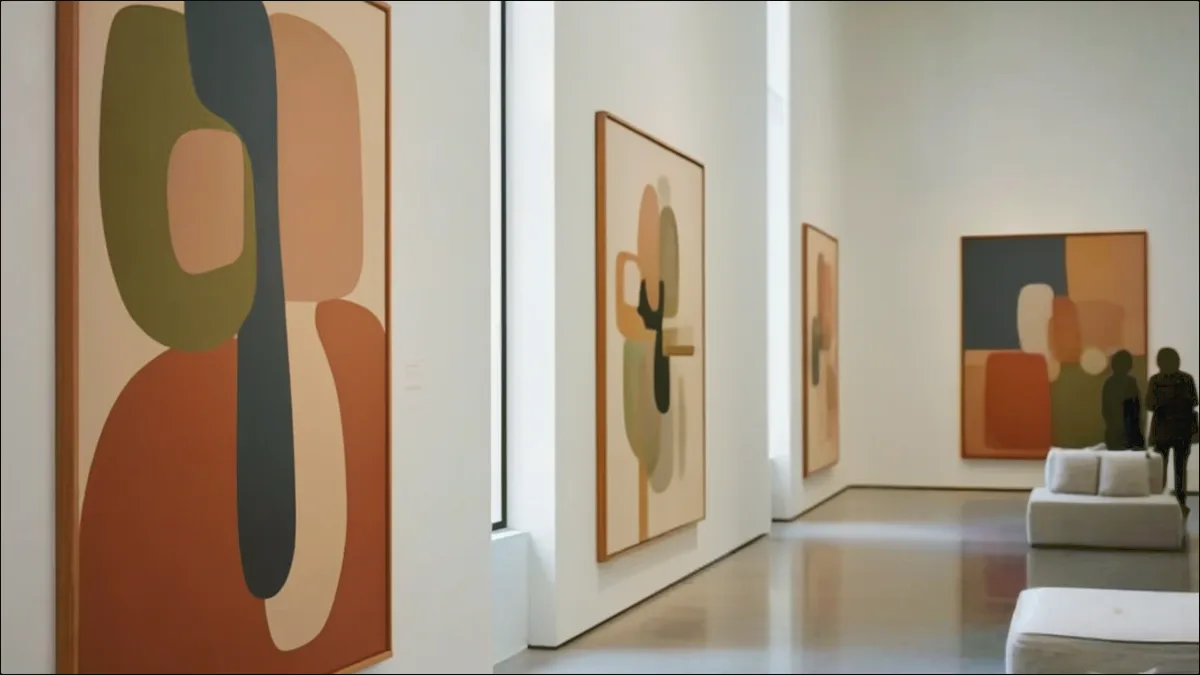 Contemporary art gallery interior with paintings displayed on white walls
"How do I actually start the conversation with a gallery?" is the question we get asked more than any other.
Approaching a gallery feels like an audition. It goes considerably better when you treat it as a business proposal. The gallery is not deciding whether your work is good in the abstract; they are deciding whether they want a working relationship with you, one that involves their money, their wall space, and their reputation with collectors. Artforum and the Art Dealers Association of America are both worth reading if you want a clearer picture of how the dealer side of that relationship operates.
What follows is the research, the email, the follow-up, and the handful of things that will get you quietly written off.
The short version
- Research 5 to 10 galleries where the fit is real. Mass-emailing is worse than not emailing.
- Become a familiar face before you pitch. It is slow and it works better than anything else.
- Keep the outreach email under 200 words, personalized, with links rather than attachments.
- Follow up once after 2 to 3 weeks, then let it go.
What a gallery is actually deciding
Galleries want work that sits well alongside the artists they already show, made by someone who answers emails and meets deadlines. They want a practice with visible momentum, an honest artistic voice, and enough collector interest that showing you is not purely charitable. Commercial galleries live on sales; a nonprofit space lives on its programming reputation. Either way, taking you on is a bet.
The constraints are worth understanding because they explain most rejections. A gallery can only carry so many artists before it cannot serve any of them properly. It receives hundreds of submissions a week and reads a fraction of them. It has a program with a shape, and work that sits outside that shape is a problem even when it is excellent. And it has to balance what it believes in against what it can sell.
Which is why silence is rarely about your work. Galleries say no to good artists constantly, because the roster is full, the program has moved, or the timing is wrong. That is not a verdict on your practice, and treating it as one will end your outreach long before it has had a chance to work.
What representation actually means
"Representation" gets used loosely, and it is worth being precise about what you are asking for, because the answer changes how you approach it.
A one-off group show is an exhibition, not representation. Representation is an ongoing commercial relationship: the gallery takes a commission on sales, typically 40 to 60% and most often an even split, promotes your work to their collectors, places you in their art fair booths, and usually expects some form of exclusivity within a territory. In exchange you supply a consistent body of work on a schedule you both agree, and you route sales in that territory through them rather than undercutting them from the studio.
That last part is where new relationships most often break. If a gallery prices your work at $4,000, selling the same work from your studio at $2,800 does real damage to both the gallery and your own market. How to price your artwork covers the wholesale and retail split and why consistency across channels matters more than any individual sale.
Get the terms in writing before you deliver work. Consignment agreements should state the commission, who insures the work and while it is where, how long the gallery holds it, when you are paid after a sale, and what happens if the relationship ends. Consignment, commission, and licensing basics for artists covers what belongs in that document.
Representation is also not the only route to a career. Plenty of artists sell steadily through art fairs, art consultants, public commissions, and their own audience. Treat a gallery as one channel among several rather than the finish line, and the outreach gets a lot less fraught.
1. Do the homework
Before you send anything, establish that the gallery is a plausible home for your work. Sending abstract oil painting to a gallery that shows hyper-realist sculpture wastes everyone's afternoon, and enough of it will get your name remembered for the wrong reason.
Start with the roster. Look at the artists they represent, and ask whether your work would sit alongside theirs without either looking out of place. Shared themes matter less than a shared sensibility, and career stage matters more than most artists expect: a gallery whose youngest artist has twenty years of shows behind them is not looking for your first solo.
Then look at price. If their work sells at $8,000 and yours sells at $600, the mismatch is structural, and no amount of enthusiasm fixes it.
Read the submission policy properly, on their About or Contact page. If it says no unsolicited submissions, believe it. If it names a format, a season, or a specific address, use exactly that. Following stated instructions is the cheapest way to look professional, and ignoring them is the cheapest way not to.
Finally, get a sense of the program and its reach. What kinds of exhibition do they mount, at what career stage, in what media? Are they local, regional, or international? Do they take booths at fairs, and if so, which? All of it tells you what showing there would actually get you.
Approaching galleries that clearly do not fit your practice wastes their time and yours, and the art world is small enough that it gets noticed. Five well-researched approaches will do more than fifty scattergun ones.
Before you reach out, answer four questions honestly: does the work belong in their program, are you at a comparable career stage to their artists, would you be glad to show alongside that roster, and would you want to work with these people for years rather than months? If most of the answers are no, keep looking.
2. The soft approach
The best way to approach a gallery is to already be a familiar face. It is the slowest route and by some distance the most effective.
Go to openings, and go to support the show rather than to pitch. Turn up with some regularity, though not to every single thing. Look at the work properly, ask the kind of question that shows you did. Introduce yourself to the staff when it happens naturally. What you are building is recognition, so that when your email eventually lands, your name is not new.
What sinks this: bringing a portfolio, pitching during someone else's opening, or treating the room as a networking exercise. Anyone who has worked an opening can spot it from across the floor.
Engage online, but only where you mean it. Follow the gallery and their artists. Comment on things you actually have something to say about, since "great work!" registers as nothing at all. Share a show when it is genuinely relevant to your own audience. Occasionally a gallerist follows a link back and looks at your profile, which is the entire argument for keeping your portfolio current rather than half-updated.
Be a peer before you are an applicant. A good share of gallery interest starts with one of their current artists mentioning a name. Go to artist talks. Join a critique group or a collective. Show up to other people's openings and mean it. Collaborate where it makes sense.
The referral is the whole point. When a gallery's own artist recommends you, you stop being a cold submission and become a warm introduction, which is a categorically different conversation.
3. The cold outreach email
If the gallery accepts submissions, or you have had a brief encounter that went well, it is time for the formal introduction. Concise, personalized, and built around links rather than attachments.
The subject line should say what the email is in six or seven words. "Artist Submission: Maya Okonkwo, Ceramic Sculpture" works. "Studio Visit Request: Maya Okonkwo" works. What does not work is "Gallery Representation", which is generic, "Please Look at My Work", which reads as a favour, or anything with URGENT in it, which reads as a problem.
The hook is the first sentence, and its only job is proving you are not sending this to forty galleries. Name a specific artist, exhibition, or aspect of the program, and say what it has to do with your work. A gallerist can tell the difference between research and flattery in about one line.
The body is two or three sentences: what you are making now, and one or two recent credits worth mentioning. Recent exhibitions, a residency, an award. Specific beats impressive. If your CV is doing the heavy lifting here, it needs to be current before you send anything, which is what the artist CV builder is for.
The ask should be one concrete thing. A studio visit. A portfolio review. A place on their preview list. "I'd love to be considered" gives them nothing to say yes to.
The links go at the bottom: your website or profile, Instagram if it is presentable, and three to five images either attached small or linked. Never a folder of full-resolution files.
Cold outreach template
Subject: Artist Submission: [Your Name] - [Medium]

Dear [Gallery Name] Team,

I'm reaching out because your program's focus on [specific theme/approach] aligns with my practice exploring [your theme]. I've followed [specific artist/exhibition] and was particularly drawn to [specific reason].

My work [brief 2-3 sentence description of current practice]. I'm currently working on [current project/series]. Recent highlights include [1-2 recent exhibitions, residencies, or awards].

I'd be grateful for the opportunity to share my work with you. Would you be open to a studio visit or portfolio review?

Best regards,
[Your Name]

[Link to Website/Artsume Profile]
[Link to Instagram - if professional]
[3-5 images attached - small file size]
Keep the whole thing under 200 words. Galleries read hundreds of these a week, and the ones that get answered are the ones that can be read in twenty seconds. A single link to a portfolio and CV that are already up to date does more work than any paragraph you could add.
4. The update email
If you have met a gallerist before, or they have seen your work in a group show, you do not need a pitch. You need an update, which keeps you on their radar without asking them for anything.
Send one when there is something genuinely worth sending: a new body of work finished, a significant exhibition or award, a short note after one of their openings, or news that connects to something they are programming. Quarterly is about right. Monthly is a nuisance.
Update email template
Subject: Update from [Your Name] / New Work from [Studio Name]

Hi [Gallerist Name],

I hope you're having a great season. I'm reaching out because I've just completed a new series of works titled "[Series Name]" that builds on the themes of [Theme] we discussed at [Event/Last Meeting].

[Brief 2-3 sentence description of the new work and what's different or significant about it.]

I've attached a few images below and updated my [website/Artsume profile] with the full portfolio. I'd love to hear your thoughts, and if you're in the [City] area soon, I'd be happy to host you for a brief studio visit to show you the pieces in person.

Best regards,
[Your Name]

[Link to Website/Artsume Profile]
[Link to Instagram]
[3-5 images attached]
The update email is about staying visible, not making a sale. Keep it short, reference the conversation you actually had, link rather than attach, and do not expect a reply. Most updates get read and not answered, which is fine; the point is that your name stays in circulation until the timing works.
The failure mode is manufacturing news to justify the email. A gallerist can tell when an update has been reverse-engineered from a desire to be in touch, and it costs you more than the silence would have.
5. The deal-breakers
Reputation is the one asset you cannot rebuild quickly, and this is the list that damages it.
Gallery Outreach Mistakes
A few more that do not fit in a table. Never badmouth another gallery, however justified you feel; the art world is small and it travels. Never inflate your CV, because credits are checkable and being caught once ends the conversation permanently. Keep your public accounts presentable, since anyone considering you will look. And always answer a reply, including a no, with a short thank-you. The gallerist who passes on you this year may be the one who programs you in three.
Following up without becoming a problem
If you have heard nothing after two to three weeks, one brief, polite follow-up is entirely appropriate. If you have genuine news in the meantime, a short update is fine. If you have met them in person, send a thank-you within a day or two, always.
Keep it to four lines:
Hi [Name],

I wanted to follow up on my email from [date] about [brief reminder]. I know you're busy, so I'll keep this brief.

[One sentence update if relevant]

Thanks for your time,
[Your Name]
Then stop. One follow-up, not three. No guilt-tripping, no "just checking in again" a week later. If they say no, if months pass across two or three attempts with no reply, or if you have already tried a gallery whose policy says not to, move on without ceremony. There are other galleries, and the one you burn today is the one whose director takes over somewhere better in five years.
Get your materials in order first
Everything above assumes a gallerist who follows your link finds something finished at the other end. Before you send anything, that means high-quality images of current work, a CV that goes up to this year, a clear artist statement, and contact details that are easy to find. Artist portfolio best practices covers image quality and curation, how to write an artist statement covers the statement, and the CAA-format CV guide covers the document galleries read most closely.
Your social accounts count as part of this whether you want them to or not. Consistent, decently photographed, posted regularly enough to look active. And if you are preparing specifically for a gallery approach rather than a grant panel, what curators want to see in a gallery portfolio is the more targeted read.
Other routes in
Email is not the only door.
Galleries take booths at art fairs, and artists get noticed at them, both by dealers walking the floor and through the satellite events around the fair week. How art fairs work for artists covers what to expect.
Plenty of galleries run open calls for group shows. Applying is a legitimate way to get your work physically in front of a gallery that would never have opened your email, and a group show there is a far better starting point than a cold pitch. Getting into exhibitions covers the wider set of routes.
Curators tend to have working relationships with galleries and make introductions. So do collectors who already own your work. And a strong residency record carries weight with dealers, partly as a signal that other selection panels have taken you seriously: what residency programs want to see covers how to build that record.
Press helps too, and it is more within reach than most artists assume. Getting press coverage as an artist covers the outreach, which works much like gallery outreach and fails for the same reasons.
Open Exhibition Opportunities
View allCreate your Artsume to keep your work and experience ready for applications.
One last thing
Almost all of the above is a variation on one idea: fit first, relationships before requests, brevity in every email. Do the research, become a familiar name, ask for one concrete thing, follow up once.
The part that is hardest to internalize is that silence is the normal outcome and says almost nothing about your work. Galleries pass on artists they admire every month for reasons that have nothing to do with the paintings. What you can control is the quality of the work, the state of your materials, and whether the people who might one day program you already know who you are.
That is a slow game, and it does not reward the artists who are best at pitching. It rewards the ones who are still around.
Frequently Asked Questions About Approaching Galleries
Before your first approach, spend an afternoon getting the link you will send into shape. A profile that carries your portfolio, CV, and statement in one place saves the gallerist three clicks, and sharing your profile covers what they see when they open it.