How to Get Into Art Exhibitions: A Complete Guide
Get your work into exhibitions. How juried shows, gallery programs, museum opportunities, and artist-run spaces work, and which to pursue at your stage.
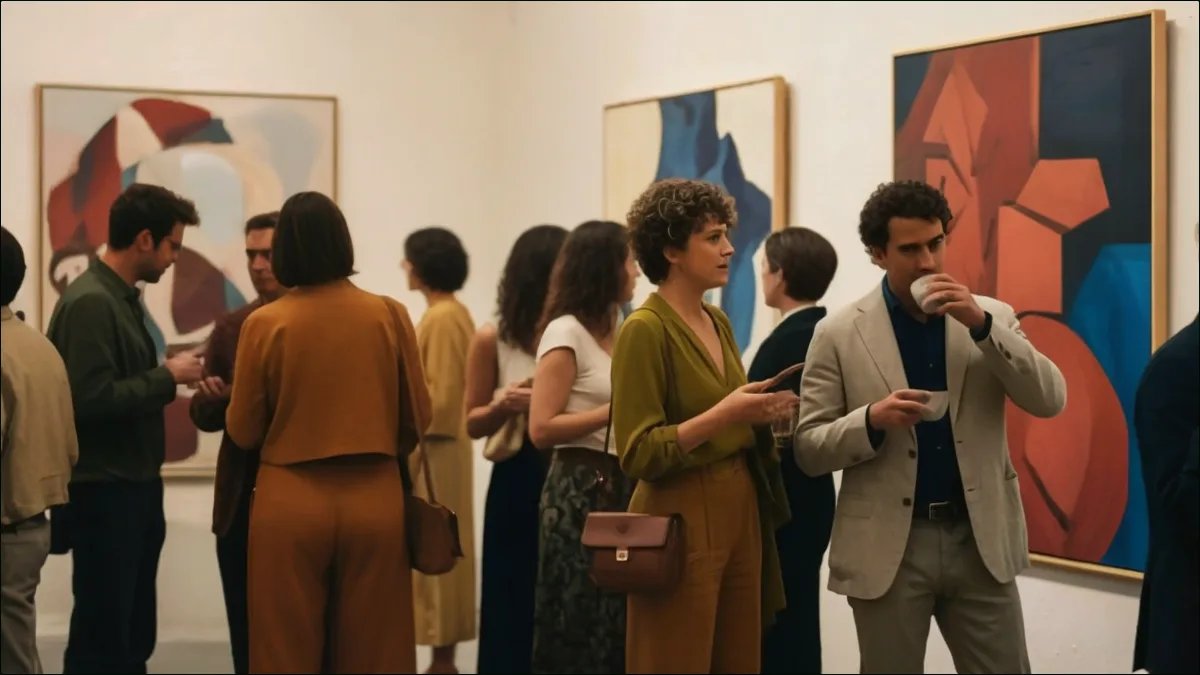 Gallery opening reception with crowd viewing contemporary art exhibition
Exhibitions are how most of the rest of an art career gets built. They produce visibility, credibility, sales, and the professional connections that lead to the next thing. Institutions from MoMA to the Whitney run emerging artist programs, and platforms like CaFÉ carry a steady stream of open calls. CaFÉ puts its own count at about 170 listings at a time and more than 800 a year (checked September 2026). The question is how you actually get through one of those doors.
There are four routes: juried shows, galleries, museum programs, and alternative spaces. They work differently, they reward different things, and most artists end up using several at once.
The short version
- Four routes exist. Do not commit to one and treat the others as beneath you.
- Start where you are competitive and build the history that opens the rest.
- Your documentation decides whether you get considered at all.
- Relationships compound. Rejection is the normal case, not the exception.
Types of exhibition opportunity
Exhibition Venues Compared
| Venue Type | Competition | Prestige | How to Access |
|---|---|---|---|
| Commercial Gallery | High | High | Representation or invitation |
| Non-Profit Space | Medium-High | Medium-High | Open calls, proposals |
| Museum | Very High | Very High | Curatorial selection |
| University Gallery | Medium | Medium | Proposals, connections |
| Alternative Space | Low-Medium | Variable | Direct outreach, DIY |
| Pop-Up/Temporary | Low | Variable | Self-organized |
Juried and open call exhibitions
An organization publishes a call with a theme, requirements, and a deadline. Artists submit images and supporting materials, a jury selects, the selected artists deliver work, and the show opens, often with prizes attached.
This is the most accessible route into a real exhibition, and the credits it produces are legitimate CV lines. Selection is based on the work rather than on who you know, which is not true of most of the alternatives. The costs are the entry fees, usually $25 to $50, the variable quality of the shows themselves, and the shipping and travel that follow acceptance.
If you have no representation and are building a history, this is where to spend your applications. How to find and apply to open calls and how juried shows choose their work cover the process from both sides.
Gallery exhibitions
Commercial galleries represent artists and sell work, taking a commission that typically runs 40 to 60%. In exchange they bring collector relationships, handle sales and promotion, and usually expect exclusivity. Nonprofit galleries are mission-driven, often program more experimentally, and are less concerned with saleability; many run open submission periods. Cooperative galleries are artist-run, with members sharing costs and responsibilities, which buys you control over your own exhibition schedule at the price of a financial commitment and a share of the work. Project spaces, frequently attached to larger institutions, are the most flexible of the four and the most receptive to work that has not settled yet.
Shows arrive through cold submission, introductions from mutual contacts, curators encountering your work somewhere else, open portfolio review days, and, most often, relationships built over a long time. How to approach an art gallery covers all of that, including what representation actually commits both sides to.
Museum exhibitions
Museum shows are curated by institutional staff and held to professional presentation standards. They come as solo exhibitions, thematic or survey group shows, emerging artist programs, and shows drawn from the collection.
Artists get included through curator studio visits, through work seen at other exhibitions, and through recommendations from people the curator trusts. A handful of museums run open submission programs, and acquisition into a collection sometimes leads to exhibition later.
The honest version: this almost always comes later. Build toward it through other venues rather than applying at it, and put the energy into making work strong enough to be recommended.
Art fairs
Fairs are commercial events where galleries show their artists to a concentrated audience of collectors. They run from the major international fairs like Art Basel and Frieze down through regional fairs and emerging-artist fairs such as NADA.
Participation is usually through your gallery, though some fairs run direct artist programs and there is always a satellite ecosystem around fair week. What you get is collector access at a density that does not otherwise exist, plus visibility to curators and critics who show up for the same reason. How art fairs work for artists covers the costs and the etiquette.
Alternative and DIY spaces
Artist-run spaces are exactly that: galleries operated by artists, usually programming more experimentally than a commercial space can afford to, and reached either through an open call or an invitation from someone already inside.
Pop-up exhibitions take over a vacant storefront or an industrial space for a few weeks and are usually artist-organized. Apartment galleries run shows out of private residences, a movement that has grown steadily in cities where commercial rent has priced everyone out. Public installations in parks, community centers, and storefronts need permissions and reach audiences who would never enter a gallery. Window galleries put work at street level around the clock with almost no barrier to entry. Online exhibitions cost the least and travel the furthest.
What all of these buy you is freedom, control over how the work is shown, and a community you build rather than apply to. What they cost you is visibility, logistics you have to run yourself, less weight on a CV than an established venue would carry, and usually the financial risk. Organizing your own exhibitions and pop-ups covers the venue hunt, the permissions, and the budget; artist collectives covers doing it with other people, which is how most of these actually happen.
Building an exhibition history from nothing
If your CV has no exhibitions on it, five things are available to you right now.
Student and MFA shows count. List them under Selected Group Exhibitions; they are real exhibitions and everyone's record starts somewhere. Local juried shows are usually less competitive than national ones and build a regional presence that matters more than emerging artists expect, though it is worth researching a show's quality before paying its fee. Alternative spaces are the most accessible venues in any city and come with community attached. Organizing your own show, with a few other artists to share the effort and the cost, produces a real credit and considerably more experience than being in someone else's. And online exhibitions have the lowest barrier of all, which makes them a reasonable way to keep building while the in-person applications are pending.
What the arc usually looks like
The first five years are juried and open call shows, local and regional venues, alternative spaces, group exhibitions, and whatever your school produced. Between five and fifteen, the mix shifts toward gallery representation, curated group shows, institutional exhibitions, art fair participation through a gallery, and eventually solo shows. After fifteen years, the conversation is museums, major gallery shows, retrospectives, biennials, and international exhibitions.
Nobody moves through this on schedule, and plenty of good careers skip stages entirely. The useful part of the sequence is knowing roughly where you are competitive, so your applications go where they have a chance.
Not every show is worth taking
Exhibitions do not carry equal weight, and the CV line does not distinguish between them, but the people reading it do.
What counts: curated shows with a visible curatorial position, institutions with a track record, programs that actually turn applicants away, professional presentation, and a catalogue or documentation you can point to afterwards.
What does not: pay-to-show arrangements, venues that accept everyone, shows with no evident curatorial thinking behind them, poor presentation, and vanity galleries selling wall space as though it were selection.
Declining a weak opportunity is allowed, and it is often the right call. Four strong exhibitions read better than twelve indiscriminate ones, and anyone assessing your CV will recognize the venues whether or not you do.
Working each route
Approaching galleries
Visit in person if you can, read the roster honestly, and work out whether your practice belongs in that program before you write anything. Then follow their stated submission process exactly, which is both the easiest way to look professional and the easiest one to skip.
The email itself should be short, personalized enough to prove you know the program, and built around a link rather than an attachment. What galleries are reading for is a distinctive voice, presentation that suggests you take your own work seriously, evidence you are reliable to work with, a body of work actually ready to show, and, for commercial spaces, some indication it will sell.
Relationships do most of the work here, and they take longer than the email does. How to approach an art gallery covers the whole sequence, from research to the follow-up window.
Applying to juried shows
Choose shows where your work genuinely fits rather than where the name is best. Look up the jurors, since a juried show is a specific set of eyes rather than an abstract standard, and look at what they selected last time. A show whose past editions have nothing resembling your work is not a lottery ticket; it is a wasted fee.
Then make the application good. Strong, consistent work samples, documentation that does the work justice, a statement written for this exhibition rather than pasted in, no errors, and submitted before the last afternoon. If you are selected, reply quickly, hit every deadline, turn up to the opening if you can, and photograph your own inclusion, since nobody else will do it for you.
Juried art shows and open calls for artists go into the selection process in more depth, and best practices for applying to art opportunities covers the application craft generally.
Working with curators
Curators find artists mostly through recommendation, from other curators, artists, and collectors they already trust. After that: studio visits arranged through a mutual connection, work seen at another exhibition, online research, open calls, and fairs.
Which means the useful behaviour is not pitching. It is being present at exhibitions and talks, making work that gives people something to say about it, being straightforward to deal with, staying in touch at a frequency that is not a burden, and saying yes when a studio visit is offered. Curators are looking for a distinctive practice that fits what they are already thinking about, and for artists who understand that a group show is an argument the curator is making.
Making your own opportunities
You do not have to wait to be selected. Find a temporary venue, negotiate with the owner, get a few artists together to split the cost and the labour, handle the insurance and installation and promotion, and document the result properly, because the documentation is what turns one weekend into a permanent credit.
Online exhibitions are the lower-effort version, built on your own site or a platform designed for virtual shows and promoted through social media and email. And collaborative projects with artists whose work complements yours share the costs while cross-pollinating two audiences, which is usually a better deal than either of you would get alone.
DIY exhibitions and pop-ups covers the practical side in detail. Whatever you organize, tell people about it: getting press coverage as an artist covers the outreach, and a self-organized show with a write-up behind it carries considerably more weight than one without.
What exhibiting actually asks of you
Before selection, you need high-quality images of the work, which matter more than everything else combined, plus an artist statement, a CV, whatever the application form asks, and the entry fee if there is one.
After selection is where the real work starts, and it arrives in three batches. The logistics: preparing and framing the work, often to specifications the venue sets, then shipping or delivering it, insuring it, meeting installation requirements, and keeping to a timeline that is not yours. Framing artwork and how to ship artwork safely both matter here, and both cost more than first-time exhibitors budget for.
The administration: contracts, consignment forms if the show sells, a price list, and a bio and statement for publicity. And the promotion: a usable headshot, press-ready text, social assets, some availability for interviews, and attendance at the opening, which is usually expected even when nobody says so.
Costs to anticipate
| Expense | Typical Range |
|---|---|
| Application fees | $0-50 per show |
| Framing/preparation | $50-500+ per piece |
| Shipping | $50-1000+ depending on size/distance |
| Insurance | Often required; varies |
| Travel to opening | Varies by location |
| Installation materials | $0-500 |
A show that sells nothing can still cost you several hundred dollars, which is worth knowing before you accept the third one in a season. Budget across the year rather than per opportunity. If any of the sale-side numbers are unclear, how to price your artwork covers what to quote a venue taking commission.
Exhibition agreements
Every show should come with something in writing, and the terms that matter are consistent across venue types: how long the exhibition runs, what commission applies to sales, who insures the work and while it is where, who pays for shipping in each direction, who installs and deinstalls, what the venue may do with images of your work, and when unsold work comes back to you.
The warning signs are equally consistent. Missing or vague terms. A commission well above the norm with no explanation of what it buys. No insurance provision at all. Language claiming broad rights over your images or the work itself. Exclusivity clauses that extend past the show. And pay-to-show arrangements presented as curated exhibitions, which are a rental transaction wearing a costume.
Ask directly, before you agree: who covers shipping and insurance, what the commission is, how the work will be installed, what happens to unsold pieces, what promotion the venue will actually do, whether you can announce it yourself, and whether there will be documentation or a catalogue. A venue that finds those questions unreasonable has told you something useful. Artist contracts: consignment, commissions, licensing covers the documents in detail.
Staying exhibition-ready
Keep five things current at all times: portfolio images meeting the specifications most calls ask for, an artist CV that includes your last show rather than the one before it, your statement in more than one length, a professional bio, and work that is genuinely ready to be delivered.
Keeping those in one place is the difference between applying to a show you spotted on Thursday and missing it. The artist CV builder and portfolio on Artsume hold them together, and an application tracker keeps the deadlines and outcomes in one record rather than in your inbox.
Document every show
Photograph the installation properly while the show is up, because you cannot go back for it. Update your CV the same week rather than the next time you need it. Collect any press, save the promotional materials, write down who you met, and record what sold.
Then take ten minutes and be honest about the experience. What worked, what you would do differently, who you actually connected with, how the venue handled the parts they were responsible for, and whether you would exhibit with them again. Two years of those notes will tell you more about where to spend your applications than any amount of strategy.
Frequently Asked Questions
How do I get my first exhibition?
Start with accessible opportunities: local juried shows, emerging artist programs, alternative spaces, or collaborative projects with other artists. Student/MFA shows count on your CV. Create your own opportunities through pop-ups if needed. Build from there.
Should I pay to exhibit my work?
Be cautious. Reasonable entry fees ($25-50) for juried shows are normal. But 'pay-to-show' gallery schemes where you rent wall space often aren't worthwhile. They rarely build credibility and can be expensive. Evaluate each opportunity individually.
How important is gallery representation?
Gallery representation can be valuable for sales and access to collectors, but it's not the only path. Many successful artists show through multiple channels: juried shows, institutional exhibitions, alternative spaces, and direct sales. Focus on showing your work; representation may follow.
How do I know if an exhibition opportunity is legitimate?
Research the venue and organizers. Look for: track record of past shows, clear terms and contracts, reasonable fees (if any), professional communication. Be wary of excessive fees, unclear terms, or organizations with no verifiable history.
What if I keep getting rejected from exhibitions?
Rejection is normal. Even established artists face it. Assess your applications honestly: Are you applying to well-matched shows? Are your work samples strong? Is your statement clear? Request feedback when available. Improve weak areas and keep applying.
How many exhibitions should I do per year?
There's no magic number. Focus on quality over quantity. A few strong exhibitions at reputable venues matter more than many shows at weak venues. Balance showing work with making new work. Don't overextend yourself logistically or financially.
Should I accept every exhibition invitation?
No. Evaluate each opportunity: Does this venue align with your practice? Is this a good use of your work? Will this help your career? It's okay to decline opportunities that don't fit. Protect your work and reputation by being selective.
How long does it take to build exhibition history?
Varies widely. Some artists build substantial histories in a few years; others develop more slowly. Focus on consistent effort, applying regularly, showing when possible, documenting everything. Career momentum builds over time through persistent effort.
Where to start
Getting shown is mostly persistence applied in the right direction. Begin where you are actually competitive, document everything you do, build the relationships that will still be there in five years, and work upward from there rather than trying to skip.
Practically, this month: get your portfolio and CV into a state you would send without apologising, then browse the open calls currently accepting work and pick two or three where the fit is real. Where else art opportunities get posted covers the databases and networks beyond any single platform, and how applying works here covers the submission itself.