Juried Art Shows: How to Get Selected
Get selected for juried art shows. How jurying works, where to find shows worth entering, what entry fees buy, and how to build a record that reads well.
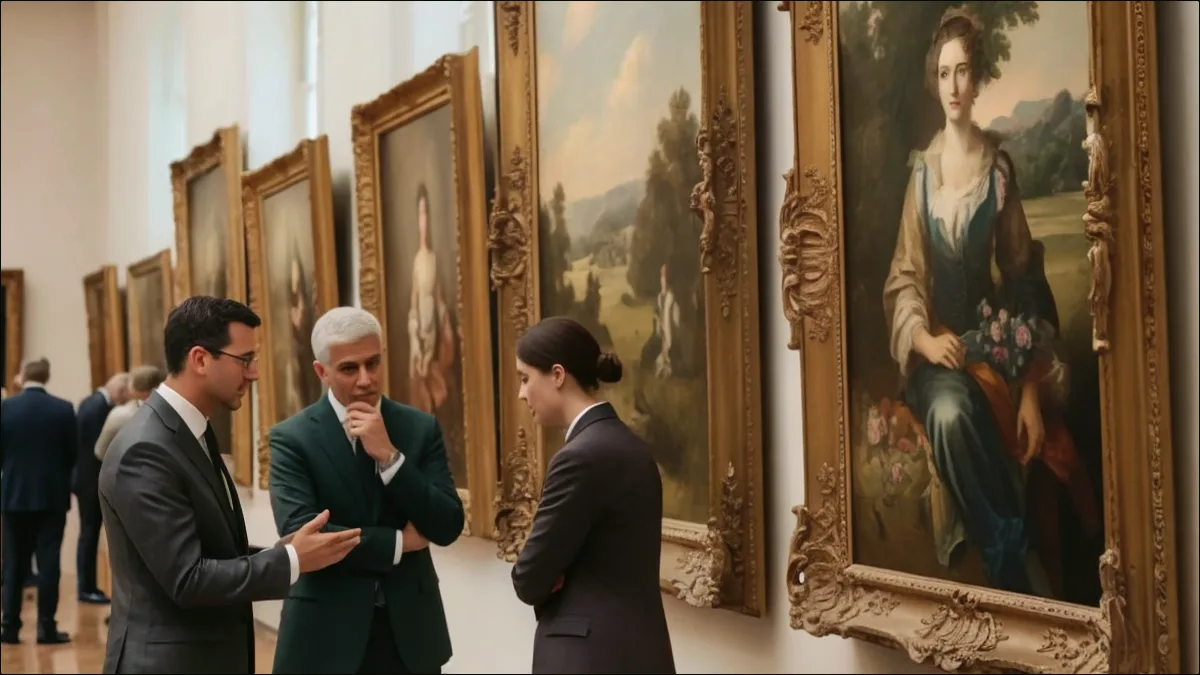 Juried art show with judges reviewing artwork submissions in salon style
A juried art show is a competitive exhibition: artists submit work, a panel selects what hangs. What you take away is rarely the prize money. It is a line on your CV naming a real venue, a real jury, and a date, and that line is what the next reviewer reads when you apply for something bigger.
This guide is about that record: how juried shows are run, how to tell a serious one from a fee mill, and how to get selected often enough that the record actually grows. If you are after the award itself, the money and the recognition that come with winning, art competitions and prizes covers that ground. If you want the mechanics of the call-for-entry format, open calls for artists goes deeper on fees, RFQs, and submission compliance.
Quick Answer
- Juried shows accept submissions from any eligible artist; a jury selects work for exhibition
- Good opportunities for emerging artists to build CV and gain exposure
- Success requires strong work, professional documentation, and strategic selection
- Entry fees are common ($25-50 typical); evaluate value before entering
- Quality over quantity - apply selectively to well-matched shows
How juried shows work
The cycle is the same almost everywhere:
- Call announced: Exhibition opportunity published with theme, requirements, deadline
- Submission period: Artists submit work images and application materials
- Jury review: Panel reviews submissions and selects work for exhibition
- Notification: Artists informed of acceptance or rejection
- Delivery/shipping: Accepted artists send work to venue
- Exhibition: Work displayed; opening reception often held
- Awards: Prizes announced (many shows include cash awards)
- Return: Work shipped back or collected after exhibition closes
Steps 5 through 8 are where the costs live, and they arrive after you have already paid the entry fee. Budget for the whole cycle, not the application.
Juried Show Types
| Show Type | Entry Fee | Prizes | Career Value |
|---|---|---|---|
| National Juried Exhibitions | $25-50 | $500-10,000+ | High - prestigious CV credit |
| Regional Shows | $15-35 | $100-2,500 | Medium - builds local presence |
| Online Juried Exhibitions | $10-30 | $100-1,000 | Low-Medium - digital exposure |
| Museum Annuals/Biennials | Often free | Varies | Very High - institutional recognition |
| Art Center Shows | $20-40 | $250-5,000 | Medium - community engagement |
| Themed Competitions | $25-45 | $500-25,000 | Medium-High - specialized recognition |
What separates one show from another
Most juried shows are defined by what they restrict. Theme-based calls ask submissions to respond to a specific concept, while open-theme calls take any subject or approach. Media-specific shows limit entries to painting, photography, ceramics, or another single discipline. Regional shows draw a geographic boundary; career-stage shows draw a professional one, restricting entry to students, emerging artists, or established practitioners. Annual shows recur on a fixed cycle, and the long-running ones are often the most prestigious.
Who juries
Panels are usually built from curators working at museums or galleries, established artists in the relevant media, and critics or scholars. Collectors sometimes sit on them too. Many shows use two to five jurors rather than one selector, which means your work has to survive a conversation, not just one person's taste.
Look up the jurors before you decide what to submit. Their own work and their previous selections tell you more about what will resonate than the prospectus does.
Finding shows worth entering
Exhibition listings are scattered across databases, institutional calendars, and word of mouth. Artsume's opportunity listings let you filter juried shows by deadline, discipline, and location, and the complete guide to finding art opportunities maps the wider set of sources, including the ones that never get aggregated.
Beyond aggregators, three streams are worth checking directly:
- Institutions: museum and art center calendars, art league and guild announcements, state and regional arts council listings
- Third-party databases: CaFÉ (Call for Entry), Submittable Discover, and EntryThingy
- Other artists: collectives, critique groups, and social media communities circulate calls before they show up anywhere searchable
Open exhibition programs on Artsume
View allCreate your Artsume to keep your work and experience ready for applications.
Judging whether a show is legitimate
A show worth your entry fee has an established venue with a documented exhibition history, named jurors with verifiable credentials, a clear and detailed prospectus, fees proportional to what is on offer, photographs or catalogs from past editions, and explicit terms about how your work will be insured and handled.
The warning signs are just as consistent:
- Unclear or missing information about the venue
- Excessive fees without clear value
- No evidence of past exhibitions
- Vague terms about artwork handling
- Pressure tactics or aggressive marketing
- Claims about massive exposure without evidence
What a fee should cost
| Fee Range | Assessment |
|---|---|
| $0-25 | Reasonable for most shows |
| $25-40 | Acceptable for established venues with prizes |
| $40-60 | Should offer significant value |
| $60+ | Evaluate carefully; usually too high |
Budget entry fees as a career expense, the same way you budget materials. Then be selective about spending them.
Preparing a strong submission
Choosing which work to send
Send your strongest work that genuinely relates to the show's focus, favoring recent pieces that photograph well and represent what you are making now. If the call allows five submissions and you have three strong pieces, send three. Padding the set with weaker work lowers the average a juror sees.
Four habits sink otherwise good applications: submitting too many pieces, forcing work to fit a theme it does not match, showing older work that no longer represents your practice, and letting image quality vary across the set.
Documentation
Your images are how the jury experiences your work, and poor documentation eliminates strong work before anyone considers it. Meet the exact specifications for size, format, and resolution, keep the presentation consistent across every file, and check color accuracy, focus, lighting, and backgrounds before you upload anything.
Choose the best angle for each piece, show scale when it matters, and include detail shots or installation views when the call permits them. Documenting your artwork covers the photography itself, and artist portfolio best practices covers how the set works together.
Written material
Artwork information has to be accurate and consistently formatted: title, date, medium, dimensions, and price where applicable. Where an artist statement is required, keep it relevant to this show and free of jargon. Where a CV is required, send a current one formatted to the standards reviewers expect.
Juries eliminate entries that ignore instructions before they evaluate the work. Meet every stated requirement, respect image limits exactly, use the specified file formats and naming, include everything asked for, and submit ahead of the deadline rather than on it.
Building the record over time
Choosing shows deliberately
Before entering, answer five questions honestly: does your work genuinely fit this show's focus, is the venue reputable, is the fee proportional to the opportunity, would you be glad to have this on your CV in five years, and do you have the time and money to participate if you are selected?
A no on the fourth question is the one artists ignore most often. A CV full of unrecognizable venues does not read as an exhibition record.
Running a pipeline
Look for shows six to twelve months ahead, note the deadlines that recur annually, budget the fees, and balance reach applications against ones you are competitive for now. Ten to fifteen well-chosen applications beat fifty rushed ones, and a mix of local and regional shows across different selectivity levels gives you a better read on where you actually stand.
Then record what happens. Shows entered, fees paid, work submitted, outcomes, and the patterns underneath them. Artsume's application tracker keeps deadlines and results in one place, and managing applications walks through the workflow. Without records you cannot tell which kind of show is worth your money, and after a year of guessing you will still be guessing.
After the notification
If you are selected, respond promptly to confirm, review the framing, shipping, and insurance requirements in full, prepare the work to specification, and deliver by the stated date. Attend the opening if you can, photograph your inclusion, update your CV immediately, and collect the work when the show closes.
Read the presentation and sales terms carefully at this stage. Framing standards are often specified down to the molding, hanging hardware and labeling requirements vary by venue, and sales commissions commonly run 30 to 40 percent. Shipping and framing are real costs: framing artwork and shipping artwork safely cover both, and local shows exist partly because those costs are lower.
If you are not selected, the useful response is short. Do not read it as a verdict on the work, request feedback where it is offered, ask honestly whether the fit was ever there, and enter the next cycle. Jurors change, and so does your work.
What the record is actually worth
Each accepted show adds a line under selected group exhibitions on your CV: venue name, city, year, and the award if you won one. Early on, list them all. As the record grows, start cutting the weakest so the strongest stay visible.
The rest of the value is harder to see on paper. Openings put you in a room with the other exhibiting artists, the venue's staff and curators, and whoever collects from that venue, which is a better use of an evening than most networking is. Many shows sell work, so price appropriately, understand the commission before you agree to it, and be reachable during the run. Awards compound: a jury prize from a recognized institution is evidence the next panel can weigh, and it tends to travel further than the cash did.
That accumulation is the point. Getting into art exhibitions covers the routes beyond juried shows, and best practices for applying to art opportunities covers the application craft that carries across all of them.
Frequently Asked Questions
How do I know if a juried show is worth entering?
Research the venue, look at past shows, check jury credentials, and evaluate fees vs. potential benefit. Good shows have established venues, professional juries, clear terms, and reasonable fees. Avoid excessive fees, vague information, or organizations with no track record.
How many juried shows should I enter?
Quality over quantity. Most artists benefit from 10-20 well-matched submissions per year rather than dozens of rushed applications. Focus on fit and application quality. Track your results to understand your success rate.
What increases my chances of being selected?
Strong work that fits the show's focus, professional documentation (images are critical), clear artist statement, complete application following all instructions, and strategic show selection. The work itself matters most. Invest in documentation quality.
Should I enter shows with entry fees?
Reasonable fees ($25-50) from established organizations are normal. Budget for entry fees as a career expense, but be selective. Evaluate whether the fee is proportional to the opportunity: venue reputation, prizes, exposure. Track spending and results.
How important are juried shows for my career?
They're valuable for building exhibition history, especially early in your career. They provide CV lines, exposure, potential sales, and networking. As your career develops, you may be more selective, but juried shows remain useful at all stages.
What if I keep getting rejected?
Rejection is normal. Even excellent artists face it. Assess your submissions: Is documentation strong? Are you applying to well-matched shows? Request feedback when available. Improve weak areas and keep applying. Many successful artists were rejected repeatedly.
How do I handle shipping and framing costs?
Budget for these as exhibition costs. Read requirements carefully. Some shows have specific framing standards. Ship properly with insurance. Factor these costs when deciding whether to enter. Local shows reduce shipping burden.
The long view
An exhibition record is built one accepted show at a time, and the artists who build one fastest are usually the ones being most selective about where they apply. Research the venue, match the work honestly, document it properly, follow the instructions, and keep a record of what happened.
Do that for two or three years and the CV stops being a list of whatever accepted you. It starts being an argument.