Open Calls for Artists: How to Find and Apply Successfully
Find open calls and apply well. What an open call is, how to spot one worth your fee, what jurors assess, and how to submit without last-minute mistakes.
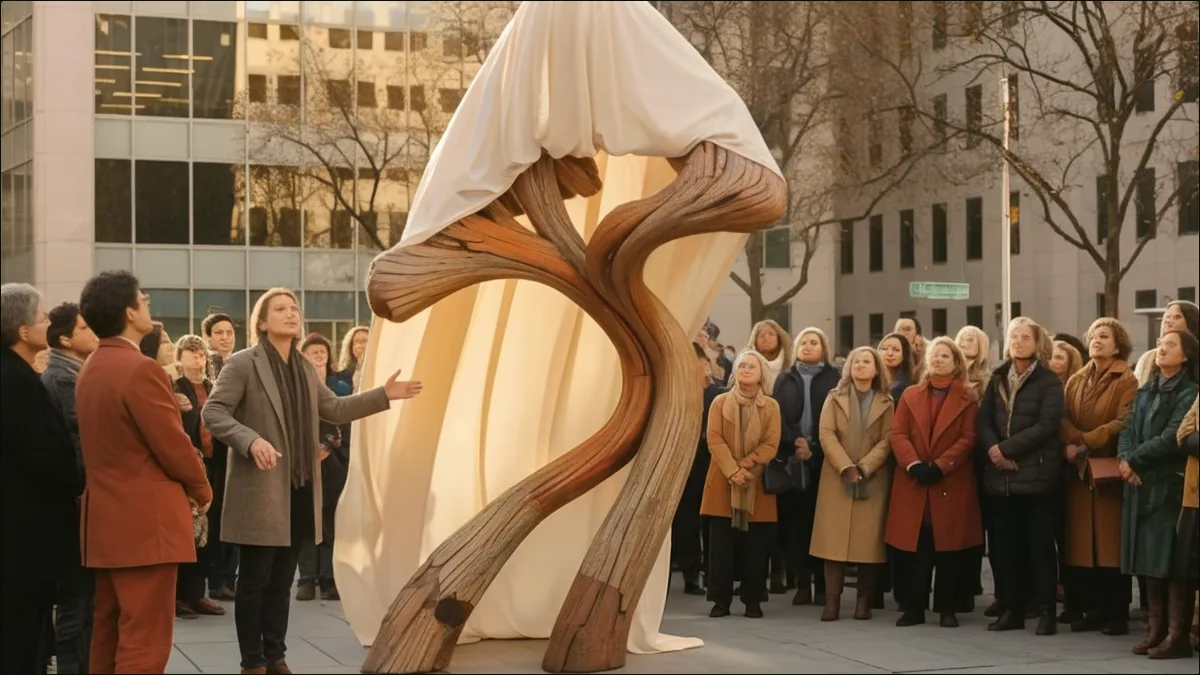 Public art unveiling ceremony for open call commissioned artwork
An open call is a format, not a category of opportunity. Exhibitions, publications, public art commissions, residencies, and grants all get distributed this way: an organization publishes its criteria, anyone eligible submits, and a jury decides. What changes from call to call is the paperwork, the fee, and the rules you have to follow exactly.
This guide is about that format. How a call is structured, what an entry fee is actually paying for, what RFQ and RFP mean when you hit them, and how to submit without being eliminated on a technicality. If your question is where the calls are in the first place, how to find art opportunities is the broader map of sources.
Quick Answer
- Open calls invite submissions from any eligible artist (vs. invitation-only)
- Found on platforms like Artsume, CaFÉ, Submittable, and arts council websites
- Success requires matching your work to the call, strong documentation, and following instructions exactly
- Apply selectively to well-matched opportunities rather than submitting everywhere
What an open call actually is
Open calls, also published as "calls for entry," "calls for artists," or "calls for submissions," are public invitations to submit work or proposals for consideration. The defining feature is that eligibility, rather than an invitation, controls who can apply.
| Aspect | Open Calls | Invitation-Only | Gallery Representation |
|---|---|---|---|
| Who can apply | Any eligible artist | Selected/invited artists | Artists represented by gallery |
| Selection process | Jury reviews all submissions | Curator selects from pool | Gallery decides |
| Accessibility | High | Low | Requires relationship |
| Competition level | High volume of applicants | Curated pool | Varies |
Open Call Types Comparison
| Type | Typical Fee | What You Get | Application Effort |
|---|---|---|---|
| Gallery Exhibitions | $0-50 | Solo/group show, sales opportunity | Medium |
| Art Fairs (Artist Section) | $200-1,000 | Booth space, collector access | High |
| Public Art Projects | Usually free | Commission ($5K-500K) | Very High |
| Residency Programs | $0-100 | Time, space, stipend | High |
| Grant Programs | Usually free | Funding ($1K-100K) | High |
| Online Exhibitions | $0-25 | Digital visibility | Low |
| Publication Features | Usually free | Print/online exposure | Medium |
The type of call sets the shape of the application. Exhibition calls are the most common and usually the cheapest to enter, typically $25 to $50, sometimes with prizes attached; juried art shows are the version of this built around building an exhibition record, and getting into art exhibitions covers the routes that never run as a call at all. Publication calls, covering catalogs, magazines, books, and online features, are often free and less competitive than exhibitions. Residency and grant calls run on annual cycles with detailed written requirements, covered in depth in the residency application guide and the grant application guide. Festival and event calls are time-bound and usually theme-driven. Collection calls, where an institution acquires work outright, are rarer and sometimes paid.
Public art calls are the outlier, and they use their own vocabulary.
RFQ and RFP
Public art and large commissions almost never ask for a finished idea up front. They run in two stages.
A Request for Qualifications asks who you are: portfolio, resume, statement of interest, evidence you can execute at scale. No project-specific design. Panels use RFQs to build a shortlist, and RFQs are the more common entry point for larger commissions because organizations want to assess artists before asking anyone to design anything.
A Request for Proposals asks what you would make: a specific design, materials, budget, and timeline for this site. Because that work is substantial, most programs pay shortlisted artists a stipend to produce it. Public art commissions covers the whole two-stage process, including what a competitive proposal budget looks like.
What happens after you submit
Most calls follow the same six steps: the call is published with guidelines and a deadline, the submission window stays open for roughly four to twelve weeks, a jury or curator reviews everything over the following weeks or months, finalists are chosen, results go out, and the exhibition or project proceeds.
What that compresses is worth knowing. Juries may review hundreds of submissions. An initial screening pass eliminates incomplete or non-compliant applications before anyone looks at the art. Work samples are usually reviewed before written materials, multiple rounds narrow the field, and final selections are typically argued out among jurors rather than scored.
Where open calls are posted
Artsume's opportunity listings aggregate calls across types and let you filter by deadline, location, and career stage, with applications connected to your Artsume. Several other platforms carry large volumes of calls, each with a different center of gravity:
- CaFÉ (Call for Entry): US exhibitions and public art, standardized application format
- Submittable Discover: calls from any organization using Submittable, across visual art, writing, and grants
- Artwork Archive: listings tied to inventory management
- Wooloo: international calls and residencies, European focus
- EntryThingy: exhibition and competition calls
Aggregators never carry everything. Arts councils at the state, provincial, and municipal level post their own calls and tend to be less competitive than national ones. Museums run open submission periods for emerging artist programs, usually annually. Nonprofit art centers host juried shows that are more accessible than commercial galleries, some galleries publish open portfolio review windows, and university galleries run calls that are often restricted to regional artists.
The rest arrives through channels you have to be inside of: organization newsletters and opportunity roundups, artist communities on social media, discipline-specific professional groups, and other artists. Set Google Alerts for phrases like "call for artists [your medium]" and "open call [your city]," turn on notifications where platforms offer them, and block out time on a recurring basis to check the sources that do not push to you.
Open calls on Artsume
View allCreate your Artsume to keep your work and experience ready for applications.
Deciding whether to enter
Not every open call deserves your time, and the fee makes that decision cost real money.
Fit
Does your work connect to the theme or the organization's focus, and would it sit comfortably alongside what they have shown before? Look at past exhibitions and past recipients rather than the mission statement, which rarely predicts anything. Confirm you meet the stated requirements for geography, career stage, and medium before you spend an hour on the application. And ask whether you would be glad to be in this specific show, because applying purely for a CV line produces flat applications that jurors recognize.
Legitimacy
An organization worth entering has a findable history: how long it has existed, what it has programmed, who was selected before, and whether those people are verifiable. The terms should be explicit about what happens to your artwork during and after the show, what rights the organization takes, and what the commission structure is. Fees should be proportional and their purpose should be stated.
Be cautious of excessive fees without clear value, missing organization information, no documentation of past programming, vague terms about rights or shipping, urgency and pressure tactics, unevidenced claims about exposure, and any operation that looks like it earns more from entry fees than from anything else it does.
Cost and timing
Beyond the entry fee, price in shipping if you are selected, travel to the opening, and framing or preparation. Then check whether the effort the application demands is proportional to the benefit, whether you have time before the deadline, and whether you could actually deliver the work and attend the events if you were accepted.
What entry fees pay for
Fees are the part of the open call format artists argue about most, so it helps to know what a legitimate one covers: the administrative cost of managing submissions, jury honoraria and expenses, the submission platform itself, prize funds, exhibition costs including venue, installation, and marketing, and catalog production.
| Fee Range | Assessment |
|---|---|
| $0-25 | Reasonable for most calls |
| $25-50 | Acceptable for juried shows, established organizations |
| $50-100 | Should offer significant value (major prize, catalog, etc.) |
| $100+ | Requires strong justification; research carefully |
Fees stacked on top of each other are the clearest warning sign in the format. An entry fee plus a hanging fee plus a reception fee, or any fee whose purpose is not stated, is a different business model than the one described above. Budget application fees as a career expense, prioritize free calls where they exist, be more selective with paid ones, and track what you spend against what you get so you can calculate your real cost per acceptance.
Preparing the submission
Work samples
Your images are the most important element of any submission, because jurors assess your work through documentation before they read anything.
Follow the file specifications exactly: format, pixel dimensions, resolution, color profile, and naming convention. Open every file after export to confirm it works. Then hold the set to a consistent standard, with proper lighting, clean backgrounds, accurate color, sharp focus, and no watermarks. Choose your strongest work relevant to this call, show range within a coherent body, and think about the images as a sequence rather than a pile. Padding with weak work lowers the average.
Documenting your artwork covers the photography, and artist portfolio best practices covers assembling the set.
Written components
An artist statement for a call should be 150 to 300 words in plain language, explaining what you make and why, and connecting to this specific opportunity where that is relevant. How to write an artist statement has the full method. Project descriptions need accurate titles, dates, media, and dimensions, plus a brief conceptual note where it helps. Application questions should be answered exactly as asked, specifically to this opportunity, inside the word limits.
Where a CV is required, send a current, correctly formatted, error-free one. The Artsume CV builder keeps a single version current so you are not rebuilding it against each deadline.
Meet every stated requirement, respect word and character limits exactly, use the specified file formats and naming, submit ahead of the deadline rather than at it, and include nothing they did not ask for. Juries eliminate non-compliant entries before they see your work.
Working the deadline
Read the guidelines twice, confirm eligibility, and list every requirement before you open the submission form. Prepare and test all files against the stated specifications first, then fill in the application in one pass rather than assembling it live.
On submission, verify each upload completed, proofread the text, check the artwork information against your own records, and save the confirmation number or email. Afterwards, note the expected notification date in your calendar, record the entry, and move on. Nothing about refreshing your inbox changes the outcome.
Tracking submissions
For every submission, record the opportunity and organization, the submission date and deadline, the fee paid, which specific works you sent, the expected notification date, the result, and any feedback you received.
That record answers questions guessing cannot: which opportunity types you succeed at, which work gets selected most often, what your acceptance rate looks like per platform, and whether paid calls are returning anything. Artsume's application tracker holds deadlines, statuses, and outcomes together, and managing applications covers the workflow.
After notification
If you are selected, respond within the stated timeframe, review the contract and logistics in full, and raise any questions before you commit rather than after. Then meet every delivery, installation, and materials deadline, prepare the work to specification, follow the publicity guidelines when you announce it, attend the opening if you can, update your CV, and keep documentation of the whole thing for your records.
If you are not selected, treat it as information rather than judgment. Ask for feedback where it is offered, review honestly whether the fit was there and whether your materials were as strong as they could have been, and enter again next cycle if you are still eligible. Jurors change and your work changes with them. The patterns worth acting on only appear across many rejections, not one.
Common mistakes
The errors that cost artists opportunities cluster into three kinds.
Mechanical: missed deadlines, wrong file formats or sizes, incomplete submissions, ignored word limits, and last-minute uploads that collide with technical problems.
Strategic: submitting everywhere regardless of fit, sending generic applications, chasing only prestigious calls while skipping attainable ones, not tracking results, and quitting after rejection.
Material: poor images, inconsistent presentation across a set, missing or incorrect artwork information, and an outdated CV or statement.
The mechanical ones are the most painful, because they eliminate strong work for reasons that have nothing to do with the work. Best practices for applying to art opportunities covers the application craft in more depth, and applying to programs walks through submitting on Artsume.
Frequently Asked Questions
How do I know if an open call is legitimate?
Research the hosting organization. Look for a track record, past exhibitions, clear contact information, and professional communication. Check if you can find past recipients or documentation of previous programming. Be wary of excessive fees, vague terms, or organizations with no verifiable history.
Should I apply to calls that charge fees?
Reasonable fees ($25-50) from established organizations are normal and often worthwhile. Evaluate whether the fee is proportional to the opportunity. Legitimate organizations use fees to cover real costs, not as profit centers. Track your fee spending and results to assess return on investment.
How many open calls should I apply to?
Quality over quantity. Apply to opportunities where you have genuine fit rather than submitting everywhere. For most artists, 10-20 well-matched applications per year is more effective than 50+ rushed submissions. Track your success rate to calibrate.
What if my work doesn't fit a specific theme?
Don't force fit. Jurors can tell when work is shoehorned into a theme. Wait for calls that genuinely align with your practice, or look for calls without thematic restrictions. Poorly matched applications waste your time and reviewers'.
How important are the written components vs. images?
Images typically carry the most weight. Jurors assess work visually first. However, clear writing helps contextualize your work and demonstrates professionalism. Think of it as: images get you considered, writing supports the consideration.
Should I apply to the same call multiple years?
Yes, if your work fits and you're eligible. Many artists are selected after multiple attempts. Jurors change, your work evolves, and persistence demonstrates commitment. Use feedback from previous submissions to strengthen future applications.
How do I handle multiple acceptances with conflicting dates?
Review commitments carefully before accepting. If conflicts arise, communicate promptly and professionally with all parties. It's better to decline respectfully than to overcommit and underdeliver. Build a reputation for reliability.
What's the difference between RFQ and RFP for public art calls?
RFQ (Request for Qualifications) asks for your portfolio and experience; if shortlisted, you develop a proposal. RFP (Request for Proposals) asks for a specific design proposal upfront. RFQs are more common for larger commissions. Organizations want to assess artists before requesting detailed design work.
Getting good at the format
Every open call runs on the same machinery, which means the work you do once compounds. A current CV, a documented body of work, a statement you can adapt, and a record of what you have already entered turn each new call from a project into a task.
Start by creating your Artsume so your work and career experience stay together. Then browse current calls and find the ones your practice actually fits.
If you run a call, you can publish the program on Artsume for free. Artists can review the same public details before they decide to apply.