How to Apply to Art Opportunities: Best Practices
Apply to grants, residencies, and exhibitions with a real strategy. How to build a pipeline, balance reach against fit, and raise your acceptance rate.
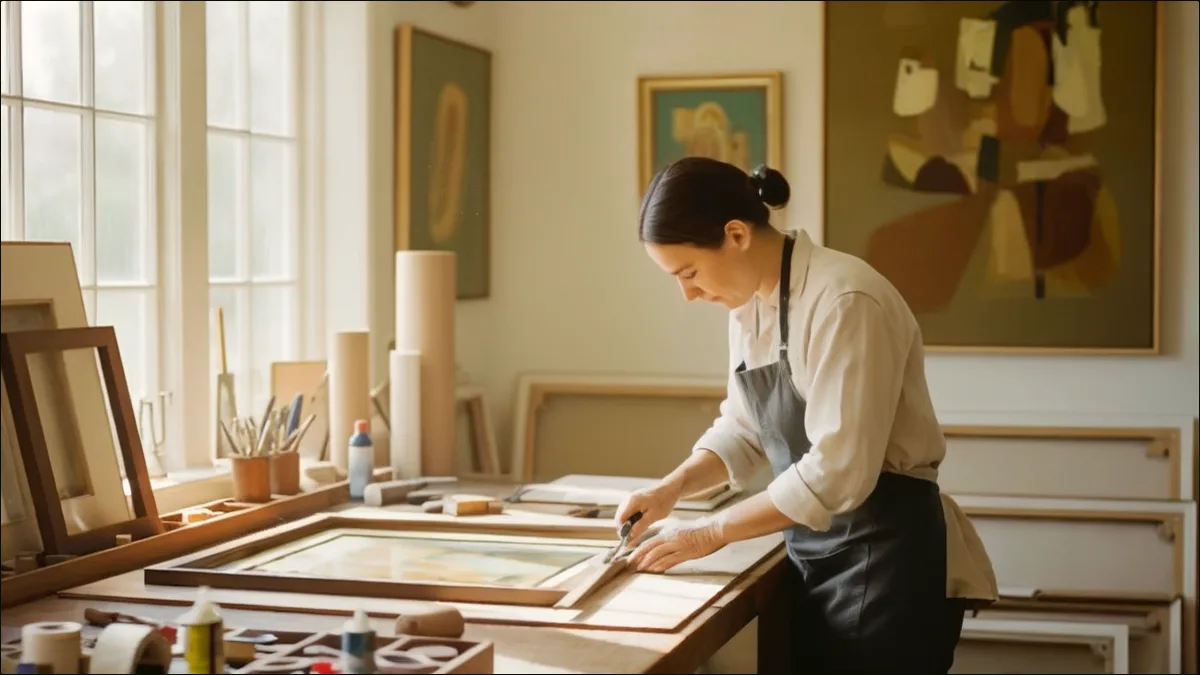 Artist carefully framing artwork for grant and exhibition applications
Applying to art opportunities (grants, residencies, exhibitions, open calls) is a numbers game with skill modifiers. The more you apply, the better your chances. But how you apply matters even more.
What follows is how to pick the right opportunities, write the application, and read your rejections for what they tell you. If you are still at the stage of finding things worth applying to, start with how to find art opportunities and come back once you have a shortlist.
Quick Answer
- Apply to opportunities that genuinely fit your work - fit matters more than prestige
- Invest time in fewer, stronger applications rather than many rushed ones
- Your work samples carry the most weight - make them excellent
- Follow instructions exactly; don't give reviewers reasons to eliminate you
- Track everything and improve your approach over time
Two of those deserve emphasis before you read any further. Ten tailored applications beat fifty generic ones, and the single biggest return you can get comes from professional documentation of your work, because reviewers judge artistic merit through the images long before they read a word you wrote.
Application Success Factors
| Factor | Impact | Time to Improve |
|---|---|---|
| Work Sample Quality | Very High (50%+) | Weeks-months |
| Professional Documentation | High | Days with practice |
| Proposal Clarity | High | Hours per application |
| Following Instructions | Very High | Minutes of reading |
| Fit with Opportunity | Very High | Research upfront |
| CV Completeness | Medium | Ongoing maintenance |
The Application Mindset
Think Like a Reviewer
Understanding how applications are evaluated helps you write better ones.
A reviewer may have 50 to 200-plus applications in front of them, and they are looking for reasons to advance an application as well as reasons to set one aside. Strong opening paragraphs and work samples earn attention in the first thirty seconds; if a reviewer is uncertain after that first look, they often will not look deeper. Your job is to make saying yes easy.
Fit is the first filter, before quality even enters the picture. Mismatched applications get eliminated early no matter how good the work is. An excellent landscape painter applying to a social practice residency wastes everyone's time. Past that filter, quality does stand out. In a stack of adequate applications, excellence is obvious, and reviewers know strong work when they see it.
One thing artists rarely account for: reviewers read applications against each other, in a single sitting. Yours is not competing with an abstract standard. It is competing with everything else that crossed the desk that afternoon.
Accept the Numbers
Even excellent applications face stiff competition:
- Top grants: 3-10% acceptance rate
- Competitive residencies: 5-15% acceptance rate
- Juried exhibitions: 10-30% acceptance rate
- Open calls: Varies widely (some very competitive, some easier)
This means rejection is the norm, not the exception. Your job is to:
- Apply to opportunities where you have genuine fit
- Make your applications as strong as possible
- Apply to enough opportunities that statistics work in your favor
- Learn from results and improve over time
Successful artists aren't those who never get rejected. They're those who keep applying despite rejection.
Develop a Long-Term View
A working application practice takes a few years to build. The first year goes to learning the field, assembling materials, and finding out what your applications look like to someone else. By the second and third you are refining the approach, accumulating a track record, and starting to see which types of programs respond to your work. After that it is maintenance and incremental improvement. Don't expect immediate results; the compounding is real but slow.
Choosing the Right Opportunities
Evaluate Fit Honestly
Before applying, ask:
Does my work align with their mission?
- Read their about page, past recipients, stated priorities
- Look at who they've funded before - is your work in that conversation?
- Consider the organization's values and focus areas
- Ask: Would my work make sense in their program?
Am I eligible?
- Geography, career stage, discipline requirements
- Citizenship or residency requirements
- Age or experience level restrictions
- Don't waste time on opportunities where you don't qualify
Is this the right time? You need work that is ready to show, the capacity to deliver what you are proposing if it gets funded, and enough room in your year to finish it. A residency you cannot attend and a project you cannot staff are both worse outcomes than a rejection. Career stage matters here too, since programs aimed at emerging artists will read a mid-career application as a poor fit, and the reverse is just as true.
Would you be excited to receive this? Applications pursued for the CV line come out flat, and reviewers can tell. Genuine interest shows up in the writing without you having to perform it.
Research Thoroughly
Read everything before you write anything: guidelines, FAQs, past recipient lists, the funder's mission, annual reports where they exist. Look hard at who has been funded before and ask whether your work belongs in that conversation. Many programs run info sessions, and attending both tells you what they care about and puts you on their radar. If you know an artist who has received the award, ask what made their application work and what they wish they had known. Checking what the organization posts publicly tells you the register they write in.
Two field-wide resources are worth knowing about while you research. Candid and Grantspace publish material on what makes funding applications successful, and the Alliance of Artists Communities publishes research on how residencies run their selection processes.
Research saves you from wasting time on poor fits and helps you tailor applications to strong fits.
Build Your Application Pipeline
You need one place that answers "what have I got open right now, and what is due next." A spreadsheet works if you keep it honest. The columns that earn their space are the organization and opportunity name, the deadline with its timezone, a fit rating from 1 to 5, current status, the specific requirements, the result and any feedback that came with it, and whether you are allowed to reapply.
The alternative to maintaining that by hand is Artsume's application tracker, which keeps deadlines, statuses, and submitted materials attached to each opportunity so you are not reconciling a spreadsheet against your sent folder in the week before a deadline. Either way, the discipline matters more than the tool. Managing applications in the docs walks through the statuses and what each one means.
Work the pipeline on two clocks. Quarterly, look 3-6 months ahead, rank by fit and effort, and block out preparation time before the calendar fills. Annually, check your success rate by opportunity type and let the pattern change your strategy. If two years of juried shows have produced nothing and two residency applications landed, that is information.
Balance Risk and Realism
Your pipeline should include:
Aspirational opportunities (30%): Competitive programs where you have genuine fit but face long odds. These build ambition and occasionally succeed.
Solid opportunities (50%): Programs well-matched to your career stage and work. These should be your core focus.
Attainable opportunities (20%): Less competitive programs where you're highly likely to succeed. These build track record and confidence.
Adjust ratios based on your career stage. Emerging artists might weight more toward attainable; established artists might reach more.
Crafting Strong Applications
Work Samples: The Foundation
Your work samples often determine success or failure. Reviewers assess artistic merit primarily through the work itself.
Quality requirements:
- Professional documentation (proper lighting, clean backgrounds, accurate colors)
- Consistent presentation across all images
- High-resolution files meeting exact specifications
- Proper annotations (title, date, medium, dimensions)
- No watermarks or unnecessary overlays
Selection strategy:
- Lead with your strongest work, whatever year it is from
- Select work relevant to what you're proposing
- Show range within coherence - variety that still feels like one artist
- 10 excellent images beat 20 mediocre ones
- Consider how images work as a sequence
Then there is the unglamorous part: file format, exact dimensions, color profile, naming convention. Follow every specification to the character, and open each file one last time before you submit it, because a corrupted upload reads to a reviewer exactly like carelessness. Our portfolio best practices guide covers curation in depth, and preparing a portfolio for grants and residencies covers what review panels specifically ask for.
Written Materials: Clarity Wins
Artist Statement:
- Clear, jargon-free language
- Explains what you make and why
- Connects to the specific opportunity when relevant
- Appropriate length (usually 150-300 words)
- First person, present tense typically
For help, see our artist statement guide. Several programs ask for a short third-person biography alongside the statement, which is a different document with different rules; how to write an artist bio covers that one.
Project Proposals:
- Specific and concrete (what exactly will you do?)
- Realistic scope for time and budget
- Clear outcomes (what will exist when done?)
- Connection to the funder's priorities
- Timeline that makes sense
- Budget that adds up
- Answers the "why here, why now" question
For grant-specific advice, see our grant application tips.
Application Questions:
- Answer what's actually asked (re-read the question)
- Be specific to this opportunity (not generic)
- Show you've done your research
- Keep within word limits (exactly)
- Use the space available - very short answers suggest low effort
- Proofread carefully
CV/Resume: Current and Formatted
Your artist CV should be:
- Up to date (add each entry the week it happens)
- Properly formatted to CAA standards
- Tailored to relevant experience when appropriate
- Error-free (dates, spellings, formatting)
- Appropriate length for your career stage
Many artists maintain their CV in Artsume's CV builder, which handles the formatting and exports on demand. Update once, always ready.
Letters of Recommendation
Pick recommenders who know your work well, whose opinion carries weight in the field, and who will write about you with actual enthusiasm rather than politeness. A lukewarm letter from a famous name loses to a specific one from a curator who has spent an afternoon in your studio. Where you have the choice, get perspectives that do not all look the same. A critic, a curator, and a fellow artist say different things about you.
Then make it easy for them. Ask three to four weeks out at minimum. Send the deadline, the submission method, and the program's guidelines in one message. Attach your application materials so they can reference specifics instead of generalities. Send a reminder as the date approaches, and thank them however it turns out.
Supporting Materials
What else you attach depends on the opportunity. A budget should be realistic, detailed, and add up, because reviewers do check the arithmetic, and a budget that balances signals that you have thought the project through. A work plan needs specific milestones and a duration that accounts for the rest of your life. Beyond that, press, reviews, and video are there to demonstrate the practice around the work, so include what is genuinely strong and leave out the rest.
The Application Process
Start Early
Timeline for a major application:
| Weeks Before | Activity |
|---|---|
| 8+ weeks | Research opportunity, confirm fit |
| 6 weeks | Gather requirements, identify gaps, request recommendations |
| 4 weeks | Draft all written components |
| 3 weeks | First revision, prepare work samples |
| 2 weeks | Get feedback, revise, finalize work samples |
| 1 week | Final review, technical preparation |
| 2-3 days | Submit (never at the last minute) |
Starting early allows for:
- Thoughtful writing with time for revision
- Feedback from trusted colleagues
- Technical troubleshooting without panic
- A final review with fresh eyes
- Buffer for unexpected issues
Follow Instructions Exactly
This sounds obvious but accounts for many eliminated applications:
File specifications: Exact format, size, dimensions, naming conventions. If they say 1920px on longest edge, don't submit 1919px or 1921px.
Word/character limits: Don't exceed them. Many systems truncate automatically. Going over signals you don't follow directions.
Required components: Include everything requested. Missing pieces often mean automatic disqualification.
Submission method: Follow their process exactly. If they want a PDF, don't send a Word doc. If they want files uploaded, don't email instead.
Reviewers don't give points for creativity in ignoring guidelines. They often see it as disrespectful.
Get Feedback Before Submitting
Have someone review your application:
What to ask for:
- Is the writing clear to someone who doesn't know my work?
- Does the proposal make sense?
- Are there any errors or typos?
- What questions does this leave unanswered?
- Does this present me professionally?
Who to ask:
- Fellow artists who've received grants
- Trusted mentors or advisors
- Writing-strong friends (even non-artists)
- Previous grant recipients if you know any
Take the notes without arguing, sit with them for a day, and then decide. You do not have to accept every suggestion, since it is your application, but when two readers stumble in the same paragraph, the paragraph is the problem. Weight clarity above everything else.
Submit Before the Deadline
Never submit at the last minute:
- Technical problems happen (servers crash, files corrupt, internet fails)
- Portals crash near deadlines (everyone else is last-minute too)
- You can't fix mistakes after submission
- Rush leads to errors
- Late submissions are usually rejected outright
Aim to submit 2-3 days early. If something goes wrong, you have time to resolve it. Early submission also lets you move on mentally.
After Submitting
Track Your Applications
Record what you submitted and when, which version of your materials went out, what the opportunity asked for, the result whenever it lands, any feedback that came with it, and your own notes on how the process went. This is the data that makes next year's applications better, and it is also what stops you rewriting a proposal you already wrote. If you are applying through Artsume, the tracker keeps the submitted version attached to the record; the applying-to-programs walkthrough covers what gets saved at each step.
If Accepted
Congratulations! Now:
- Respond promptly (don't leave them waiting)
- Review all requirements and contracts carefully
- Note reporting deadlines
- Document your project thoroughly
- Fulfill all obligations
- Thank the funder appropriately
- Update your CV immediately
- Share appropriately (follow their guidelines on publicity)
Your behavior after acceptance affects future opportunities. Be professional and reliable.
If Rejected
Rejection is normal. Use it productively:
- Don't take it personally: Competition is fierce; rejection isn't about your worth as an artist or person
- Request feedback: Some programs offer it if asked. This information is valuable.
- Analyze honestly: What could be stronger? Work samples? Writing? Fit?
- Improve weak areas: Better documentation, clearer writing, more realistic proposals
- Apply again: If eligible, try next cycle with a stronger application
- Apply elsewhere: More applications mean more chances
Learn From Patterns
Over time, look for patterns:
- Which types of opportunities yield better results?
- What feedback recurs across rejections?
- What do your successful applications have in common?
- What distinguishes accepted from rejected applications?
Use this information to refine your strategy.
Common Mistakes to Avoid
Application Errors
- Missing deadlines: Set reminders 2+ weeks ahead, then 1 week, then 2 days
- Incomplete applications: Check every required field before submitting
- Wrong specifications: Follow file requirements exactly
- Typos and errors: Proofread carefully; have others review
- Last-minute submissions: Technical problems happen
Strategic Mistakes
- Applying everywhere: Poor fit wastes time; prioritize alignment
- Generic applications: Tailor to each opportunity
- Quantity over quality: Better to apply well to fewer opportunities
- Ignoring feedback: Learn from rejections
- Giving up too soon: Persistence matters; keep applying
- Only applying to reaches: Include attainable opportunities too
Presentation Problems
Bad documentation sinks good work more often than anything else on this page. After that it is unclear writing, since jargon and vagueness lose a reader who has ninety more applications to get through. Then come proposals whose scope does not match the time or money available. Materials that have gone stale hurt in a quieter way: a CV missing the last two years reads as an artist who stopped working. And work samples that do not hang together as a group leave a reviewer unsure what they are looking at.
Relationship Mistakes
The art world is small enough that everyone eventually meets again. Be professional with people who reject you, thank the people who recommended you whether or not it worked, keep complaints about a program off social media, and if you are accepted, deliver everything you agreed to. None of this is about being nice. It is about the fact that the juror who passed on you this year is on a different panel next year.
Building Application-Ready Materials
The best applications come from ongoing professional practice rather than a two-week sprint. Six things are worth keeping permanently current.
Your CV should be updated the week something happens, not the week before a deadline; Artsume's CV builder keeps it formatted as you add entries. Your portfolio needs every significant piece documented properly; see our portfolio guide. Your artist statement should be revised as the practice moves, and it helps to keep it at two or three lengths so you are not cutting 400 words down to 150 at midnight.
Beyond those, hold onto project documentation. The photos, budgets, and reports from finished work are the raw material for the next proposal. Keep your references warm and their contact details current. And maintain a file of boilerplate: bio, recurring project descriptions, the standard paragraph about your practice, all ready to adapt rather than rewrite.
When opportunities arise, you're ready, not scrambling.
Frequently Asked Questions
How many opportunities should I apply to?
Quality over quantity, but don't put all eggs in one basket. For most artists, 10-20 well-matched applications per year is reasonable. Focus on fit and application quality rather than volume. Track results to understand your success rate and adjust accordingly.
What's the most important part of an application?
Work samples typically carry the most weight. Reviewers assess artistic merit primarily through the work itself. However, clear writing and realistic proposals matter for getting past initial review. Think of it as: samples get you considered, writing gets you funded.
How do I know if an opportunity is right for me?
Research the opportunity thoroughly: read their mission, look at past recipients, attend info sessions if offered. Ask: Does my work fit their stated priorities? Am I eligible? Would I be genuinely excited to receive this? If you're forcing the fit, it's probably not right.
Should I apply to reach opportunities or focus on realistic ones?
Both. Include some aspirational opportunities where you have genuine fit, but don't only apply to long shots. Build your track record with mid-tier opportunities while occasionally reaching for more competitive ones. Success builds on success.
How do I improve my success rate?
Invest in work sample quality, apply only to well-matched opportunities, start applications early enough for revision, get feedback before submitting, and learn from rejections. Track your results over time to identify what works for you.
What if I keep getting rejected?
Rejection is normal. Even excellent artists face it regularly. Request feedback when available, honestly assess your applications, improve weak areas (especially work samples and writing clarity), and keep applying. Many successful artists were rejected repeatedly before receiving awards.
How far in advance should I start preparing?
For major applications, start 6-8 weeks before the deadline. This allows time for drafting, revision, feedback, and technical preparation without rushing. For ongoing readiness, maintain your CV and portfolio year-round so you're always prepared.
Can I apply to the same opportunity multiple times?
Usually yes, unless guidelines say otherwise. Many artists receive grants or residencies after multiple applications. Use feedback and experience to strengthen each subsequent application. Some funders appreciate seeing artists' development over time.
Do I need professional help with my applications?
Most artists write their own applications successfully. Peer feedback is valuable and free. Some artists hire grant writers for major applications, but it's not necessary. Focus on clarity, specificity, and genuine fit rather than polished language.
How important are letters of recommendation?
When required, they matter. Choose recommenders who know your work well and will write enthusiastically. Give them plenty of notice and helpful materials. A lukewarm recommendation can hurt more than help.
Conclusion
There's no shortcut, but there is a system. Apply where you have genuine fit. Invest in strong work samples and clear writing. Follow the instructions to the letter so nobody has an easy reason to eliminate you. Track what happens and let the results change what you do next. Then keep going, because the persistence is doing more work than anything else on the list.
The artists who succeed aren't necessarily more talented. They are usually the ones still applying in year four.
Start building your application foundation today. Create your free Artsume profile to maintain your CV and portfolio, then browse current opportunities to find your next application. Once you have found one worth going after, how to apply for artist residencies and art competitions and prizes cover what changes by opportunity type.
Related Guides:
Track your applications
Find grants, residencies, and open calls, and track every application in one place.