Public Art Commissions: How Artists Get Projects
Win public art commissions. How percent-for-art programs, corporate commissions, RFQs, and RFPs work, and how to assemble a qualifications package.
 Large-scale public art sculpture being installed with crane
Public art commissions run on a different set of rules than the rest of an art career. You are hired before the work exists, you are paid to solve a site rather than to show what you already made, and the people evaluating you include engineers and city officials alongside curators. The money is substantial and so is the timeline: a commission can take longer to complete than an MFA.
This guide covers how those projects are funded, how the two-stage selection process works, and what a competitive proposal actually contains.
What public art commissions are
Public art commissions are opportunities to create artworks designed for public spaces: parks, plazas, government buildings, transit stations, hospitals, universities, and urban streetscapes. Unlike gallery exhibitions where existing work is displayed, commissions involve creating new, often site-specific pieces that become permanent or semi-permanent fixtures in the community.
Commissions range from $10,000 for smaller municipal projects to several million dollars for major civic installations. Beyond the fee, the work is seen by thousands of people a day for years, which is a different kind of exposure than an exhibition offers and a different kind of obligation.
Types of commission
Public Art Commission Types
| Type | Budget Range | Timeline | Selection Process |
|---|---|---|---|
| Percent-for-Art | $50K-$500K+ | 1-3 years | RFQ then RFP |
| Municipal | $10K-$200K | 6-18 months | Open call or RFQ |
| Corporate | $25K-$1M+ | 3-12 months | Art consultant |
| Community | $5K-$50K | 3-6 months | Direct selection |
| Temporary/Festival | $2K-$25K | 1-3 months | Open call |
Percent-for-art programs
Many cities and states have percent-for-art ordinances requiring that a percentage, typically 1 to 2 percent, of public construction budgets be allocated to art. This creates steady funding streams for public art programs. Cities like Seattle, San Francisco, Philadelphia, and Denver have well-funded percent-for-art programs commissioning dozens of projects annually.
These programs typically maintain pre-qualified artist registries and issue open calls for specific projects. Getting into a registry often requires demonstrating experience with durable materials, fabrication oversight, and previous public project completion, which is the chicken-and-egg problem this whole field runs on.
Municipal and county commissions
Local government art agencies commission work for civic spaces: city halls, libraries, fire stations, community centers, and public parks. These opportunities often prioritize local or regional artists and may have lower experience thresholds than state-level programs, which makes them the realistic first entry point for most artists.
They also frequently seek artists who can work with community input processes and create work reflecting local history, culture, or values. Community engagement skills differentiate proposals when the technical qualifications are similar.
Transportation art programs
Transit agencies like the Metropolitan Transportation Authority in New York, BART in San Francisco, and Metro in Los Angeles have dedicated art programs integrating artwork into stations, vehicles, and infrastructure, ranging from permanent installations to temporary projects.
Transportation art requires understanding durability requirements, accessibility compliance, and maintenance considerations specific to transit environments. Projects often run 3 to 7 years from selection to completion, and result in some of the highest-visibility placements available.
Healthcare and institutional art
Hospitals, universities, and corporate campuses increasingly commission art to improve environments and reflect organizational values. Healthcare facilities focus on work promoting healing, calm, and wayfinding; universities seek pieces celebrating academic missions or commemorating donors.
These commissions may be managed by in-house art consultants, facilities departments, or external art advisors, which means the relationships that lead to them are with administrators rather than curators.
Developer-driven requirements
Private developments in many cities must include public art as a condition of approval. Developers may commission work directly or pay into municipal art funds. Working with developers means faster timelines than public agency commissions, and potentially more aesthetic constraints.
Private development projects sometimes prefer established artists for risk mitigation, but emerging artists can access opportunities through developer partnerships with local art organizations or requirements for community-based artists.
Temporary and placemaking projects
Not all public art is permanent. Cities increasingly commission temporary installations for events, placemaking initiatives, or pilot programs testing community response. These projects have lower barriers to entry and no extensive material durability requirements, which makes them the most common stepping stone into permanent commission work.
How selection works
Public art almost never asks for a finished idea up front. Nearly every serious program runs in two stages, and understanding the difference tells you what to prepare.
Request for Qualifications
Most programs begin with an RFQ, a call for artists to submit portfolios, resumes, and statements of interest. Panels review qualifications to create shortlists of semi-finalists. RFQs evaluate your body of work, relevant experience, and artistic vision rather than project-specific proposals.
Strong RFQ responses demonstrate:
- Experience with durable, outdoor-appropriate materials
- Past public or large-scale project completion
- Understanding of fabrication and installation processes
- Ability to work within budgets and timelines
- Evidence of community engagement capabilities
Because the RFQ stage is entirely portfolio and CV, the materials matter more here than at any other point. Portfolios built for grants and applications follow the same logic, and an arts and cultural CV covers the project management and community work an artist CV usually leaves out.
Request for Proposals
Shortlisted artists receive project briefs and develop specific proposals: conceptual designs, material specifications, budgets, and timelines. That is substantial unpaid work, so most programs provide stipends of $500 to $3,000 for proposal development.
Successful proposals balance artistic vision with practical feasibility. Panels evaluate conceptual strength and site appropriateness, technical viability and material choices, realistic budgets covering fabrication, installation, and contingency, maintenance plans and durability projections, and community relevance. Open calls for artists covers how RFQ and RFP language shows up across other opportunity types too.
Panels and interviews
Selection panels typically include arts professionals, community representatives, project stakeholders, and design professionals. You may present in person or by video, followed by questions.
What the interview is really assessing is whether you can be worked with. Commissioners need confidence that you can handle the relationships a public art project requires, with fabricators, engineers, city officials, and community members, over a period of years. Communication and responsiveness to feedback are being evaluated as much as the concept is.
Building a portfolio that qualifies
Commissioners want evidence you can execute at public scale and public durability. Most artists do not have that evidence yet, and the way to build it is deliberately.
Start with temporary installation opportunities, street art festivals, and placemaking projects, which demonstrate public engagement capacity without permanent material requirements. Document everything: the installation process, community interaction, and any media coverage. Any work you have installed outdoors counts, even temporary pieces in your own backyard, as long as you can show it in environmental context with material choices appropriate to outdoor exposure. Documenting your artwork covers how to shoot work in situ so it reads as a project rather than a snapshot.
Two other things matter as much as the documentation. First, fabrication relationships: public art regularly requires steel fabrication, bronze casting, glass engineering, or lighting integration, and knowing fabricators who work with artists, plus knowing what their processes cost, strengthens every proposal you write. Second, scale translation: if your current practice is gallery-scale, produce detailed renderings showing how the concepts read at architectural scale and at real viewing distances.
Some residencies focus specifically on public art development. Programs like CityArtist in Seattle or Creative Time in New York provide support for developing public-facing projects and references that carry weight on later applications; the residency application guide covers how to approach them.
Writing a proposal that wins
Research the site before you design anything
Visit the site if you can. Study the architecture, pedestrian flow, sight lines, lighting conditions, and surrounding context, and understand the community it serves. Then address the stated project goals directly, whether that is commemorating history, activating underused space, reflecting community identity, or improving wayfinding. Proposals that could be installed anywhere rarely win, and panels can identify one immediately.
Show the route from concept to completion, not just the endpoint: development sketches, material samples or specifications, the fabrication approach and timeline, installation methodology, and maintenance recommendations.
Budget realistically
Unrealistic budgets sink otherwise strong proposals more reliably than weak concepts do. A public art budget includes:
- Artist fees (typically 15-25% of total budget)
- Design development costs
- Engineering and structural calculations
- Fabrication costs (materials and labor)
- Transportation and installation
- Site preparation
- Lighting if required
- Project management
- Contingency (typically 10-15%)
Research actual fabrication costs for your materials and build a line-item budget. Financial literacy on paper is one of the few things a panel can verify before hiring you.
Address durability and maintenance
Public art has to survive weather, vandalism, and years of exposure. Specify how the materials will weather, what maintenance the work requires, and what its expected lifespan is. Work requiring extensive upkeep creates an ongoing burden for the commissioning agency, and agencies know it, so easy-to-maintain work is both more likely to be selected and more likely to still be there in a decade.
Where community input is part of the project, describe your experience facilitating conversations, incorporating feedback, or making participatory work. Even where the specific project does not require it, that capacity strengthens your candidacy.
Finding opportunities
Public Art Archive and CODAworx document existing public art and list opportunities, and studying completed projects tells you what programs actually commission. CallforEntry.org lists public art calls alongside exhibitions, and alerts for "public art" and "commission" categories are worth setting up. The Public Art Network at Americans for the Arts runs research, an annual conference, and listservs that connect artists with the administrators who write the calls.
Go directly to the agencies too. Most municipal arts agencies maintain opportunity listings, artist registries, and documentation of their commissioning process, including Seattle Office of Arts & Culture, San Francisco Arts Commission, Philadelphia Office of Arts, Culture and the Creative Economy, Los Angeles Department of Cultural Affairs, and Denver Arts & Venues. State-level percent-for-art programs commission work for state buildings, universities, and infrastructure, usually with larger budgets and more competition than local programs.
Artsume curates public art opportunities alongside other calls, and because RFQs come around on unpredictable cycles, the application tracker is where the deadlines and registry renewals stay visible. How to find art opportunities maps the wider set of sources, and funding for art projects covers the grants that can underwrite proposal development.
Delivering the project
Winning the commission is the start of a multi-year professional relationship, and reputation in this field travels fast in both directions.
Public art involves arts administrators, architects, engineers, fabricators, city officials, and community members, so keep communication clear and document decisions in writing. Choose collaborators carefully, because their performance reflects on you: get references, review past projects, and make sure contracts define responsibilities explicitly. Artist contracts covers the terms worth arguing over before you sign rather than after.
Projects change during development. Site conditions shift, budgets move, stakeholder priorities evolve. Handle scope changes formally by documenting requests, assessing the impact on budget and timeline, and getting written approval before proceeding. Verbal agreements on a three-year project are not agreements.
Document as you go, for four separate reasons: professional photography becomes portfolio material, process documentation supports future proposals, financial records protect you in disputes, and completion reports satisfy contract requirements. Budget for that photography, and make sure your contract grants you rights to use the imagery for your own promotion.
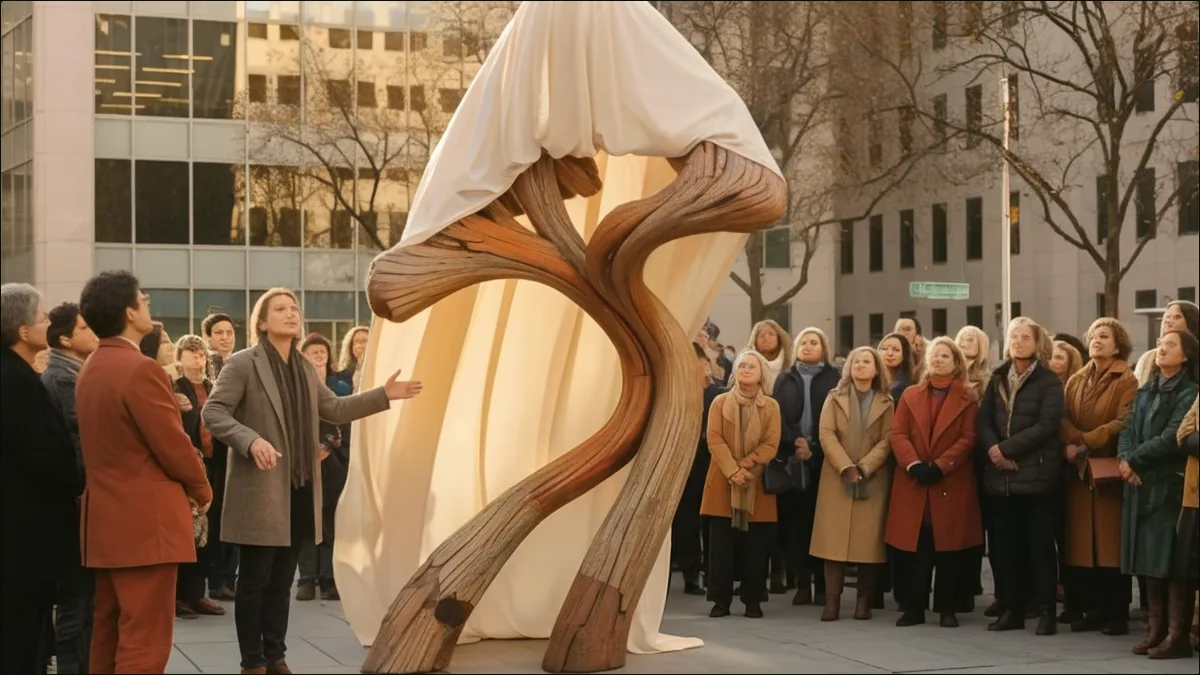
Commission contracts typically require your participation in dedication events. Beyond the obligation, dedications put you in a room with commissioners, community members, and press, which is the shortest path to the next project.
Public art commissions require balancing artistic vision with public accountability. Success comes from treating each project as both creative opportunity and professional service, delivering work that serves community needs while advancing your artistic practice.
Where proposals go wrong
The failures repeat. Timelines get underestimated, because permitting, fabrication, and installation delays are routine rather than exceptional; build contingency in and communicate early when dates slip. Budgets get guessed rather than researched, which is the single most common weakness panels cite. Proposals ignore context, arriving as work that could be installed in any city. And concepts get overcomplicated, which reads to a panel as execution risk. Clear, achievable proposals beat ambitious ones that look difficult to realize, and you can always propose more complex work once you have a track record backing it.
Frequently Asked Questions
Do I need a studio to do public art?
You don't need a traditional studio. Most public art is fabricated by professional fabricators, not in the artist's studio. You need space for design development, model-making, and sample preparation, but the actual fabrication happens elsewhere. Many successful public artists work from home studios or shared spaces.
How much do public art commissions pay?
Commissions range widely, from $10,000 for small municipal projects to several million for major civic installations. Artist fees typically represent 15-25% of total project budgets, with the remainder covering fabrication, installation, and other costs. Mid-career artists commonly receive $20,000-$100,000 in fees for substantial projects.
Can emerging artists get public art commissions?
Yes, though you'll likely start with smaller projects. Target temporary installations, percent-for-art programs in smaller cities, and calls specifically encouraging emerging artists. Build experience incrementally. Each completed project strengthens your qualifications for larger opportunities.
How long do public art projects take?
Typical timelines range from 1-3 years for smaller projects to 5-7 years for major transportation or civic projects. The selection process itself often takes 6-12 months. Understanding these timelines helps you plan your practice and manage financial expectations.
What if my work is small-scale? Can I still pursue commissions?
Many artists successfully translate small-scale practice to public contexts through repetition, aggregation, or collaboration. A jewelry-scale metalworker might create large-scale installations from repeated elements. A fiber artist might work with fabricators to realize textile concepts in durable materials. Show commissioners how your aesthetic translates to architectural scale.
Getting started
Public art rewards preparation and patience more than it rewards ambition. The artists who succeed treat commission pursuit as an ongoing practice rather than a series of applications, continuously building the portfolio, the fabrication relationships, and the proposal skills.
Audit what you already have for public-scale and outdoor documentation. Research the percent-for-art programs in your region and join the registries your practice fits, because registry membership is what gets you the call in the first place. Start developing relationships with fabricators before you need them. If commissions from private clients also interest you, commission work for artists covers how that market works differently, and if you are early enough in your career that RFQs feel out of reach, opportunities for emerging artists covers what builds toward them.
Then create your Artsume profile so the portfolio, CV, and project history an RFQ asks for exist in one place before the deadline does.