Artist Portfolio for Grants: Application-Ready Materials
Build a portfolio that wins grants and residencies. How panels read work samples, which pieces to select, and how to write the descriptions beside them.
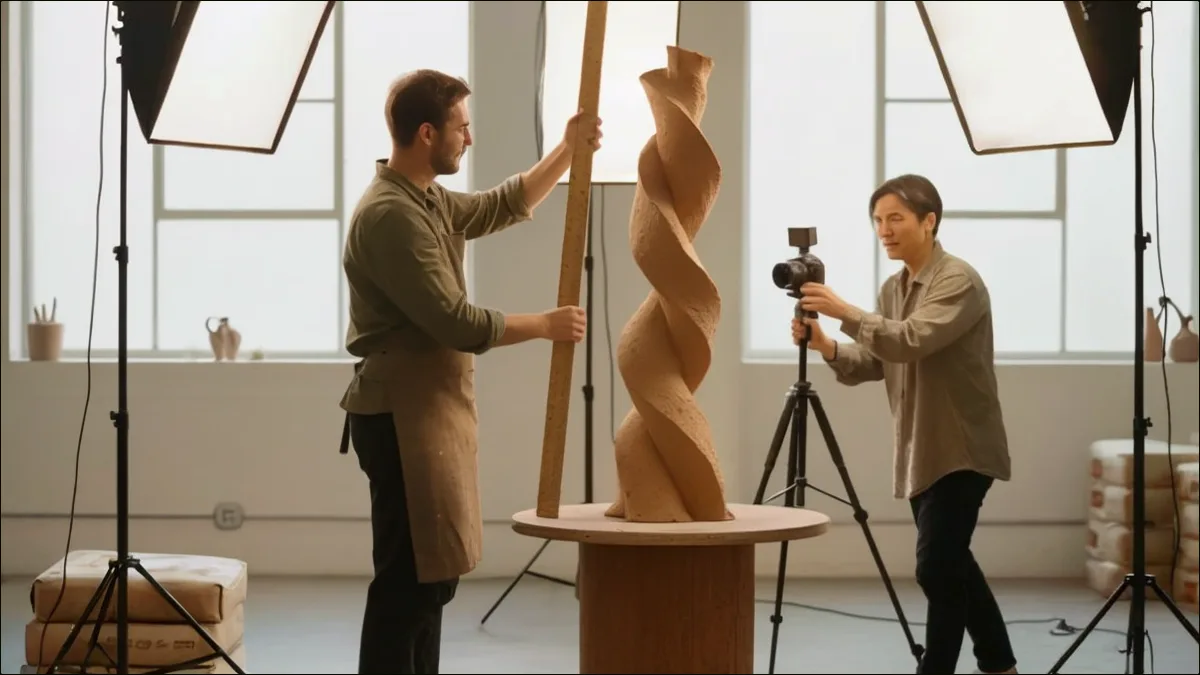 Documenting sculpture for grant and residency application portfolio
How Grant and Residency Review Differs
Organizations like the Andy Warhol Foundation and Joan Mitchell Foundation use panel reviews where multiple experts evaluate each application. The National Endowment for the Arts publishes guidelines on what panels prioritize.
Grant and residency applications undergo peer review: panels of artists, curators, and arts professionals evaluating submissions against stated criteria. A gallery is asking whether your work will sell. A panel is asking whether it deserves funding and whether you will finish what you propose. Those are different questions, and they call for a different package.
Panels also move fast. Yours may get five to fifteen minutes, split across several readers who have already looked at forty applications that day. Your materials have to communicate quickly while still showing the depth of thought a strong application requires. For the writing side of that problem, see the grant application guide.
Grant vs Gallery Portfolio Review
| Factor | Grant Review | Gallery Review |
|---|---|---|
| Primary Focus | Project potential | Market viability |
| Time Spent | 5-15 min per app | Varies widely |
| Panel Size | 3-7 reviewers | 1-3 people |
| Key Question | Will this succeed? | Will this sell? |
| Career Stage | Often emerging-focused | Often established-preferred |
| Proposal Weight | 30-50% of decision | Less formal |
If the gallery column is the one you're actually preparing for, the gallery portfolio guide covers that review instead.
What Panels Evaluate
Artistic Merit
Panels assess the quality and significance of your work:
- Technical accomplishment
- Conceptual depth and coherence
- Originality and distinctive vision
- Development trajectory and potential
Strong work samples are essential. Panels can't award weak work regardless of compelling proposals.
Project Clarity (for Project Grants)
Project-based funding requires clear, achievable proposals:
- Well-defined goals and outcomes
- Realistic scope and timeline
- Feasible budget
- Demonstrated capacity to complete
Vague proposals raise completion concerns. Overly ambitious proposals seem risky. Balance vision with practicality.
Fit with Program Mission
Every grant and residency exists for a reason, and the reason is written down. Read the program's stated purpose, connect your work to it honestly, and explain why this specific opportunity suits your practice rather than why you need money. Panels can tell the difference between an artist who researched the program and one who found it on a list.
Career Stage Appropriateness
Many programs target specific career stages. Emerging artist grants expect developing practices. Mid-career programs assume substantial achievement. Established artist awards recognize significant contribution. Mismatched applications waste panel time and your effort, so read eligibility before you read the deadline.
Preparing Work Samples for Grants
Selection Strategy
Grant work samples should demonstrate:
- Your strongest current work
- Clear artistic vision
- Range appropriate to the opportunity
- Technical accomplishment
Most applications request 10-20 images or equivalent time-based samples. Choose work that represents your practice while meeting specific application requirements. The portfolio best practices guide covers how to cut a large archive down to a selection that holds together.
Image Specifications
Follow technical requirements exactly: file format (usually JPEG), dimensions or resolution, file size limits, and naming conventions. Non-compliant submissions may be disqualified or display incorrectly during review, and neither failure gets a second chance. If your files aren't up to standard, fix the documentation before you fix anything else in the application.
Annotations and Descriptions
Work sample annotations provide essential context:
- Title, date, medium, dimensions
- Brief description if helpful
- Connections to project (for project grants)
- Role (for collaborative work)
Keep descriptions concise. Panels read quickly.
Sample Order
Lead with strong, accessible work, build logically through the selection, and end on something memorable. Remember that images often get projected in rapid sequence during review, so test your order at speed rather than one file at a time.
Writing for Grant Applications
Artist Statements
Grant artist statements should be specific and accessible:
- Describe your actual practice clearly
- Explain conceptual concerns without jargon
- Connect your work to broader contexts
- Keep length appropriate to requirements (usually 200-500 words)
Project Descriptions
Project grant proposals require:
- Clear statement of what you'll create
- Explanation of significance and context
- Detailed timeline
- Specific, realistic outcomes
- Your qualifications to complete the project
Narrative Statements
Many applications request narrative statements about your practice, development, or relationship to program themes. Address the actual prompt rather than the one you prepared for, be specific and personal, and connect your experience to the work in a way that only you could write.
Writing Quality
Panels read hundreds of applications, so clear, direct language stands out on its own. Proofread carefully, choose words precisely, and aim for a tone that is neither casual nor pretentious. Have someone else read it before you submit; you have lost the ability to see it.
Budget Development (for Project Grants)
Realistic Estimation
Budgets should reflect actual costs:
- Research expenses before estimating
- Include all relevant categories
- Plan for contingencies
- Justify unusual expenses
Common Budget Categories
- Artist fees: Your compensation for time
- Materials and supplies: Production costs
- Fabrication: External production assistance
- Documentation: Photography, video
- Travel: If applicable to project
- Equipment: If needed for project
- Other professional services: As relevant
Justification
Explain why the amounts are appropriate, how you calculated them, and what makes the total a reasonable investment. Unrealistic budgets raise concerns about project management capacity, and that cuts both ways: underestimating looks as naive as padding looks greedy.
Review panels want to fund excellent work by capable artists. Your application should demonstrate both artistic quality and professional readiness to use support effectively.
Residency-Specific Considerations
What Residencies Seek
Residency programs are matching you to a specific set of facilities, a community, a duration, and often a thematic focus. Applications should show genuine need for what this residency offers, plans that fit the time and equipment available, some sense of what you'd contribute to the community, and evidence that you understand the character of the place. The residency application guide covers the rest of the submission.
Proposal Development
Residency proposals balance structure with flexibility:
- Explain what you hope to accomplish
- Describe how you'll use program resources
- Indicate openness to discovery and change
- Show awareness of program's unique offerings
Overly rigid proposals may seem to miss residency's exploratory purpose. Overly vague proposals suggest you haven't thought seriously about the opportunity.
Community Engagement
Many residencies involve community participation: meals, critiques, public programs. Address your willingness to engage with fellow residents, what you might contribute to program activities, and your comfort in collaborative environments. Programs are choosing housemates as well as artists.
Application Strategy
Research Programs Thoroughly
Before applying, read the program description completely, review previous recipients, confirm you're eligible, and note every requirement alongside the deadline. Applying to mismatched programs wastes effort you could have spent on a program that fits.
Apply Consistently
Most artists apply many times before receiving awards. Develop sustainable application practice:
- Calendar relevant deadlines
- Maintain updated portfolio materials
- Refine applications based on experience
- Don't take rejection personally
Keeping deadlines, drafts, and outcomes in one place makes the repetition manageable; Artsume's application tracker is built for that cycle.
Target Appropriate Opportunities
Match applications to your career stage and practice:
- Emerging artist programs for early career
- Project grants for specific proposals
- Career development for mid-career growth
- Residencies matching your needs
Manage Expectations
Grant competition is intense. Acceptance rates of 5-15% are common. Even excellent applications often receive rejection. Evaluate applications as practice-building investment regardless of immediate outcomes.
Frequently Asked Questions
How competitive are artist grants?
Very competitive. Major grants may accept 3-10% of applications. Smaller regional programs and emerging artist grants may have better odds. Most successful grant recipients applied many times before receiving awards. Consistent, well-targeted applications over time eventually produce results.
Should I apply to grants outside my field?
Focus on programs genuinely aligned with your practice. Stretching to fit mismatched opportunities rarely succeeds. However, interdisciplinary grants may suit practices spanning categories. Read program descriptions carefully to assess genuine fit.
How do I know if my work is ready for grant applications?
Ready applications have consistent body of work (15+ strong pieces), clear artistic direction, and professional documentation. If you're still developing fundamental practice direction, focus on development before competitive applications.
Can I reapply after rejection?
Usually yes, most programs welcome reapplication with stronger materials. Consider what you might improve: work quality, documentation, writing clarity, or project specificity. Significant practice development between applications strengthens resubmissions.
Should I submit the same application to multiple grants?
No. Each application should address specific program priorities and requirements. While you may adapt core materials, applications should demonstrate genuine engagement with each program's unique mission and criteria.
Finding Grant and Residency Opportunities
Aggregators are the fastest starting point. Artsume's open programs list grants, residencies, and fellowships together, and CallforEntry (Café), the Alliance of Artists Communities, and your state or regional arts council listings cover overlapping ground. Open calls for artists explains how those listings work and what the deadlines really mean.
Discipline-specific organizations maintain their own lists: College Art Association for visual arts, Theater Communications Group for performing arts, plus the media arts and craft organizations in your field. Foundation research fills the gaps that listings miss, through the Foundation Center and Candid databases, regional community foundations, national endowment programs, and private foundation pages you can only find by looking. And artist communities still trade the best information informally, through professional associations, online groups, local networks, peers, and mentors.
For the broader funding picture, funding for art projects covers crowdfunding and commissions alongside grants, and artist fellowships covers the awards that fund you rather than a project.
Next Steps
Audit your portfolio for application readiness, research the programs that match your practice, develop clear proposals where projects are involved, put every deadline on one calendar, and then apply consistently rather than in bursts. Best practices for applying to art opportunities covers the habits that make the second year of this easier than the first.
Create your Artsume profile to keep grant-ready documentation in one place: a current CV, an organized portfolio, and work samples formatted for submission. If you're building the portfolio from scratch, start with how to build an artist portfolio, and see applying to programs for how submissions work once you find a fit.
Build your portfolio
Show your work in a free, professional online artist portfolio.