International Opportunities for Artists: Working Abroad
Exhibit and work internationally as an artist. Find global residencies, international exhibitions, shipping, customs, and how foreign art markets work.
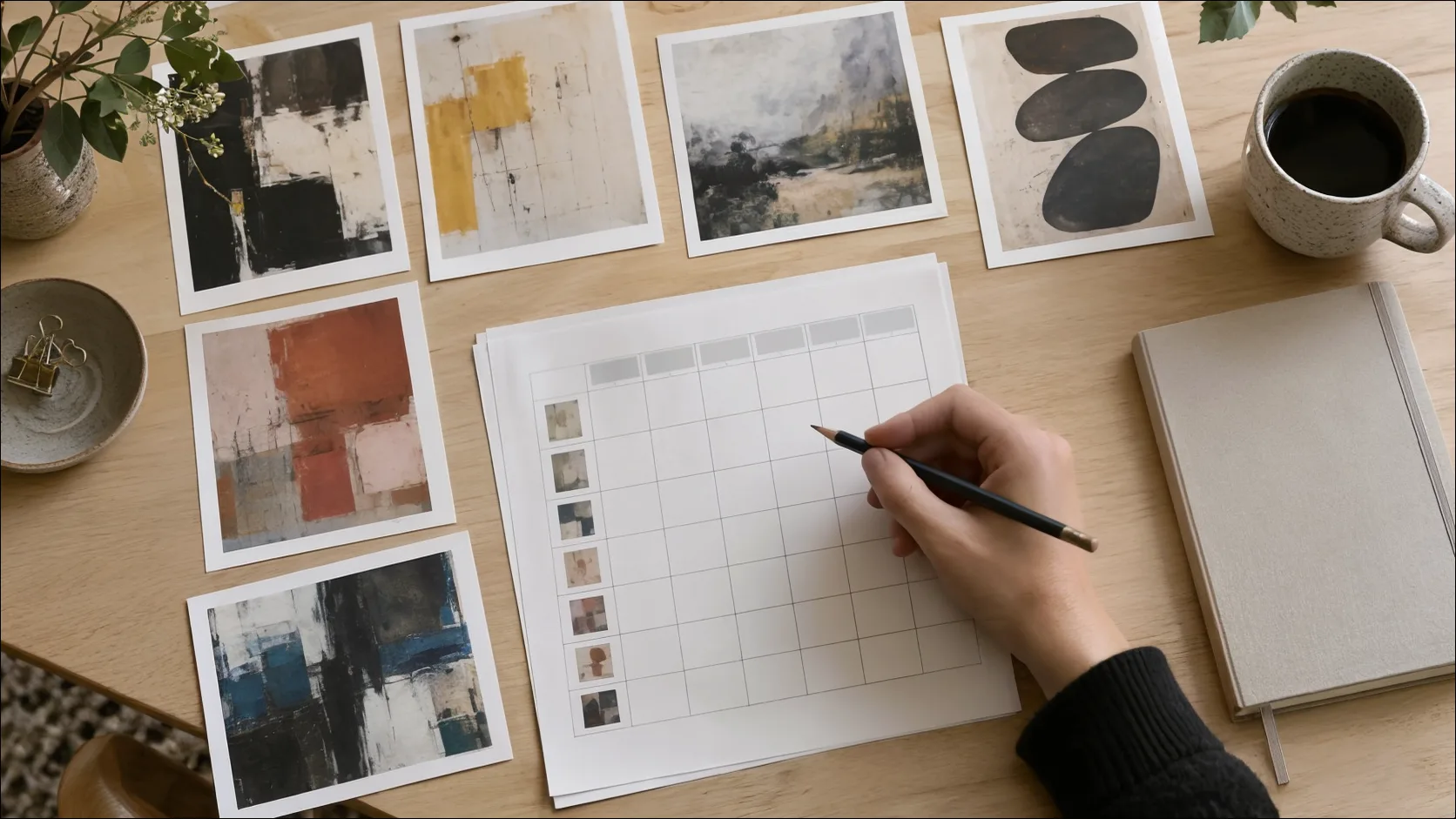
 Artist exploring international exhibition and residency opportunities abroad
Working internationally expands your audience and your influences. It also introduces a set of problems that domestic practice never raises: art worlds that run on different assumptions, shipping that can cost more than the work, customs paperwork that decides whether the show happens, and tax rules in two countries at once.
Here is how to find opportunities abroad, what they actually cost, and how to go after them without the logistics eating the opportunity.
Quick Answer
- Start with residencies, which provide structure and support for working abroad
- Research cultural differences in how art worlds operate
- Budget for hidden costs: shipping, customs, insurance, travel
- Build relationships gradually rather than cold-approaching international galleries
- Document everything for customs and tax purposes
Where the opportunities are
Residencies
Residencies are the most accessible way to work abroad, because they solve the two problems that otherwise stop you: somewhere to work and someone who already knows the city. Most provide studio space, many provide housing, some provide a stipend, and all provide local connections and structured time.
The internationally known programs include Rijksakademie in the Netherlands, Künstlerhaus Bethanien in Germany, ISCP in the United States for international artists, Cité Internationale des Arts in France, and Gasworks in the UK. Hundreds of smaller ones exist alongside them, and those are usually where a first international residency actually happens.
Exhibitions
Biennials and triennials mostly run on nomination or invitation, but smaller international exhibitions are more open than their reputation suggests. Galleries and institutions worldwide organize themed group shows that accept submissions, and art fairs bring artists in through their galleries, though some fairs run sections for unrepresented artists. Art fairs for artists covers how those sections work and what they cost.
Grants for international work
Many countries fund cultural exchange directly. From the United States, the Fulbright Program and US Artists International both support work abroad. From the UK, the British Council and Arts Council England run international grant programs. From Canada, Canada Council Travel Grants cover the movement itself. Most European countries maintain cultural institutes with their own funding streams.
These are competitive and the applications are substantial, so treat them like any other funding application: the grant application guide covers what panels read for, and artist fellowships covers the unrestricted awards that often travel best.
Teaching and workshops
Universities and institutions worldwide hire visiting artists for semester or year-long positions, workshop facilitation, lectures and artist talks, and summer programs. These pay, they carry a visa sponsor, and they put you inside an institution rather than beside one.
Finding them
Artsume's opportunity listings include international programs and let you filter by location and deadline. Beyond that, TransArtists and ResArtis are the two large residency databases, and Wooloo carries European and international calls. Each country's arts council and cultural organizations list opportunities for foreign artists directly, and those listings are frequently the least competitive route in.
Relationships do more of the work than databases do, and you can start building them without leaving home: connect with international artists in your own city, go to exhibitions at consulates and cultural centers, and join organizations with international membership. Online, follow curators and galleries abroad, take part in the discourse rather than just watching it, and join online exhibitions and projects. When you do travel, go to cities with active scenes during art week events, and ask for studio visits rather than waiting to be invited.
Major International Art Events
| Event | Location | Best For |
|---|---|---|
| Art Basel | Basel, Miami, Hong Kong | Gallery and collector connections |
| Venice Biennale | Venice, Italy | Seeing international work, networking |
| Documenta | Kassel, Germany (every 5 years) | Conceptual and political art discourse |
| Frieze | London, New York, Los Angeles | Contemporary art market |
| Regional biennials | Various cities worldwide | Emerging artists, specific regions |
How art markets differ
Art worlds operate differently in different places, and the differences are structural rather than stylistic.
The United States is commercially oriented, built around private collecting and gallery representation, with high production values expected and CV credentials weighed heavily. Europe has more public funding, an institutional exhibition system built around kunsthalles, well-respected artist-run spaces, and a stronger appetite for conceptual and political work. Asian markets are growing quickly, mixing traditional and contemporary practice, running on relationship-based business culture, and varying widely in market maturity from country to country. Latin America has a strong social practice tradition, growing institutional support, considerable international interest in regional voices, and price points that generally sit below US and European levels.
Those differences change what a strong application looks like. A CV that opens with commercial gallery representation reads differently in Berlin than in New York, and an arts and cultural CV built around public presentations and community work often travels better internationally than a sales-oriented one.
Pricing across markets
Your prices may need adjusting, and there is no consensus on whether they should be. Local purchasing power varies, shipping adds to what the collector actually pays, currencies move, and market expectations differ.
Three approaches are common: hold consistent global pricing, which is simpler and protects your market position but prices you out of some places; adjust for local markets, which is more complex but can increase sales; or price unique work consistently while letting prints and editions flex. How to price your artwork covers the underlying formulas, which apply in any currency.
Shipping
International shipping often exceeds domestic costs by five to ten times, and it is the line item that most often turns a good opportunity into a bad one.
The bill is made up of carrier charges by air, sea, or ground, crating or packaging, customs duties and taxes, broker fees, and insurance. Typical totals run:
- Small flat work, air freight: $200-500
- Medium crated work, air freight: $500-2,000
- Large installation, sea freight: $2,000-10,000+
Specialized art shippers handle custom crating, climate control, customs documentation, insurance, and installation at the destination. Cadogan Tate, Crozier, Masterpiece International, and Ship My Art all operate internationally. Shipping artwork safely covers packing and carrier selection in detail, and art insurance covers what transit coverage actually protects.
Keep detailed records and receipts for all international shipments. You will need them for customs, taxes, and insurance claims.
Customs paperwork
Exporting work generally requires a commercial invoice, a packing list, a certificate of authenticity, and, for work that is coming back, an ATA Carnet. The Carnet is the document that makes temporary export workable: it allows duty-free temporary import, requires the work to return within a specified period, and has to be processed at customs on both entries. Get it wrong and the work is stuck, or dutiable, or both.
On import duties, original artwork is often duty-free, though this varies by country and needs checking case by case. Prints and multiples may be taxed, and framing and materials can attract duties even when the artwork itself does not. Permanent export, which is what a sale is, may trigger duties in the destination country; some countries also maintain cultural export restrictions on work leaving. Plan for the buyer to pay import duties and say so in writing before the sale, which is the kind of term artist contracts exist to settle.
Money
Galleries usually pay by wire transfer; direct sales more often run through PayPal or Wise. Conversion fees of 3 to 5 percent are normal and worth pricing in rather than absorbing. Quote in a major currency, USD, EUR, or GBP, lock exchange rates where you can, and treat currency movement as a real cost rather than a rounding error.
Tax is the part artists most often handle badly. You report international income in your home country, some countries have treaties that prevent double taxation, and you need records of every international payment regardless. Many countries charge VAT on art sales; galleries typically handle it for artists they represent, but direct sales may require you to register. Talk to an accountant who has done this before, and read the artist taxes and business structure guide first so the conversation is a short one.
What to budget
International opportunities usually cost money before they pay any. Budget for application fees, flights and ground transport, accommodation where it is not provided, shipping in both directions, customs and duties, insurance, meals and incidentals, and communication.
Against that, the funding sources are artist grants for international work, residency stipends, gallery or institution support, and self-funding. Knowing which of those you are relying on before you accept is the difference between an opportunity and a debt.
Cultural expectations
Business customs vary more than the art does. Some cultures expect formal written communication and others are casual about it; response times, meeting length, and negotiation style all differ, and relationship-building frequently precedes anything transactional. English works in many art contexts but far from all, translated or bilingual materials are often needed, and visible effort in the local language is noticed.
Practical details matter too. CV format expectations differ by country, measurements and date formats need converting, and punctuality norms are not universal. When you show work abroad, expect it to read differently: some themes are sensitive in ways they are not at home, some need explanation, and the local critical discourse may not share your assumptions. Some artists adapt work for different contexts and others hold a consistent practice globally. Either is defensible; know which one you are doing and be able to say why.
Building it gradually
Expansion works better in steps than in leaps:
- Nearby countries: Canada/Mexico for US artists, EU neighbors for European artists
- Culturally similar: English-speaking countries, shared language regions
- Art hub cities: London, Berlin, Paris, New York, Tokyo, Hong Kong
- Developing markets: Emerging art scenes with growing infrastructure
Whatever the destination, keep the relationships alive after you leave. Follow up after exhibitions and residencies, keep contacts updated on new work, return to places where you already know people, and be useful: connect people in your network, pass opportunities to international colleagues, and be a good guest. Cold-approaching a foreign gallery works far less often than being introduced by someone they already trust, which is why approaching galleries starts with relationships in the first place.
Keep records of all of it: exhibition dates and venues, collaborators and contacts, reviews and press, images of installed work, and shipping documents. That archive feeds your CV, your taxes, your insurance claims, and your next application, and reconstructing it later across languages and time zones is considerably harder than logging it as you go.
Frequently Asked Questions
How do I find affordable international residencies?
Many residencies are fully funded or low-cost. Some cover housing, materials, and even stipends. Filter by cost on residency databases. Apply to programs in lower cost-of-living countries. Consider house swaps with artists abroad. Some residencies accept artists who self-fund in exchange for waived fees.
Do I need a visa to do a residency abroad?
It depends on the country and residency length. Short stays (under 90 days) often fall under tourist visas. Longer stays may require artist or cultural visas. The residency organization can usually advise. For US citizens, the UK, Schengen zone, Canada, and many other countries allow 90-day tourist stays. Our O-1 artist visa guide covers longer stays in the US.
How do I price work for international markets?
Maintaining consistent global pricing is simplest and protects your market position. However, some artists adjust for purchasing power in different markets. If you adjust, keep different tiers transparent and consistent. Never sell the same work at wildly different prices in different markets without clear reason.
What if my work gets damaged or lost in international shipping?
This is why insurance matters. Document condition before shipping. Use reputable art shippers with proven track records. File claims promptly with full documentation. For irreplaceable work, consider whether shipping risk is worth it. Some artists make work specifically for distant exhibitions to avoid shipping originals.
How do galleries abroad find artists?
Similar to domestic galleries: exhibitions, fairs, studio visits, referrals, and online presence. International galleries attend fairs worldwide and follow artists from residencies they support. Building relationships through residencies and exhibitions is more effective than cold outreach. Being visible at international events helps.
Should I get a foreign gallery before or instead of domestic representation?
Most artists build from home outward. Strong domestic representation often opens international doors, as galleries have reciprocal relationships. However, some artists find their work resonates more strongly abroad and build from there. Either path can work, but do not neglect your home market entirely.
Before you go
Two pieces of paperwork determine most of what happens next. The first is immigration: if you are working in the United States rather than visiting, the O-1 artist visa guide covers the evidence a petition requires, and most of that evidence is documentation you should be keeping anyway.
The second is your public record. Curators and galleries abroad research artists online before they contact them, often across a time zone and without a shared language, and what they find is your portfolio and CV. Keeping those current and reachable is what sharing your profile is for.
Make Your Work Discoverable
International curators and galleries research artists online. Your professional profile is your first impression globally.
Create your free Artsume profile to present your work to an international audience. Your portfolio and CV are accessible from anywhere in the world.