From the community
Sasha Q: The Best Is Yet to Come
The Toronto-based artist on paintings that transform with light, the discipline behind her practice, and building a career across borders.
Interview by David Rozenfeld
· 12 min read
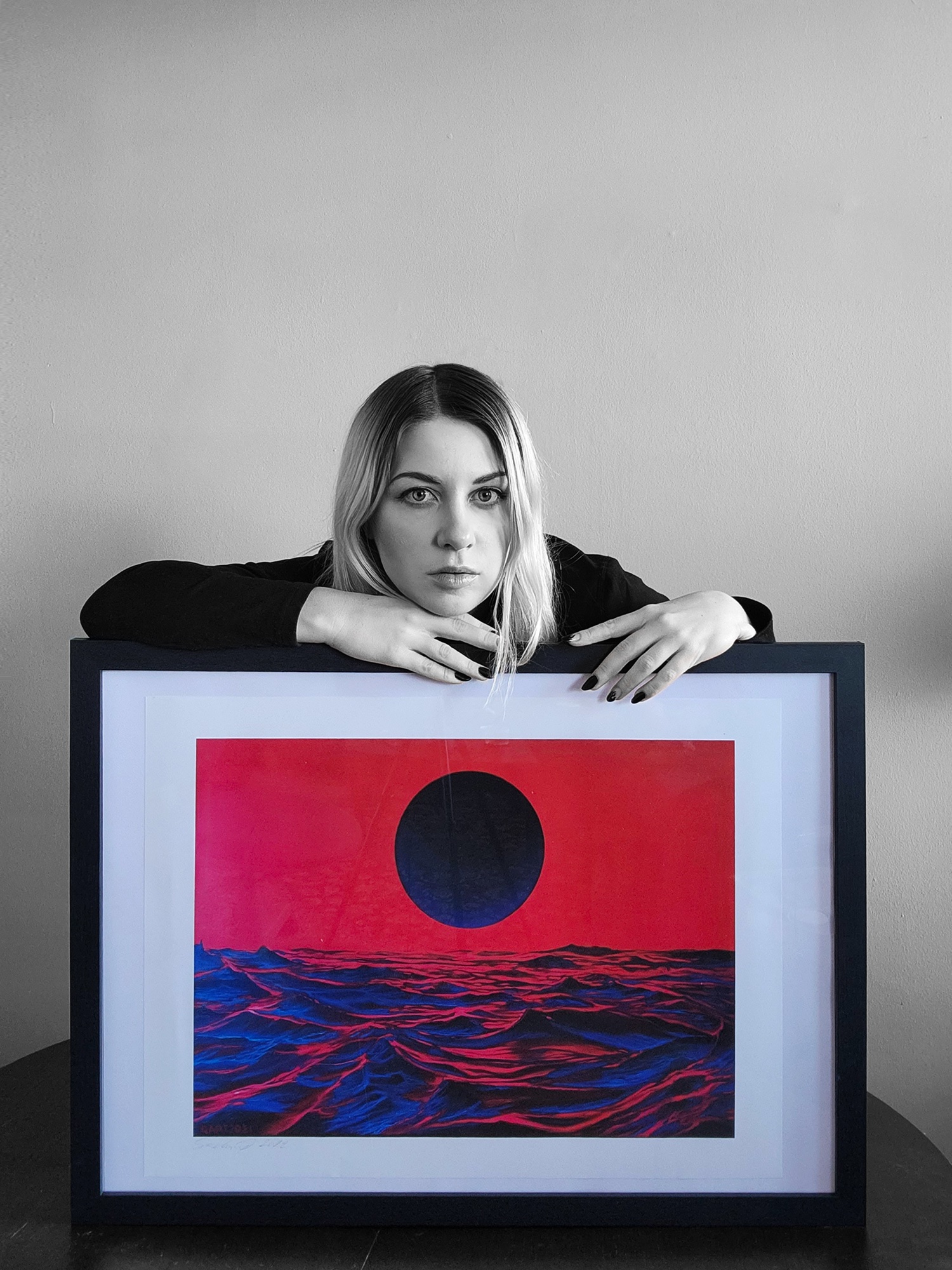
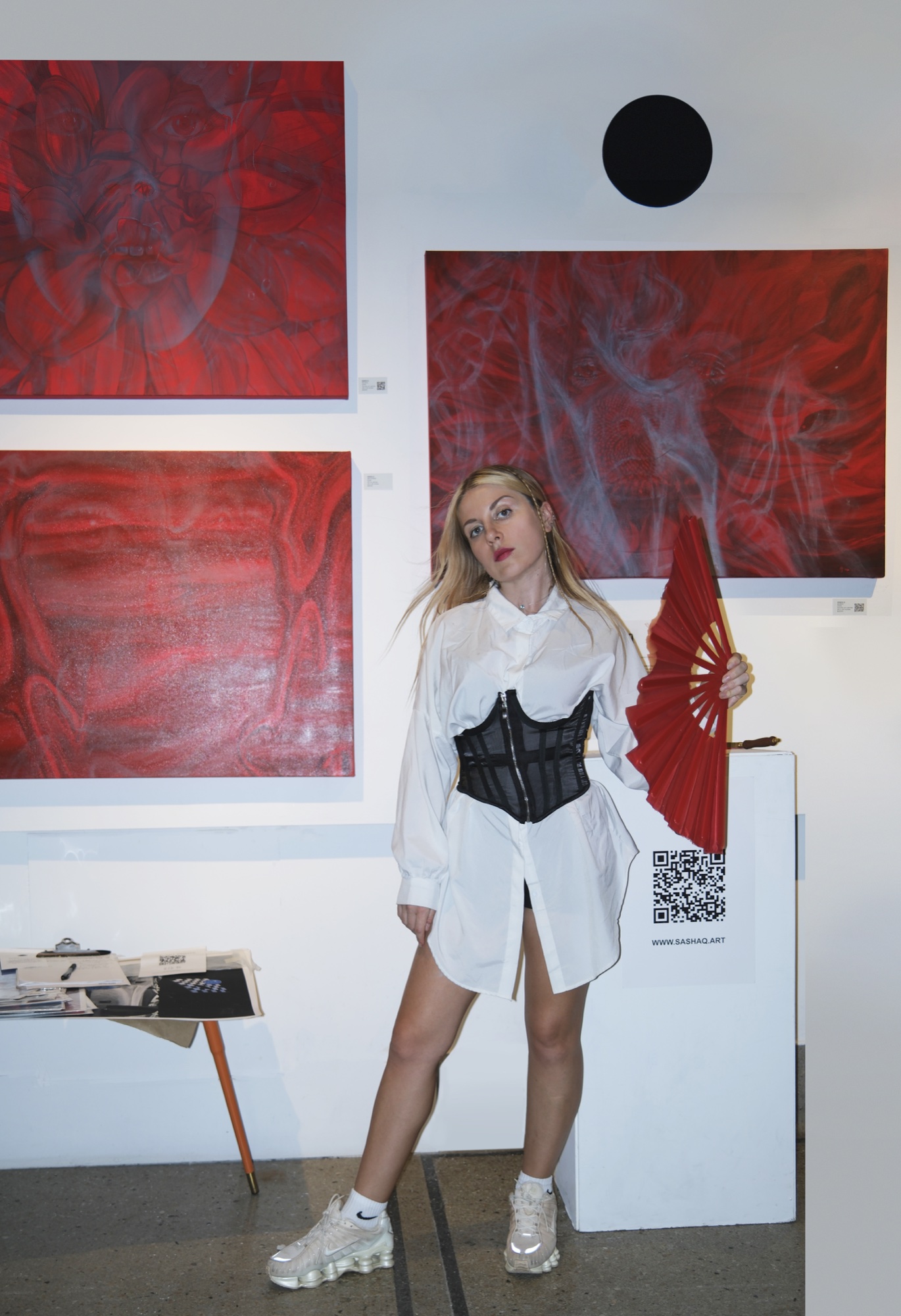
Under coloured light, Sasha Q’s paintings can change in front of the viewer. Images recede, colours shift, and another version of the work comes into view. For Sasha, that transformation is part of the painting’s meaning: an exploration of consciousness, perception, and the possibilities within a single image.
Originally from Kyiv and now based in Toronto, Sasha brings questions of home, memory, and belonging into this exploration. Working with oil and acrylic, she combines imagined landscapes with geometric forms, creating spaces that invite viewers to look again. Her practice draws on an academic foundation in art and design, a professional background in games and animation, and an ongoing commitment to making physical work.
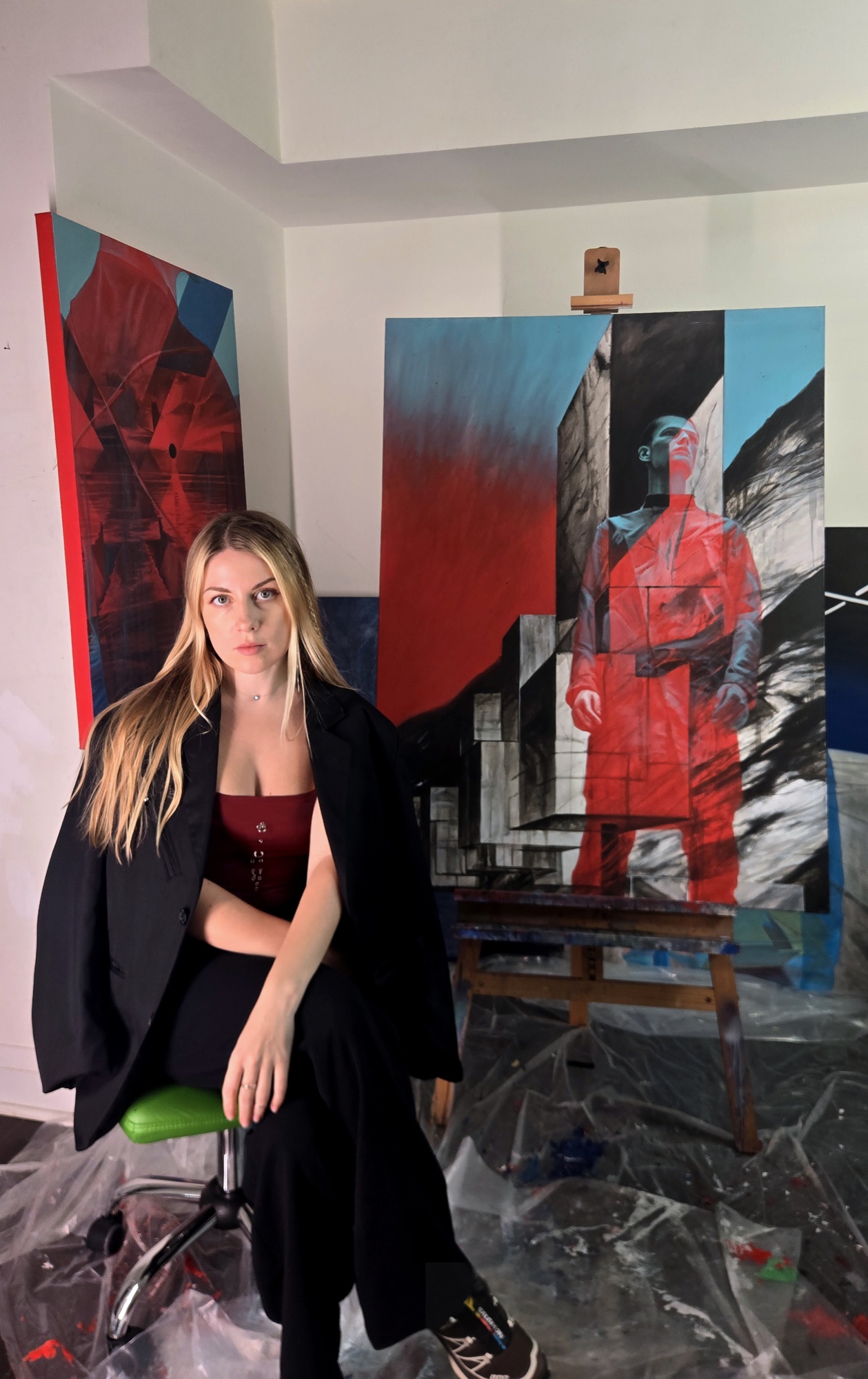
In conversation with the Artsume community, Sasha discusses the experiment that changed her approach to painting, the stories behind individual works, and her ambition to reach audiences around the world. Throughout the conversation, she returns to the importance of continuing to develop—and making room for the work she has yet to create.
This interview has been edited, condensed, and arranged by theme for clarity.
Finding her own visual language
How would you introduce your work to someone encountering it for the first time?
My work explores consciousness. I think of it as a form of deep meditation, an exploration of what might exist beyond our sensory experience.
It is also about transformation: moving from anxiety toward hope, or from fear toward happiness. Painting gives me a way to process those emotions. It is a grounding practice, a place where I can express what I feel and explore how perception changes our experience.
There is a lot of my subconscious in the work. Over time, I have learned to give it more freedom.
You’re from Kyiv and now live in Toronto. How have those experiences shaped your practice?
I grew up in Ukraine during a period of enormous change. There were political transformations and revolutions, and later the war. That experience of change has shaped the way I think and the way I make art.
When I came to Toronto, I was working in animation. Building a life in another country brought another kind of change.
Painting is a sanctuary for me. It gives me somewhere to process my experiences and express what I feel.
Those experiences have also made me stronger. I find energy in overcoming challenges. It lights a fire in me, and I want to keep growing.
How did your Other Worlds series begin?
I was very interested in the films of Gaspar Noé, particularly Enter the Void. His use of red and blue light creates an immersive experience. I was drawn to the way light could take you into another state of mind.
I began working with those colours and making landscapes that could create a similar feeling. The places I paint are not always physical places. A desert, for example, might be a kind of space that my mind travels into.
That became part of the idea behind Other Worlds: creating somewhere you can enter through the painting.
Why do landscapes and geometric forms appear together so often in your work?
I am interested in what happens when you combine things with opposing qualities.
A landscape brings something natural into the painting. Geometry introduces something constructed or artificial. When I put them together, the relationship becomes dynamic. It starts to feel like a journey.
Colour can work in a similar way. One colour might feel tranquil, while another brings energy. I like discovering how those different elements begin to work together.
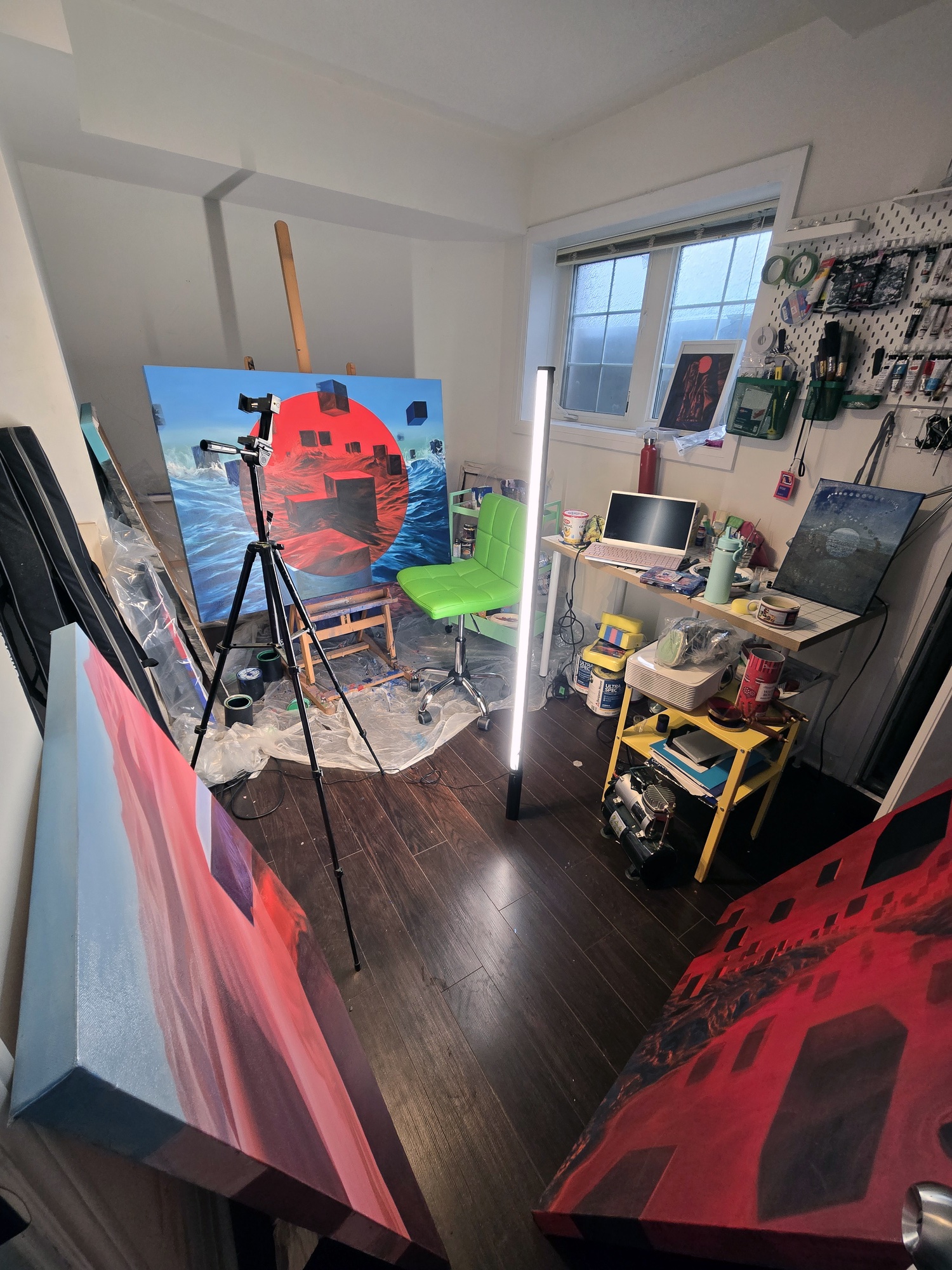
When light becomes part of the painting
Your paintings can transform under coloured light. How did you discover that approach?
At first, I was already working with a limited palette, but I was not using the transformation effect deliberately.
I had lights for plants in my room, and I noticed how different my paintings looked under them. The work changed according to the colour of the light.
I thought: what if I continued that experiment?
I began overlapping images and exploring how they could change under different lighting conditions. My work was already about transformation, so I started making that transformation happen within the painting itself.
What is the experience like when someone sees these works in person?
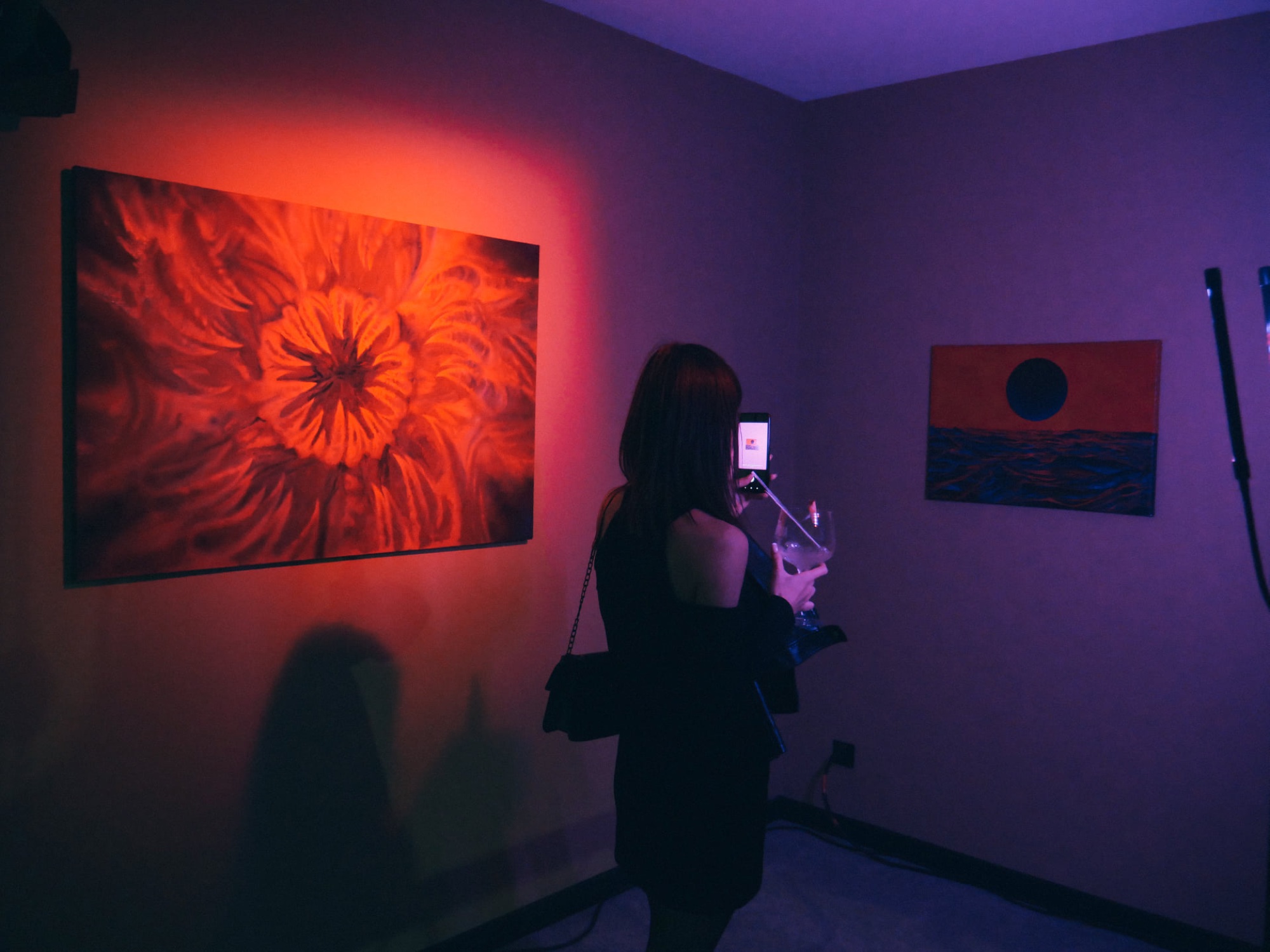
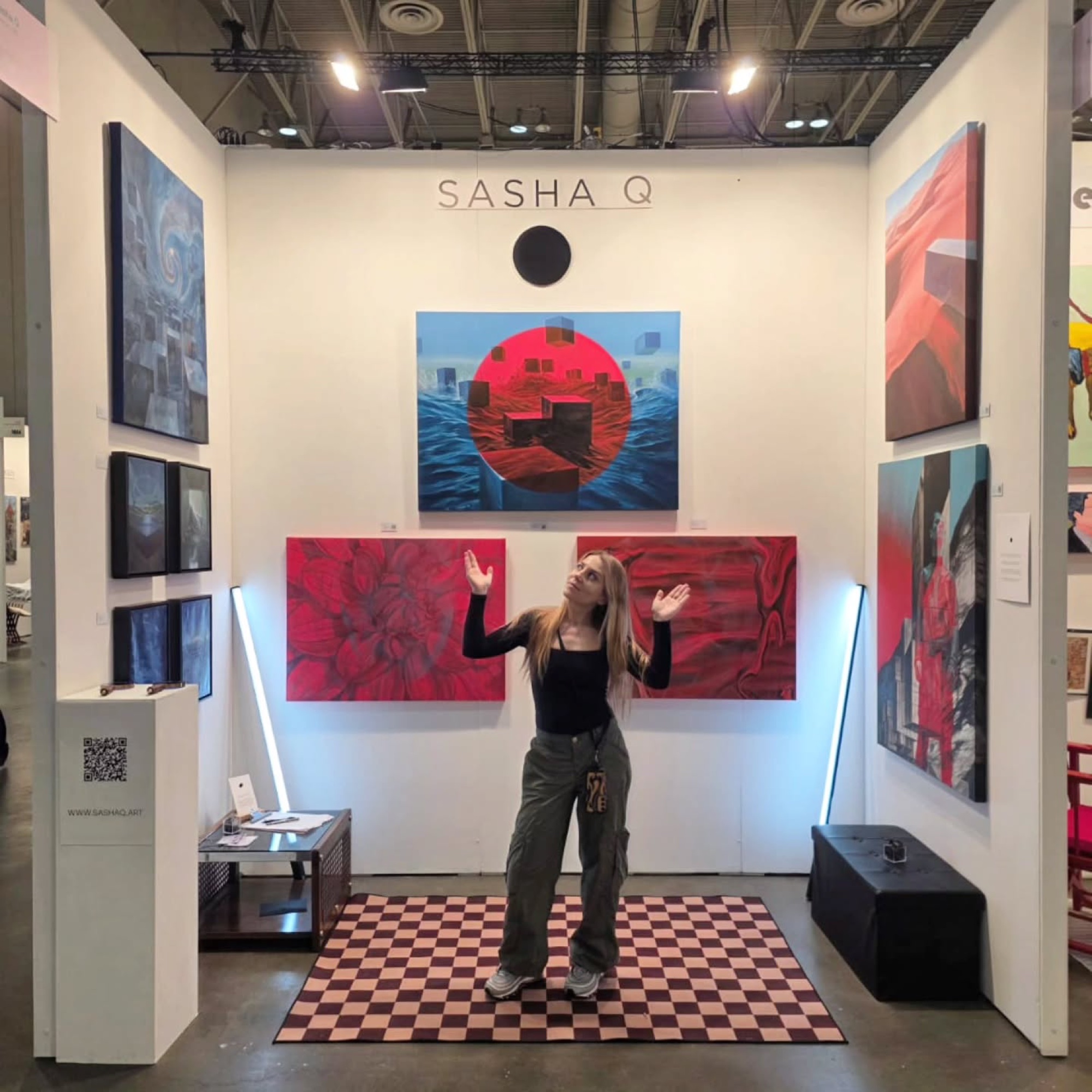
I have a lighting system that I can control through an app. In a darkened space, I can slowly change the light and show how the paintings respond.
The viewer witnesses images appearing and disappearing. That is where it begins to feel like a performance.
It is difficult to capture the full experience on camera. The camera changes the colours, and some of what happens is lost. Seeing it with your own eyes is different.
For me, it is also an act of presence. We spend so much time thinking about the past or the future. With these works, something is happening in front of you, and you are there to experience it.
Do people respond to the paintings in the way you expect?
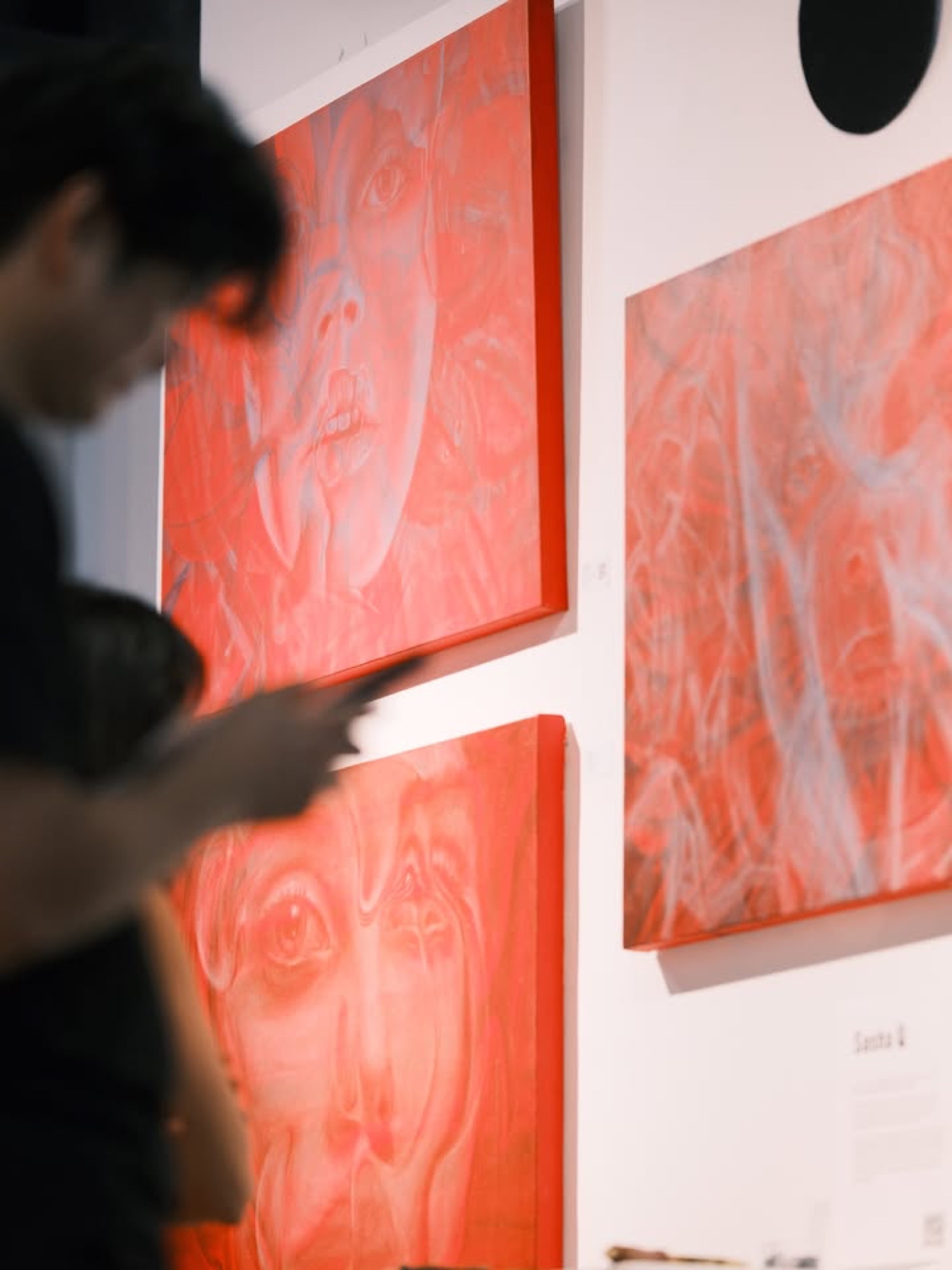
People respond very differently. Some find them soothing; others find them unsettling.
I think the work can reflect something that is already within the viewer. The contrasting colours may contribute to that: one can feel calm, while another feels more energetic.
I am interested in that range of responses. There is room for the viewer’s own emotions and perception.
A daily studio practice
What has your training contributed to the artist you are today?
I studied graphic design, and my education included a strong academic foundation in art. We worked on drawing, still life, anatomy, and realistic representation.
That gave me a technical base. Finding my own visual language was a different process.
For a long time, I struggled with the question of what my style should be. Eventually, I understood that it develops through your experiences and the way you live. You cannot completely force it.
Once I relaxed about that, I could let it develop more naturally.
What does your working process look like?
I treat it as a full-time job. I practise every day, and I do not leave everything to inspiration.
I keep a sketchbook so I can record ideas quickly. Sometimes an idea is very abstract. I cannot see it clearly as an image yet, but I can describe it in words, so I write it down.
I usually make digital mockups first. I also use collage to combine elements and see what happens.
The process involves trying things, looking at the relationships between them, and continuing to work until those relationships make sense.
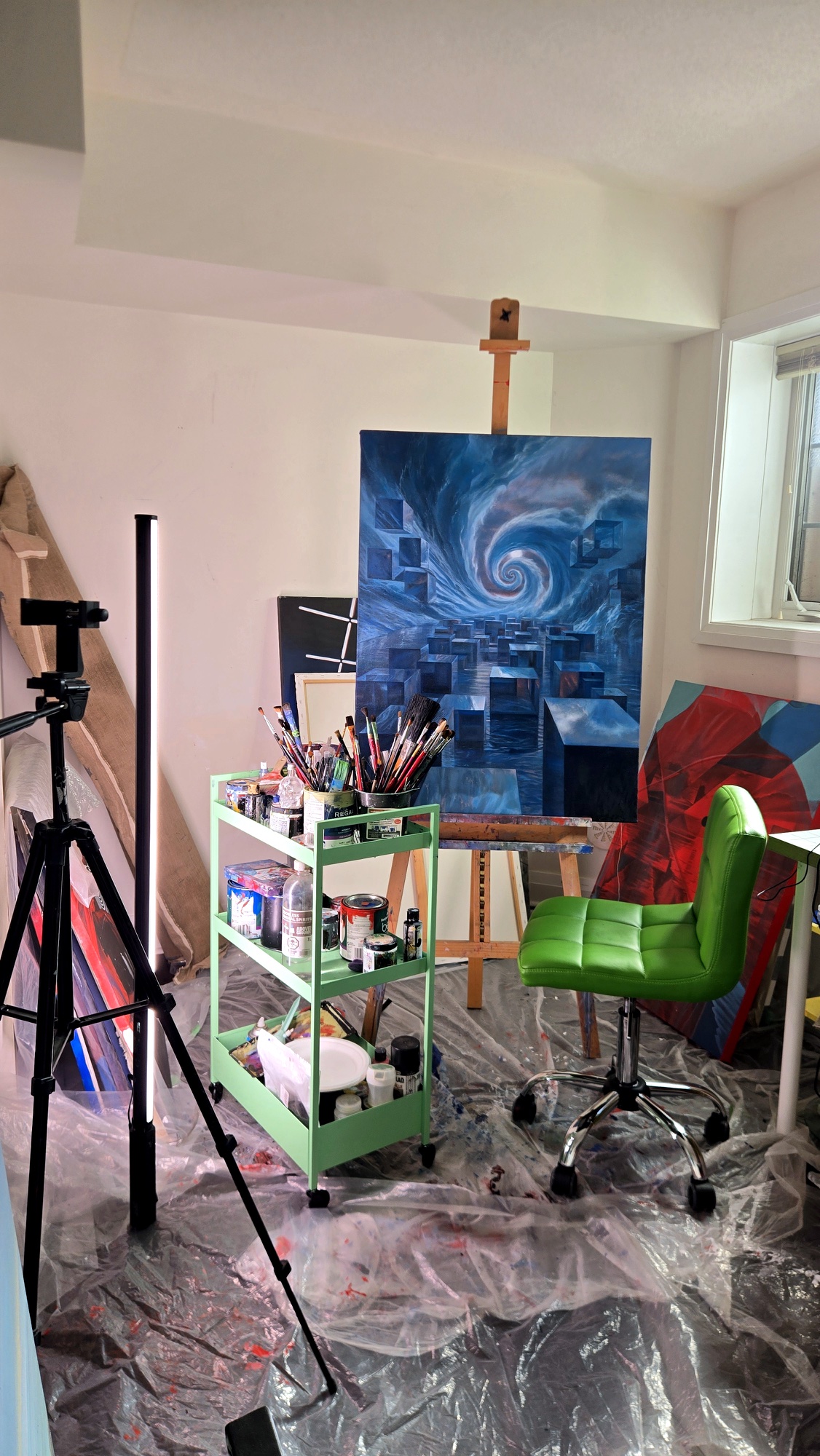
How do you think about a collection as it grows?
I look at the paintings together. I want to understand how they interact and whether they belong within the same developing story.
Sometimes a painting feels out of place, and I will return to it. I might repaint part of it or make changes so that it works better with the others.
For me, a collection is a story that needs to keep evolving. Making a new piece also changes how I see the work around it.
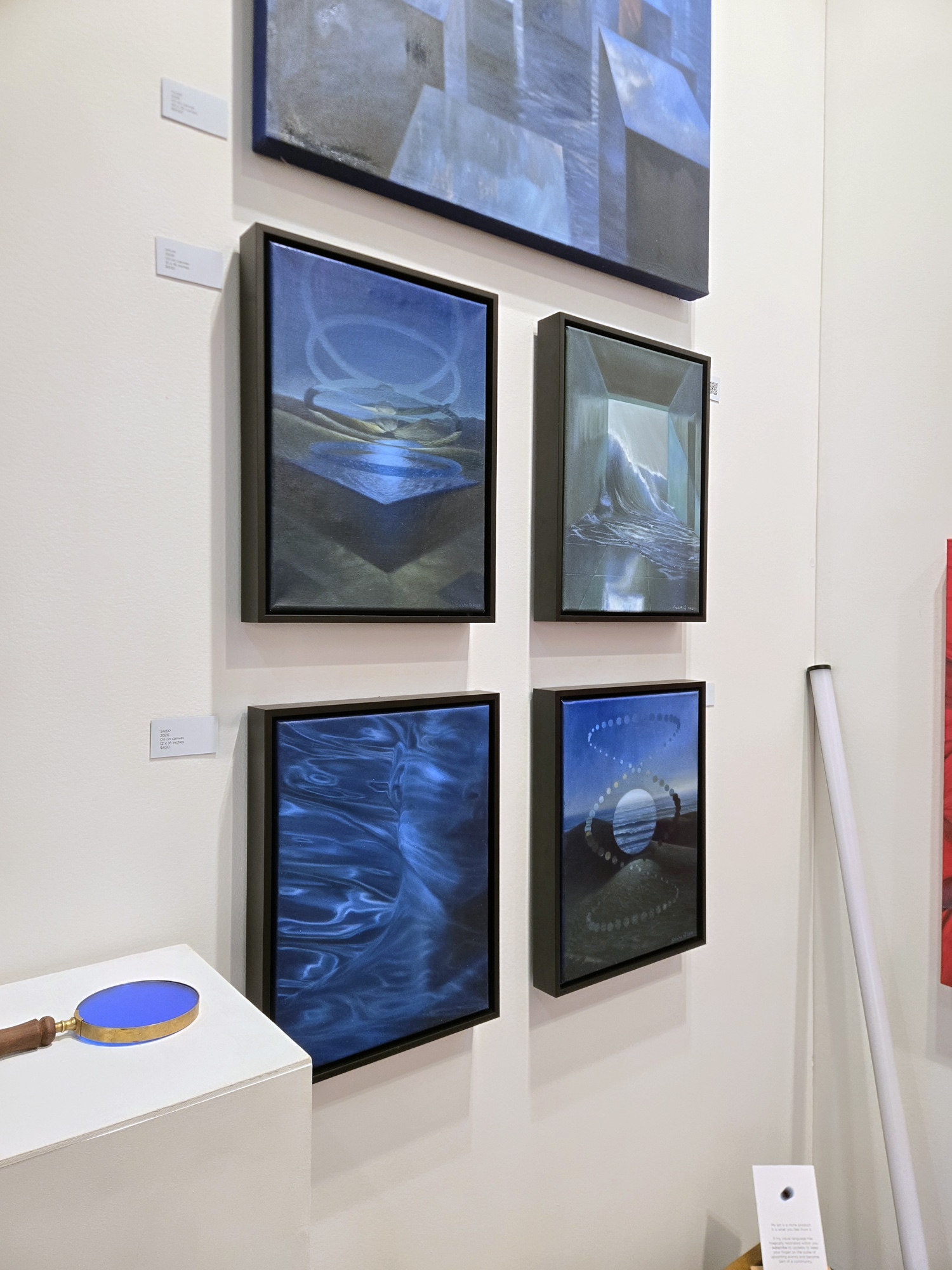
You have worked in digital fields, but physical painting remains central to your practice. What keeps you connected to it?
Even when I was working in games and animation, I continued making physical art.
There is something about it that feels alive to me. I know how to work digitally, but I have always put a lot of myself into creating something physical.
I also enjoy the material qualities of painting. I work with both oil and acrylic, and sometimes I combine them. Different finishes—matte and glossy, for example—can interact and give the surface more depth.
Physical work comes with practical challenges. It is harder to transport, organize, and exhibit. But I have continued with it because it matters to me.
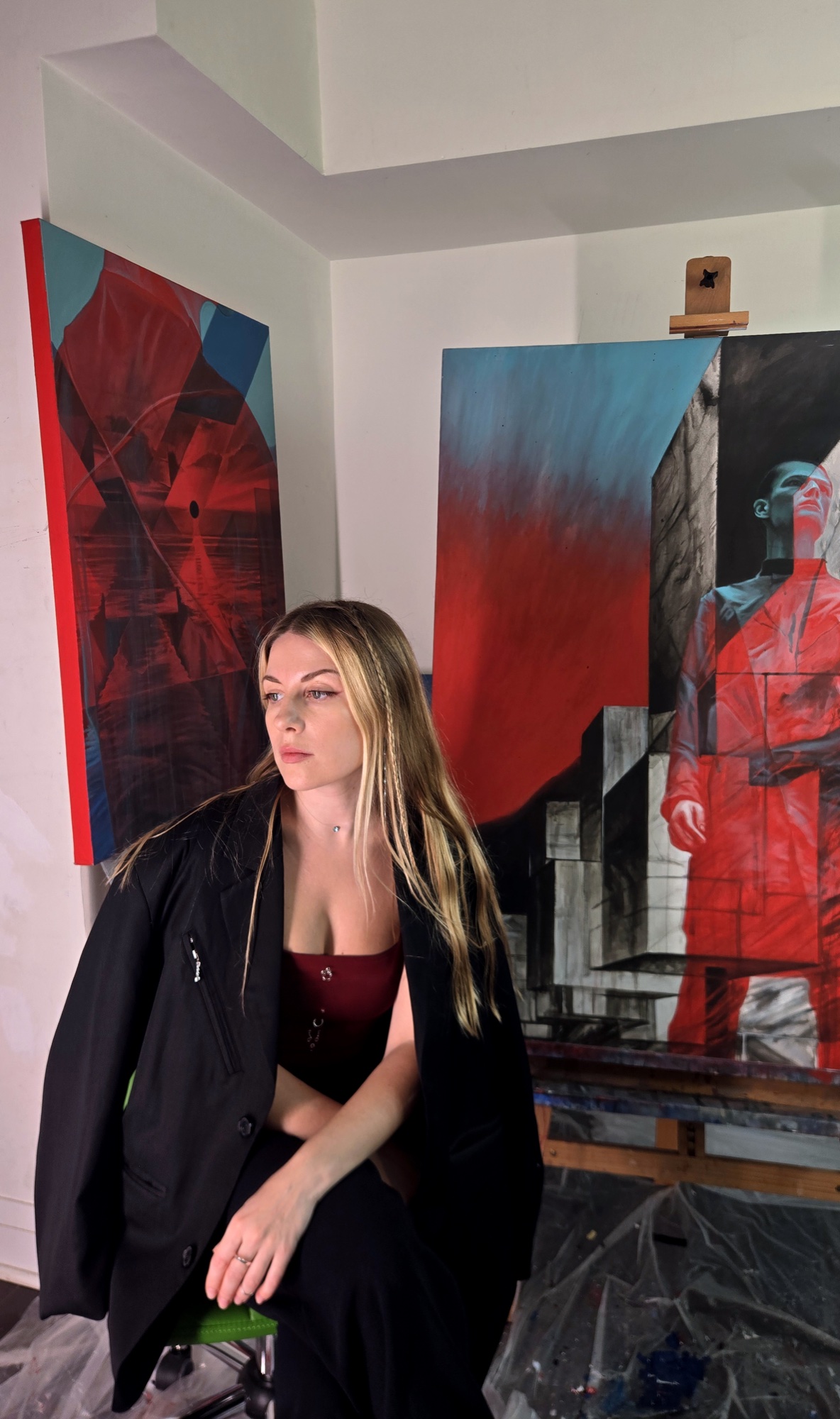
Inside the paintings
Let’s look at Configurations. How did your collaboration with ObjectX shape this work?
ObjectX is a Ukrainian fashion brand, and I wanted to introduce the work to a Canadian audience. We planned a presentation combining fashion and an art exhibition. That presentation was postponed, but I created three paintings as part of the collaboration.
The paintings draw on the urban feeling of Kyiv, my hometown. There is a lot of modernist and brutalist architecture, and I wanted to bring that into the abstract forms.
Those architectural qualities connect with the brand’s functional, tactical approach to clothing. It became a combination of brutalism, fashion, and painting.
Acrylic on canvas
This painting is part of a collaboration with Ukrainian fashion brand Object X which creates wearable functional objects inspired by the metaphoric vision of soul and body. The textures of concrete and the interplay of modernist geometric…
What were you exploring in Reminiscence?
It is about remembering a place I consider home, which I do not have the chance to be in, and figuring out where I go from here.
I am also interested in the line between dreams and reality. It is like watching a dream while you are awake.
Oil on canvas
In this mini-cycle, I'm reflecting on my homesickness and searching for an art method that conveys an abstract feeling between dream and reality. The natural landscape one's person was raised in is what shapes a personality and travels in…
And what does Becoming mean to you?
For me, it is about changing your destiny and becoming someone different. That connects to my own experience.
I never originally planned to immigrate. Moving to another country was a huge change, and that experience is part of what I am expressing in the painting.
Oil on canvas
Dedicated to embracing the state of permanent change, instability, and the transformations that unfold. Life reshapes us. Circumstances will seek our fractures. Only the flows remain unbroken - yet they can wear down stone. Who are you…
Reaching new audiences
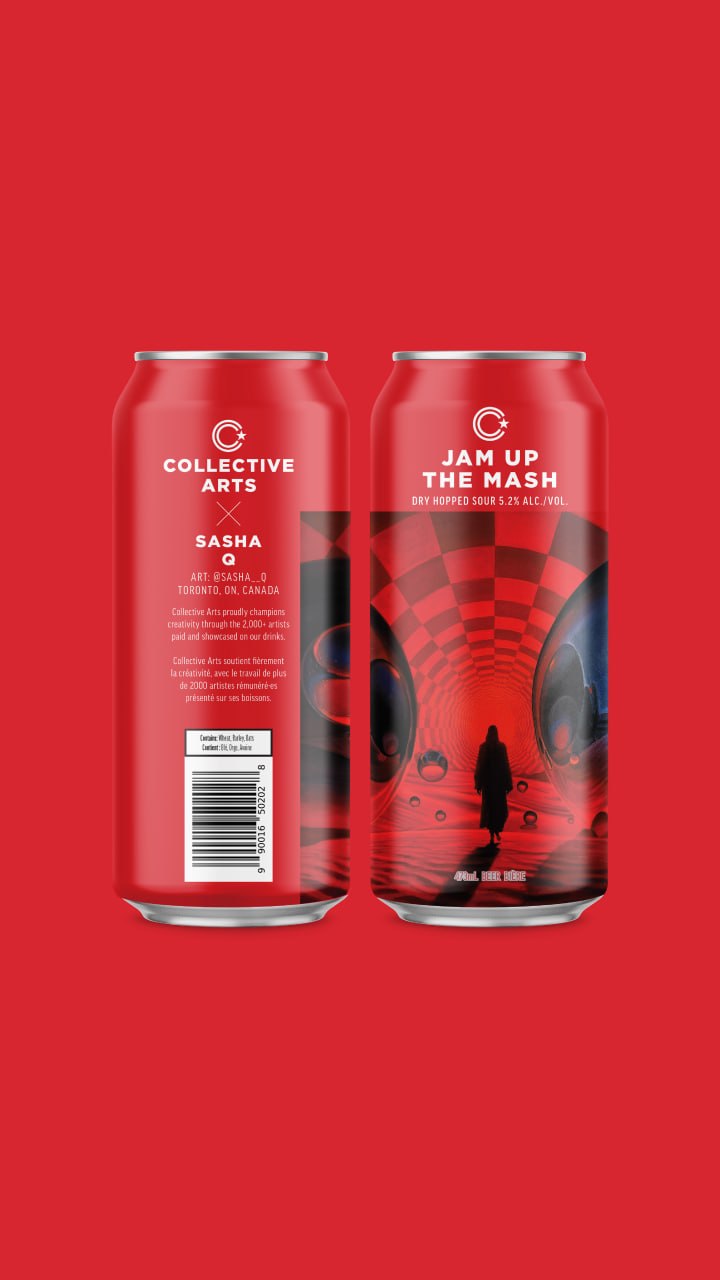
During our conversation, you showed us a Collective Arts beer can featuring your work. How did your art become part of that project?
Collective Arts licensed my artwork for one of their cans. They contacted me by email, and I had just bought a can with my work on it.
They feature many different artists across their beers, so there is a large collection of work to discover. Looking through it feels like looking through an art gallery.
They also offer prints and support artists through those projects.
What kind of career do you want to build, and how does your interest in Artsume fit into that?
My dream is to be a world artist—to build a career that is not attached to one particular place.
Artists need to keep discovering new audiences. I want to be able to connect with opportunities in different countries and continue my practice wherever I am.
I had only recently started using Artsume when we spoke, but I noticed opportunities from around the world. That is something I want to explore.
The idea of a platform where artists can find opportunities across different places interests me. Working with physical art involves a lot of organization and logistics, so building those connections matters.
Making room for what comes next
What are you exploring in the studio now?
I am developing a smaller cycle of more soothing, meditative pieces about the feeling of home.
I am interested in home as an emotional feeling. It is something I have been missing and trying to understand, and the work gives me a way to explore it.
The new pieces are also about processing emotion and making room for hope.
The palette will be more subtle. Although people may recognize certain colours in my work, I do not always use them in the same way. I want to keep exploring what the paintings can become.
Has your confidence in expressing your own ideas changed?
In the beginning, I had a strong block around what people would think.
I worried about how they would respond to what I was expressing. Eventually, I decided to embrace the awkwardness of it and give my subconscious more freedom.
Showing your art can feel very exposing. There is so much of your personality in it, and then you put it in front of other people.
But I want to be myself in the work. Learning to allow that has been an important part of the process.
What keeps you moving forward?
I think about my future self. I do not want to abandon what that person could become.
I want to continue my collections and keep developing the work. I would regret looking back and feeling that I had not done what I could.
I always want to believe that the best is yet to come and that I am still evolving. I do not want to reach a point where I think, “I am perfect; that is it.”
I want to keep learning, refining, and transforming. It is a journey.