In conversation · Kezleigh
Kezleigh: The Wall Is the Canvas
The Toronto-based new media artist on giving digital paintings a physical form, finding a language for memory, and building a career one “yes” at a time.
Interview by David Rozenfeld
· 14 min read
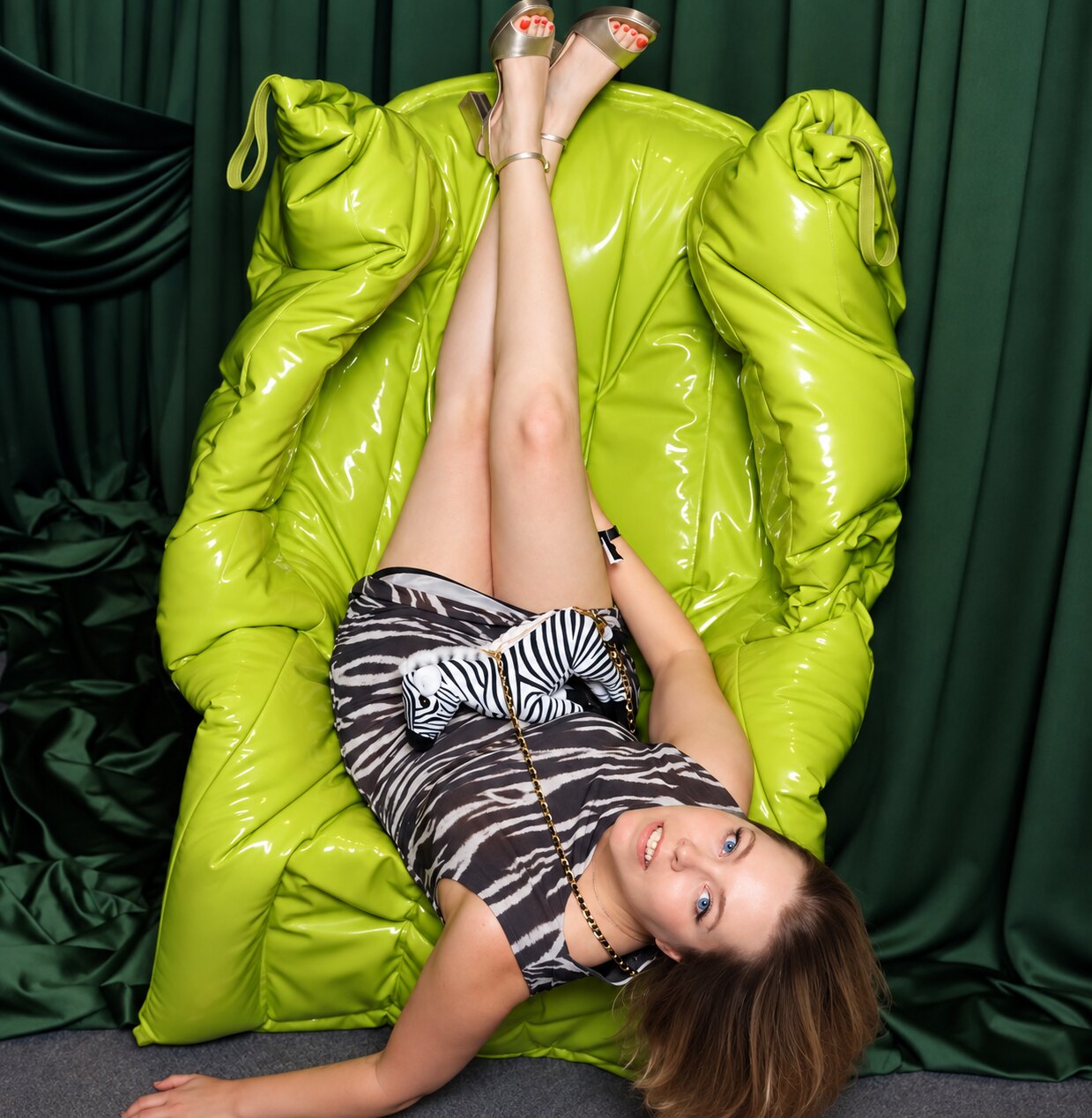
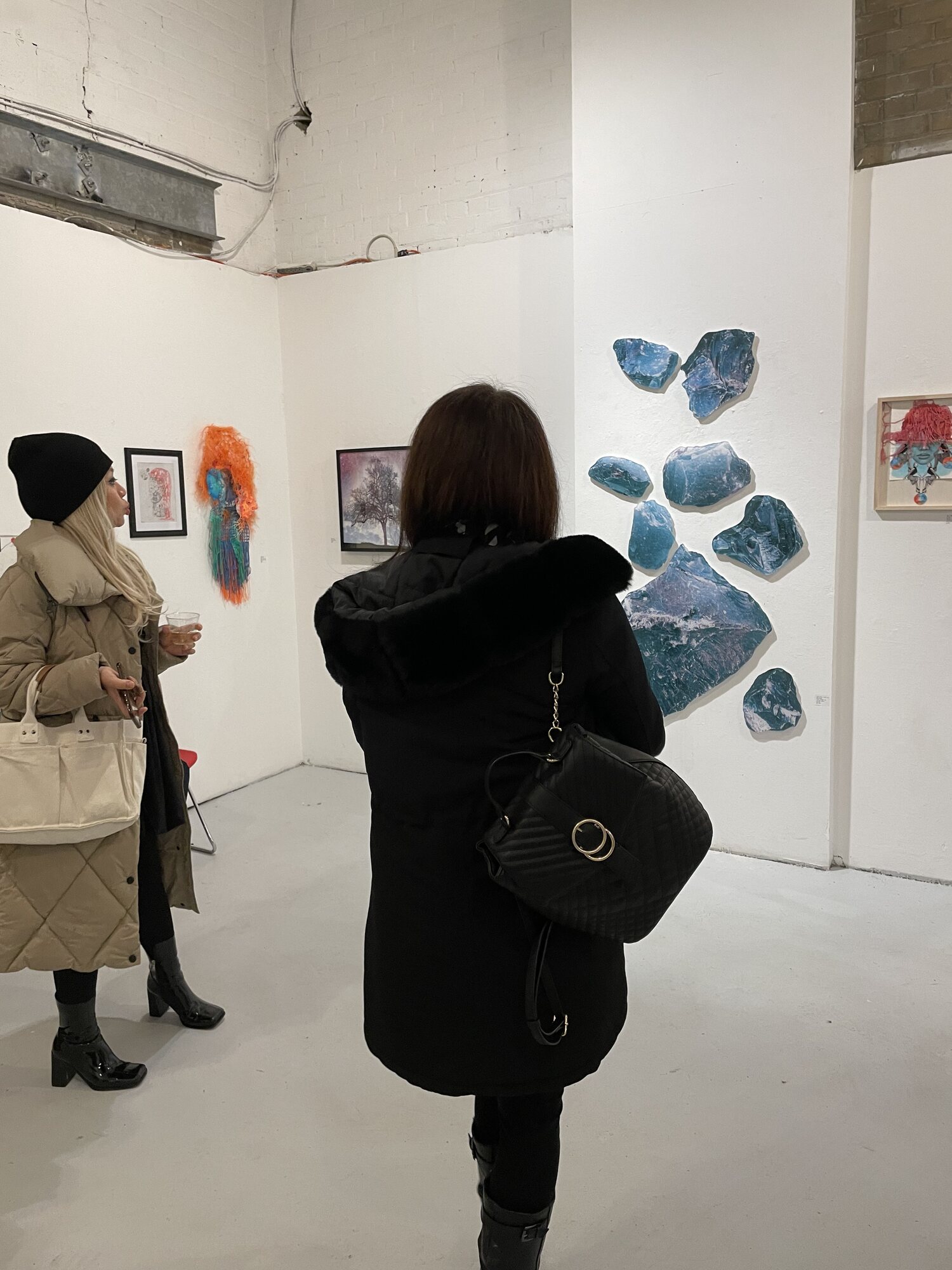
For Kezleigh, a digital painting does not have to stay on a screen. It can become a vivid, irregularly shaped object, printed onto acrylic glass and cut to follow its own outline. She does not fit the work inside a rectangle. Its shape decides where it begins and ends.
She paints with digital brushes she makes herself, and her work comes from colour, memory, and the feelings that stay after an experience. The finished pieces can look immediate. Their development often is not: an idea can sit for years before one particular shape feels right.
In this conversation with the Artsume community, Kezleigh talks about finding her medium, the emotional work behind digital painting, and the persistence it takes to build an artistic career. You can see her pieces on Kezleigh’s Artsume profile.
This interview has been edited and condensed for clarity.
Beyond the rectangle
How do you describe what you do?
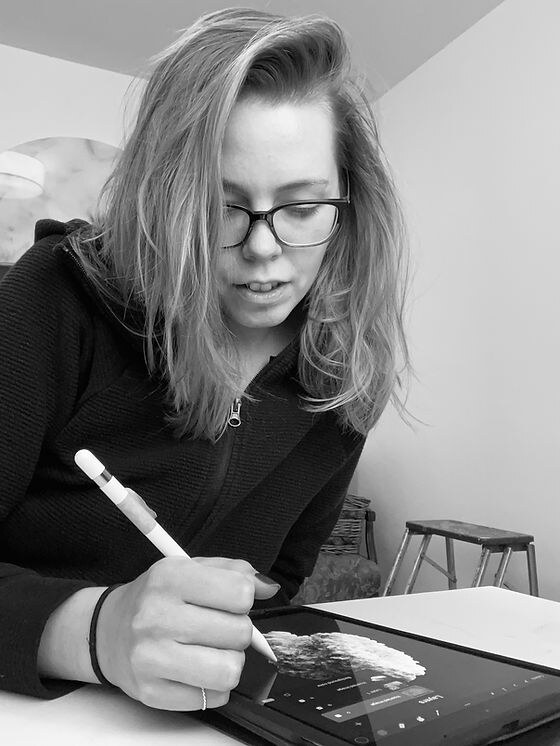
I’m a new media artist, although I move between “digital painter” and “digital artist,” depending on who I’m talking to. When people hear “digital artist,” they sometimes think of AI, television screens, or projectors, and then it gets a little hazy in terms of what I actually do.
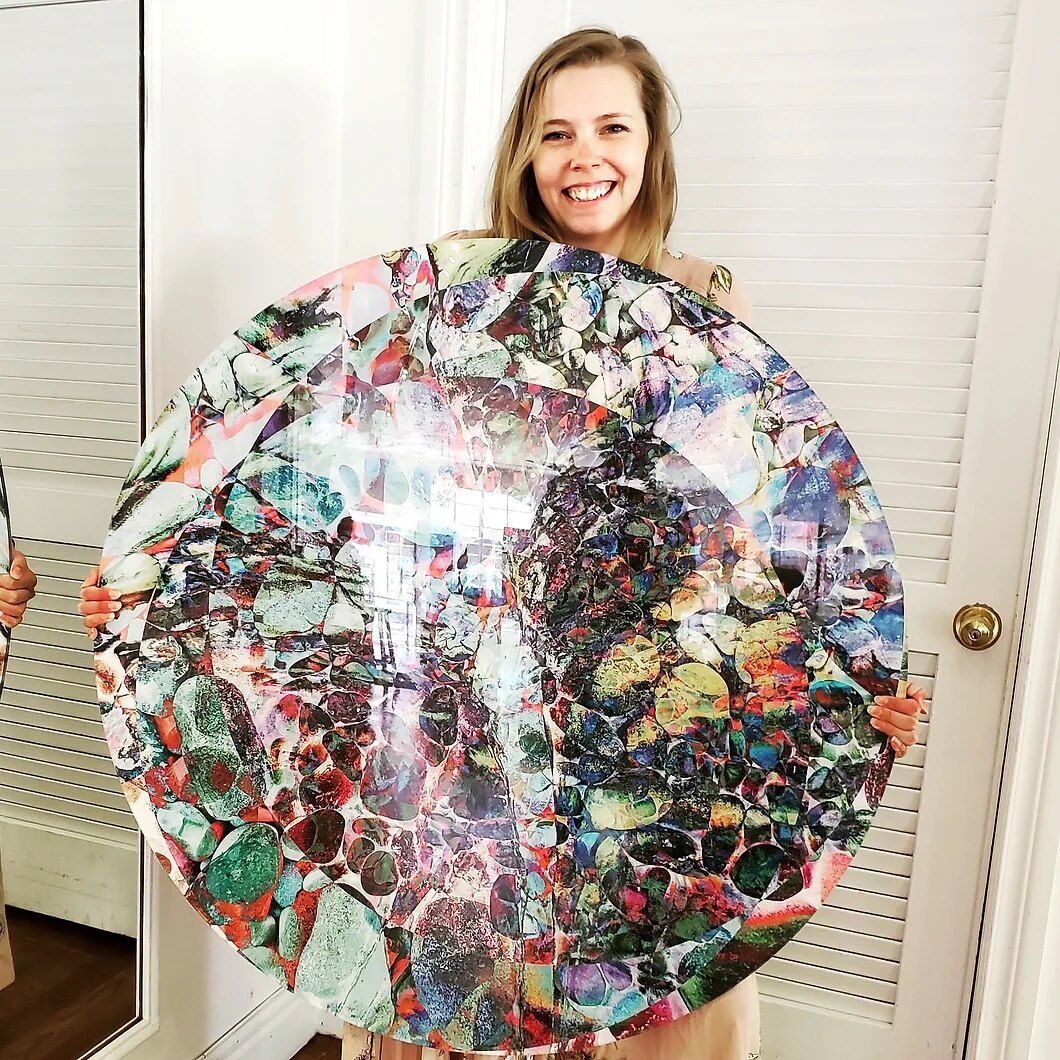
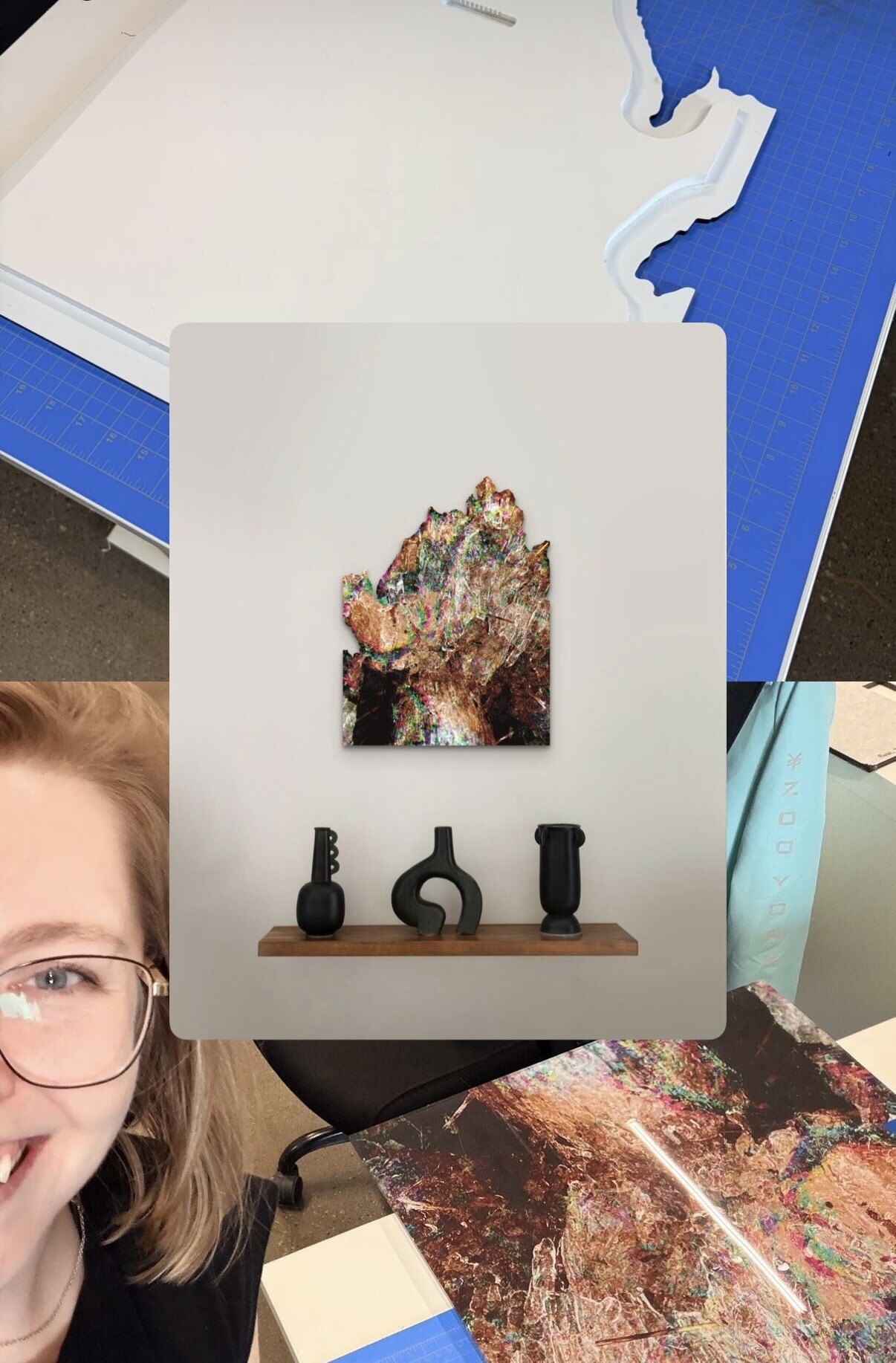
I create digital paintbrushes that I use to paint my work. It’s traditional painting turned digital. Then I send the work to a printer, where it’s UV-printed onto acrylic glass and laser-cut into shape.
Besides making the work itself, my favourite part is seeing it on the wall. It isn’t a square or rectangular piece. The wall becomes the canvas—the place where you really get to see it. I don’t feel confined to a square.
How did you find your way into this process?
I started with traditional painting. I think I’ve been an artist my entire life, and a lot of artists would probably say that: they’ve always been creative.
But this really started during COVID. Traditional materials were being bought up, and I didn’t really have the money to buy them anyway, so painting on my iPad became my creative outlet.
At first, I had the work printed onto thin pieces of plastic and attached to the back of glass. It worked, but glass is heavy, fragile, and difficult to cut. I started looking for another material and found acrylic glass, which was lighter and easier to manufacture.
Before UV printing, I was working with thin vinyl sheets. Finding a process that printed directly onto the acrylic was another step forward.
When I first printed onto acrylic glass and added extra pieces to it, I thought, “Yes, this is turning into me.” My earlier works are definitely early works. I’m happy with where I am now, but there’s still another direction I want to take it.
Was there a moment when you started taking yourself seriously as a professional artist?
When I made the promise to myself that this was going to be my career, that was it. Right then and there: I’m a professional artist.
I wasn’t going to accept anything else. Whenever I meet someone new, I say I’m an artist. That’s what I do for my career.
Colour, memory, and the moment it clicks
You studied integrated design at Haliburton. What stayed with you from that experience?
We explored so many different aspects of design: glassblowing, drafting, drawing, painting, ceramics, and woodworking. We also had a course on dreams. It was very in-depth.
At the end, we could choose a certificate to go into, and I chose ceramics. So even then, there was this interest in three-dimensional forms. I really need that kind of form in my life.
But I would say colour transformed me the most. I was already fascinated by it, and design school took that to another level. I think colour is very informative. Even someone’s favourite colour can tell you something about them. Colour has its own language.
When a memory becomes part of your work, are you trying to capture what happened or how it felt?
It’s more about the feelings within the memory.
There’s a memory I have of playing with blocks in kindergarten. I also have a photograph of it, so the photograph and the memory are associated with each other. But when I think about the feeling, it’s more like shapes and colours: reds and greens, a little grey, and a fluid shape that moves off to one side.
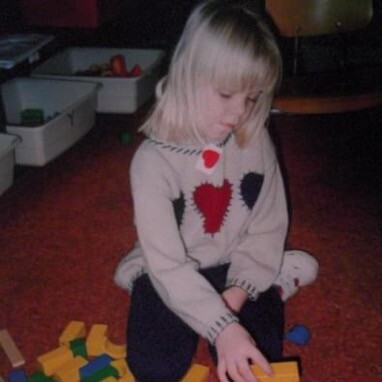
That isn’t necessarily a finished artwork yet. There are so many pieces developing in my head.
I’m interested in how the unconscious takes in information around us and how that forms us. Memories are fickle. Something you remember from school isn’t necessarily going to feel the same when you think about it ten years later. It moves and transforms.
Can you walk us through how one of those ideas becomes a finished piece?
With I think the silence speaks volumes, which recently sold, I’d had the concept for years before the piece came together.
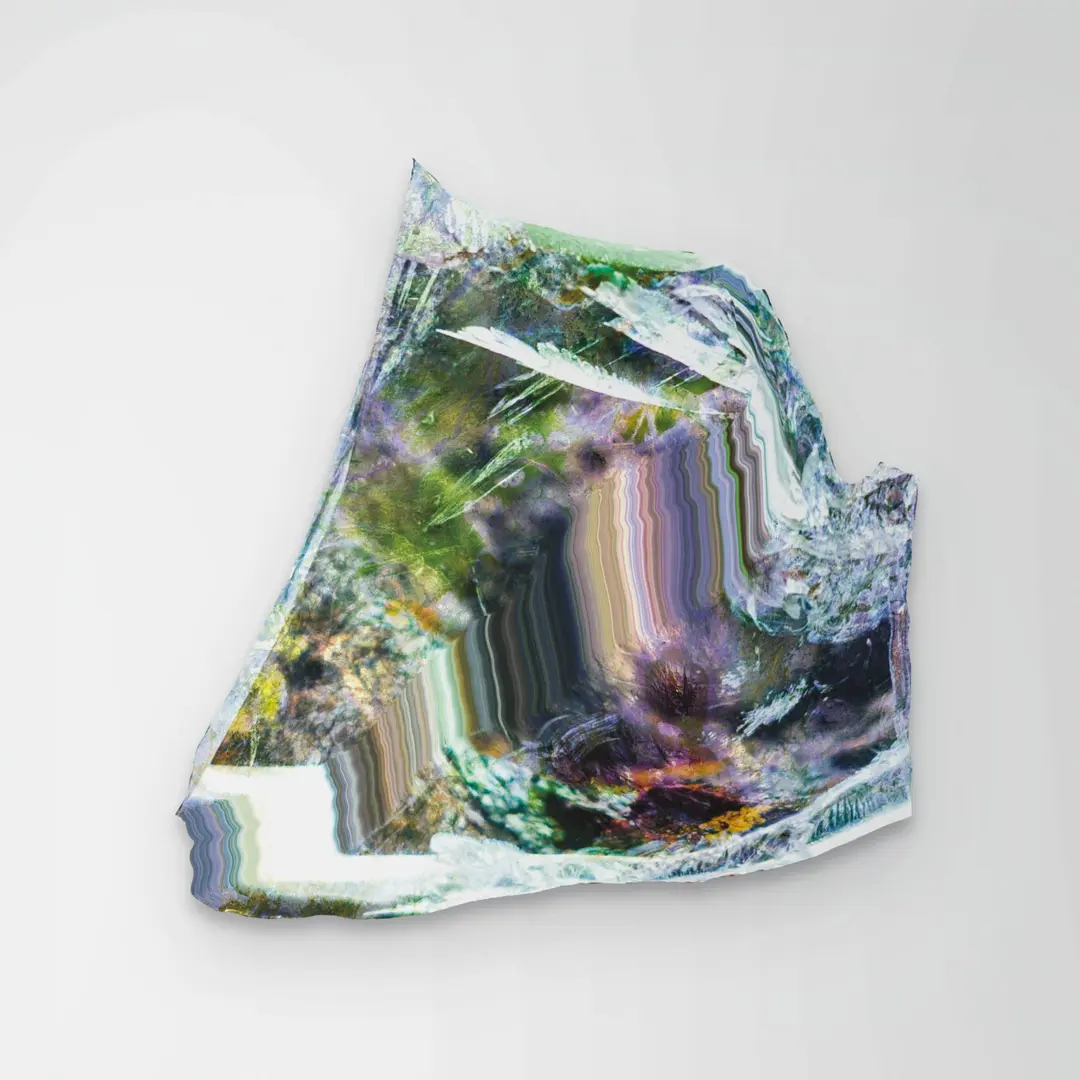
25 x 25 inches 1/1 Digital Painting UV Laser Printed on Acrylic Glass The work appears to float off the wall due to a special float mounting on the back of each piece. 1/4 inch high-quality, shatter-resistant, clear acrylic glass. Custom…
I do what I call “brain vomit”: creating backgrounds, textures, and colours, trying to get a particular feeling going. Then it simmers and marinates. It sits on my iPad or external hard drive, and I come back to it, add something, or take something away.
That happens for however long it needs to happen. Then, in one moment, it clicks, and I might finish it in a couple of hours.
The shape is a big part of that. I could have made a shape a thousand times, but in that particular moment, I think, “That’s it.”
Then I have to stop myself, because it could go on forever.
What would someone looking at the finished work never guess about that process?
How much it takes out of me.
Sometimes people see digital art and think, “That’s easy. I could do that.” But there’s a lot of emotional energy, thought, and repetition involved.
I might have made that shape a thousand times, in a thousand different ways. For some reason, the shape it has now is the one that feels right.
A piece can feel like it’s never finished. Once I feel that connection, I have to say, “It’s done. Cut it. Send it to the printers.”
Bringing the work into the world
What does working with acrylic glass allow you to do that a screen or a paper print wouldn’t?
It gives me the freedom to make the work what I want it to be.
The original pieces exist digitally, so I can change a colour or a size. If a client needs something different, that’s possible.
On a television screen, the work is limited to that screen. It’s the same feeling as being confined to a canvas. With acrylic glass, I can print the work in parts and make it much larger. It can be as small or as big as I want to work towards.
You’ve spoken about wanting technology to create wonder. What do you want people to understand about digital art?
I feel like people are tired of AI, technology, and screens. But there are still so many amazing things happening with technology, and I want to bring that sense of wonder back.
I want people to see that technology can be useful and exciting. And I want the art world to see that digital art is real art.
How do you help someone imagine a piece in their own space?
I use digital room images to show the work on a wall. A client can also send me a photograph of their own wall, and I can place the work in that image so they can see how it would look.
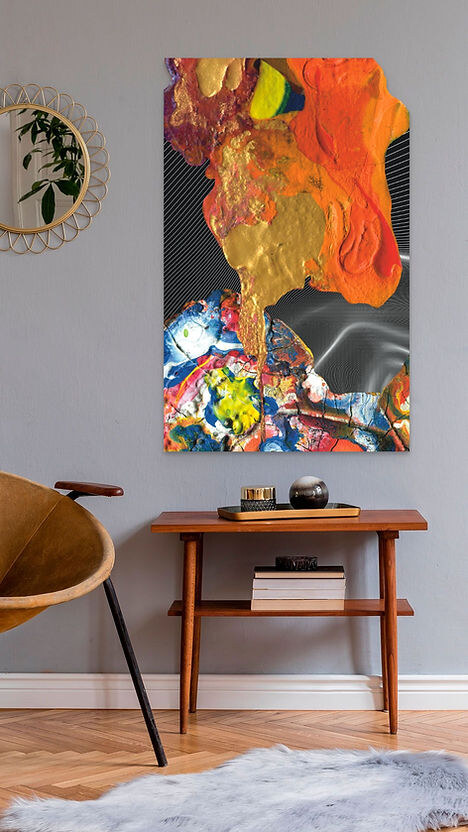
The work generally stays digital until someone buys it, and then I have it printed.
That’s another thing I like about working this way. I have a printer in France for my European work. Someone in Germany can buy a piece, and I can arrange for it to be printed in France and sent from there, rather than shipping it all the way from Canada.
The stories inside the shapes
Let’s talk about policing my joy. What does the relationship between those two figures mean to you?
My work is personal to me, but I want viewers to have their own interpretations.
For me, policing my joy is about being diagnosed with bipolar disorder and trying to stay balanced—not too high and not too low.
The two figures are reaching towards one another. When you’re low, you’re trying to reach towards yourself and say, “Come up.” But when you’re too high, there’s another part of you trying to bring things back into balance.
The middle space is full of flowers. That’s where the goal is for me: trying to stay level.
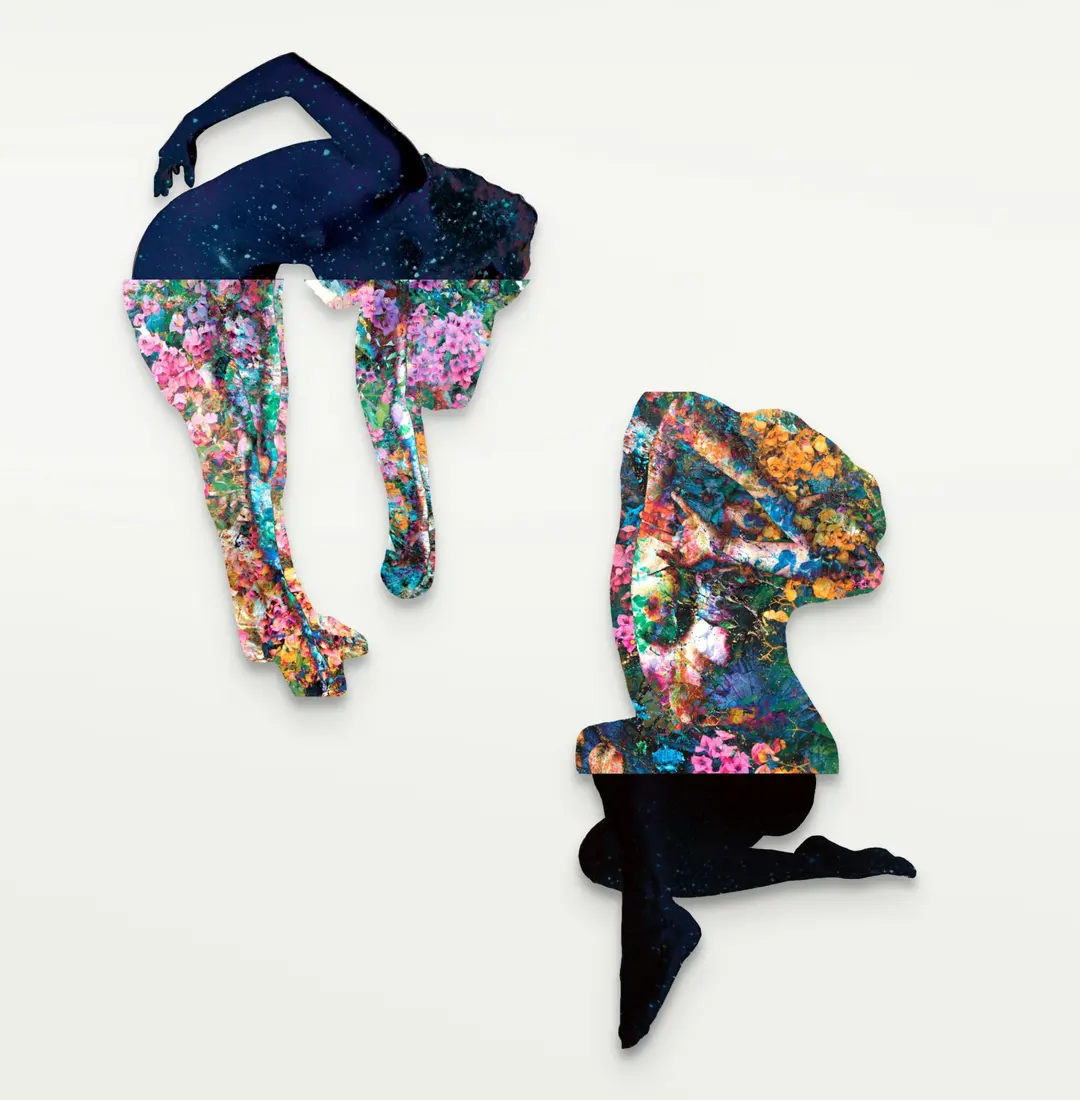
30x20 inches each 1/1 Digital Painting UV Laser Printed on Acrylic Glass The work appears to float off the wall due to a special float mounting on the back of each piece. 1/4 inch high-quality, shatter-resistant, clear acrylic…
Most of my work is more abstract, but I feel like my figurative pieces tell more of a story about myself. Each figure is a part of me. Making this piece helped me understand myself.
Your titles often sound like fragments of a larger conversation. Where do they come from?
They come from sitting with a piece for a long time. Sometimes they happen while I’m walking or feeling a certain way. Music and poetry are important, too.
I do a lot of intuitive writing. I start writing whatever is in my head and don’t stop. It doesn’t have to make a sentence or follow a structure. Whatever is there, I write it down. A lot of my titles come from that.
One piece came from walking during an orange sunset. It made me feel melancholy. The work is about that breakup feeling, when you sense something is going to happen.
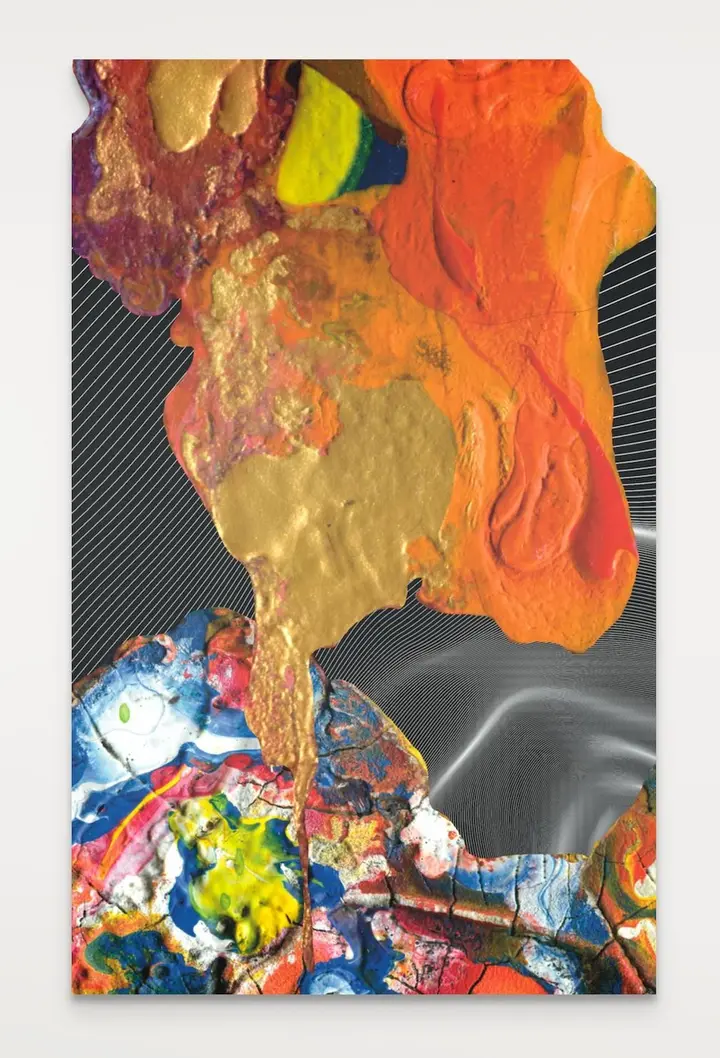
40x25 inches 1/1 Digital Painting UV Laser Printed on Acrylic Glass The work appears to float off the wall due to a special float mounting on the back of each piece. 1/4 inch high-quality, shatter-resistant, clear acrylic glass. Custom…
The first “yes”
What did receiving the Gladstone House Award at Artist Project mean to you?
It was my second year at Artist Project, and it happened on the Sunday, at the end of a very long weekend.
I’d set up the booth and done all the talking. I was overwhelmed. When they first came to find me, I wasn’t even at my booth. I was sitting on a bench with my head down, thinking, “This is so much.”
When I came back, the artists around me said someone had been looking for me. Then she came back, gave me the award, and we took photos.
I had just been feeling so overwhelmed, and suddenly I felt amazing. Being recognised as a new media and digital artist meant a lot.
I had a piece at the Gladstone for a whole year, and I got to stay there for a night, too. It was wonderful.
Was there someone who took a chance on your work early on?
Rachel Doner Turrin, a curator here in Toronto.
When I first came to Toronto, I cold-emailed her. I said I’d seen that she was a curator and sent her a few of my early pieces. She responded, and I think that was my first “yes” here.
Artists get so many noes before they get a yes. She was my first yes.
She saw potential in my work early on, and that became an ongoing relationship. She’s helped place my work in condominium spaces in Toronto and continues to put it in front of people. That’s been really important to me.
The work of being an artist
What has been the hardest part of building your practice that has nothing to do with making the work itself?
Being my own boss.
To be a successful artist, I feel like you also have to run yourself like a business. You do your own marketing and networking. You’re your own website developer. You answer your emails and do the office work.
And you have to get yourself up in the morning and make sure you eat three meals a day.
It’s all the things I have to make myself do in order to be Kezleigh. That’s probably the hardest part.
How do you keep putting yourself out there, especially when it feels uncomfortable?
Every spring and fall, I apply to galleries throughout the city. I keep coming back: “Hello, I’m Kezleigh again. This is my work.” I’m not giving up.
Networking is something I’m always pushing myself to do. I recently went to an event at The Power Plant on my own, trying to meet people and connect with like minds.
It was scary. I was shaking going in, and that happens every time. Every networking event, I’m terrified.
But I do it, and once I’m there, it feels a lot better.
How did you find Artsume, and where does it fit into your practice?
I was applying to Abbozzo Gallery and saw that submissions went through Artsume. I signed up and made my profile.
Then I found the artist card and the CV that you can download. Updating a CV can be so taxing, so I love that part. The presentation is clean and straightforward: here’s the work, here’s the artist.
I also use the artist card in my phone wallet. When I meet someone, I can pull it up and say, “Here, scan this. It has everything.”
I prefer that to handing someone a business card that might just end up in the bin. It’s helpful to have everything in one place rather than maintaining something different on every platform.
What comes next
Where do you want to take the work from here?
I want to move further into three-dimensional, sculptural forms.
With tie me to the waves that pass around me, the depth is actually an optical illusion. That piece is two-dimensional, even though it looks like it comes off the wall.
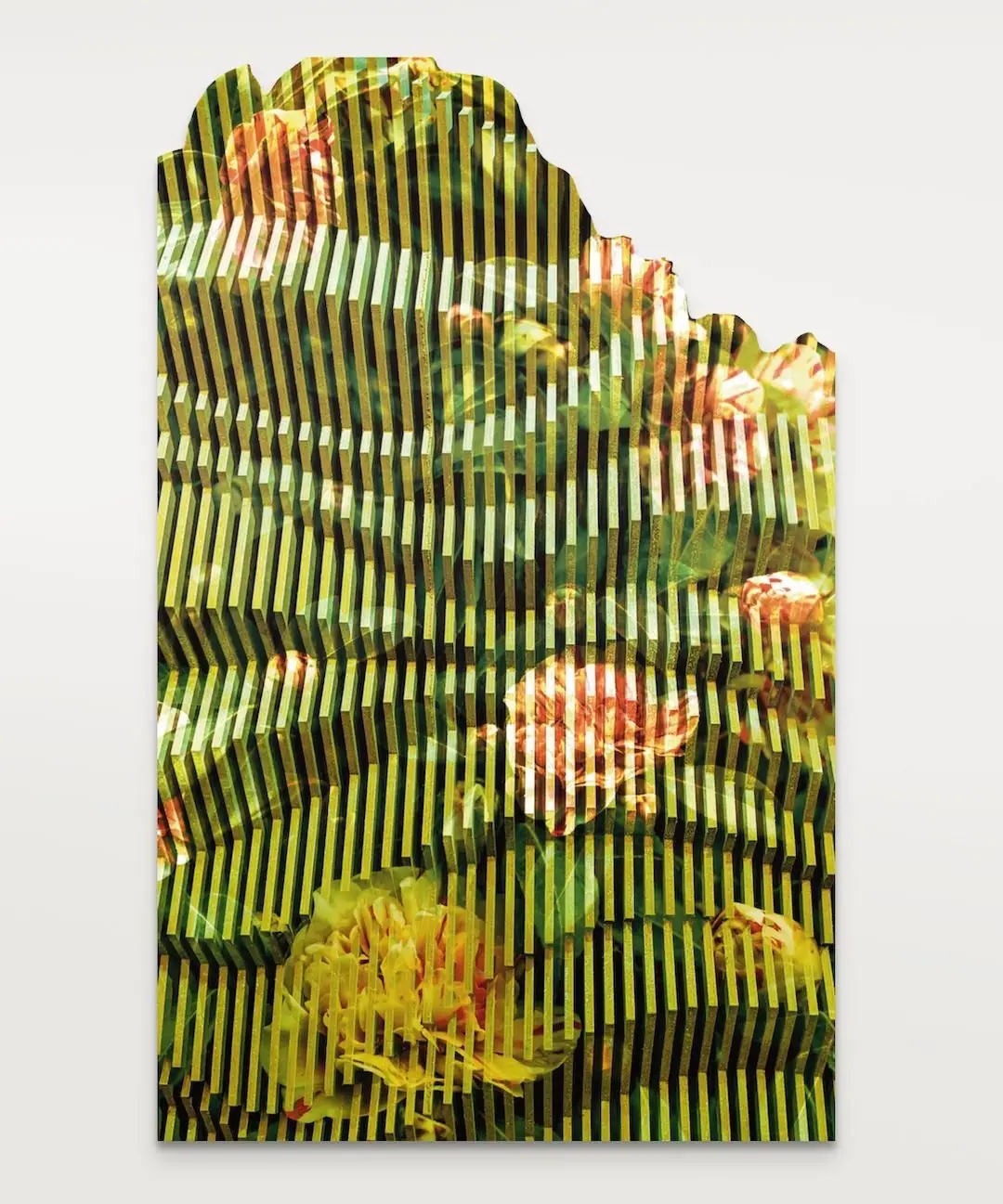
40 x 25 inches 1/1 Digital Painting UV Laser Printed on Acrylic Glass The work appears to float off the wall due to a special float mounting on the back of each piece. 1/4 inch high-quality, shatter-resistant, clear acrylic glass. Custom…
When I made it, I knew I wanted that movement and dimensionality. The next step is creating more physical, three-dimensional structures on the wall.
I’d love to make an installation and explore public art. Even having one piece somewhere in a public space would be really exciting.
What would you tell the version of yourself who was just beginning?
That’s a difficult question, because if I went back and told her not to give up, she’d say, “Of course.” I have the same drive now that I had then.
I don’t think I’d even warn her about everything that was going to happen. I was scammed out of a thousand dollars at one point. I had printers cancel on me the day before delivery.
Those experiences were awful, but going through them made me stronger. They made me ask more questions and have meetings with my printers so they understood exactly what I wanted.
I don’t think I would tell her anything different.
I think I’d just give her a big hug. And maybe a coffee.
A really good coffee.
Kezleigh’s acrylic pieces, from I think the silence speaks volumes to policing my joy, are on her Artsume portfolio, and you can contact her there. The artist card she keeps in her phone wallet and her downloadable CV come from the same profile. If you send your work to galleries every season the way she does, read how to approach an art gallery and the artist CV guide, or browse open calls.