In conversation · Artspace Peterborough, Leslie Menagh
Breathing Space: Leslie Menagh on Artspace Peterborough
The artist and arts administrator on creative collaboration, the relationships that sustain an artist-run centre, and making room for people to try something new.
Interview by David Rozenfeld
· 18 min read
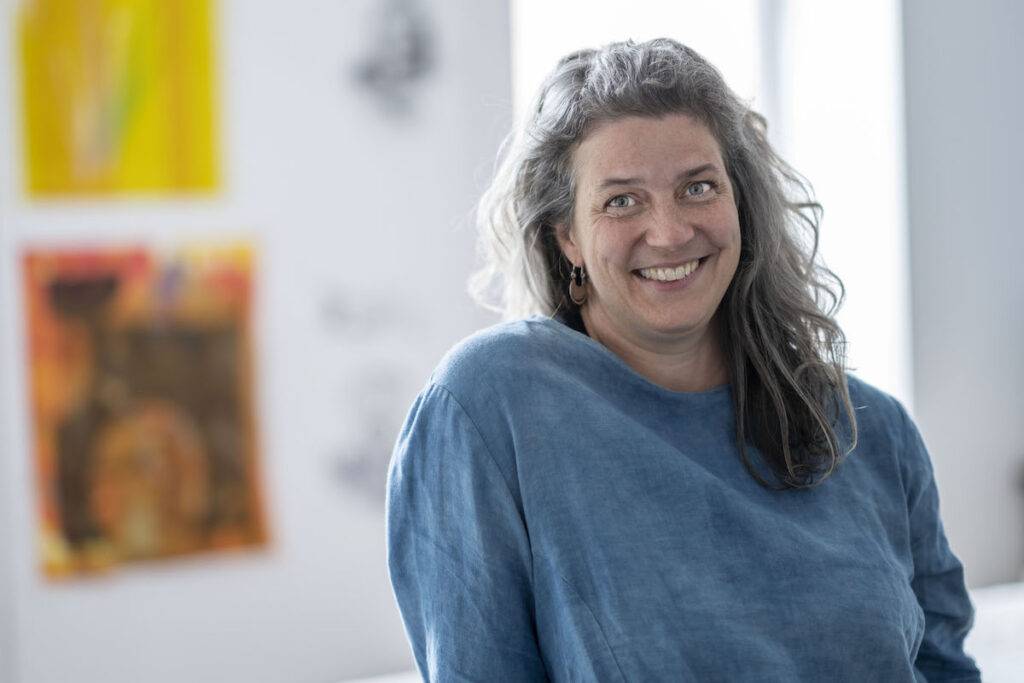
For Leslie Menagh, some of the most exciting moments in the arts begin with a question: What if? What if we used a different material, brought another person into the conversation, or changed the way a space works?
As Executive Director of Artspace Peterborough, Leslie brings that curiosity to the work of supporting artists. Her approach has been shaped by a childhood surrounded by community music, her own experience as an artist, and the textile studio she created when she couldn’t find the space she hoped to find.
We spoke with Leslie about what an artist-run centre makes possible, why hospitality matters, and how a shared studio, a community partnership, or a simple hello can change someone’s relationship with a place.
This interview has been edited and condensed for length and clarity.
A culture of community
How did the arts become such a central part of your life?
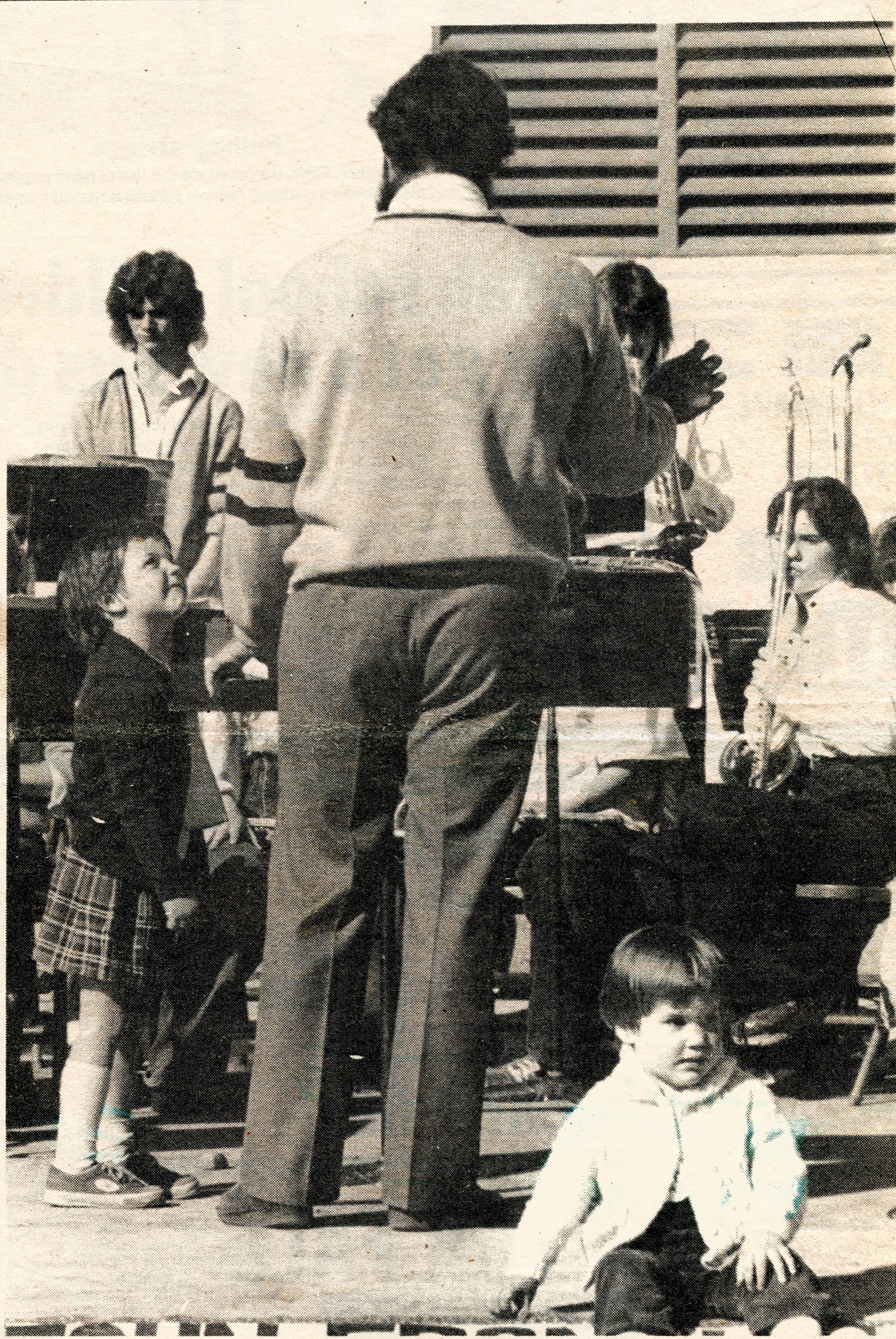
I was really born into it. My parents were involved in music, particularly community-based projects: choirs, marching bands, small orchestras. My father was an educator who specialized in music education, and my mother was a nurse. She wouldn’t call herself an artist, but she played flute in Dad’s bands and sang in his choirs.
They were interested in finding ways to bring musicians and artists together, often to raise money for something in the community, whether that was a hospital or a local cause.
I just absorbed that culture without having to think about it: gathering an audience and doing things for the whole community.
What is it about making things with other people that keeps you excited?
There’s a special thing that happens when people have to get creative or solve problems together. Folks realize that you all contribute skills, materials, and resources that no single one of you could have come up with on your own, and you become more than the sum of your parts.
Someone says, “Well, what if we did it like this, or used these materials, or this kind of platform, or approached this business?” I love those conversations.
It makes perfect sense to apply a collaborative approach to running an artist-run space. We’re trying to think that way all the time.
How does that shape the way you see your role in supporting artists?
I like to think of myself as more like a doula: someone supporting artists and helping them work through what they need to do to realize their vision.
Or a backup singer. Someone making the front of the stage available to another person and figuring out how to collaborate with them so they can be successful. That’s the role I’m interested in.
Building the studio she wanted to work in
What led you to create Madderhouse Textile Studios?
One of my most formative art school experiences was walking into the print-and-dye and screen-printing studio for the first time.
There were these huge, long tables, felt-padded and covered with fabric. We mixed our own dyes and inks, learned how to care for and expose screens, and explored different ways of working with colour. There was a kitchen with equipment for mixing colour and preparing materials. And there was something pretty magical about that space.
After I graduated, I kept looking for that kind of studio. I found something similar in Toronto, but it was a long drive, and I couldn’t always get there. I basically wanted to live in a space like that.
Eventually, I decided I would just have to recreate it.
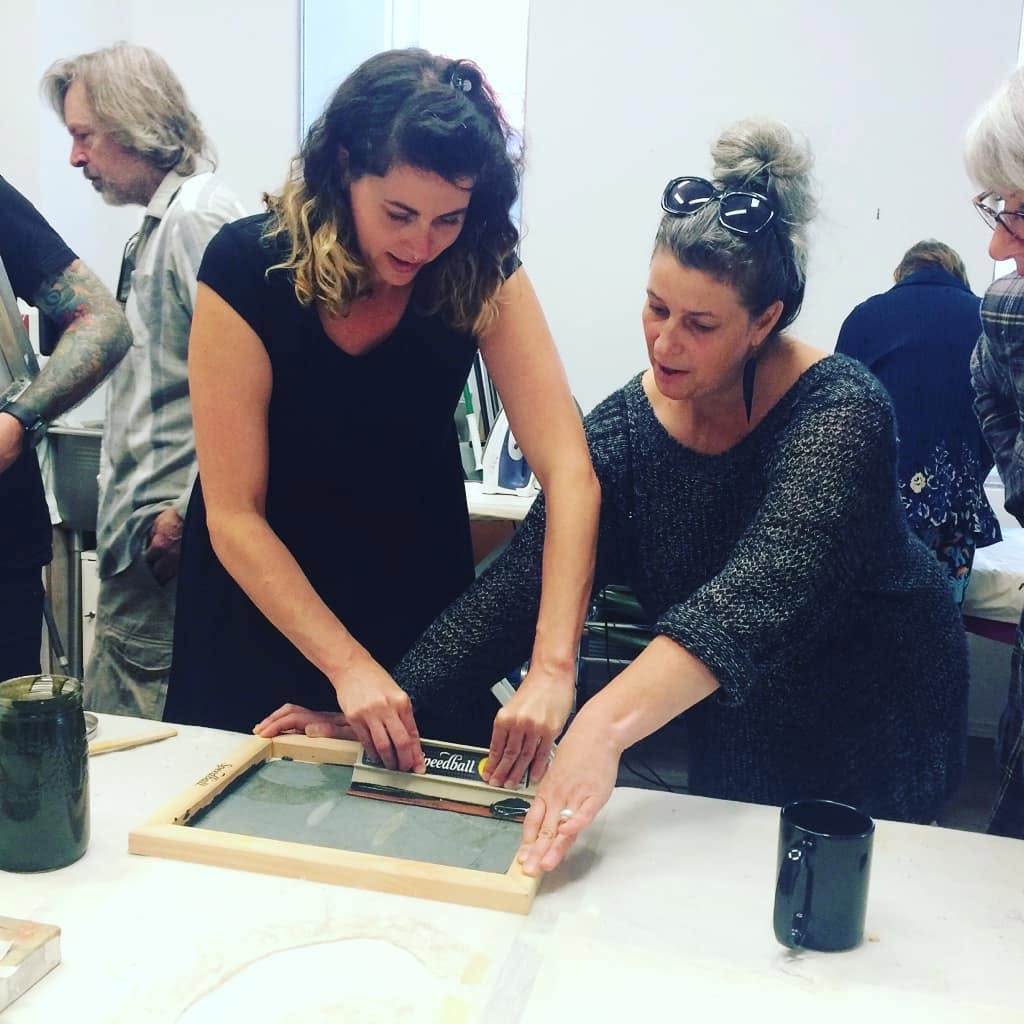
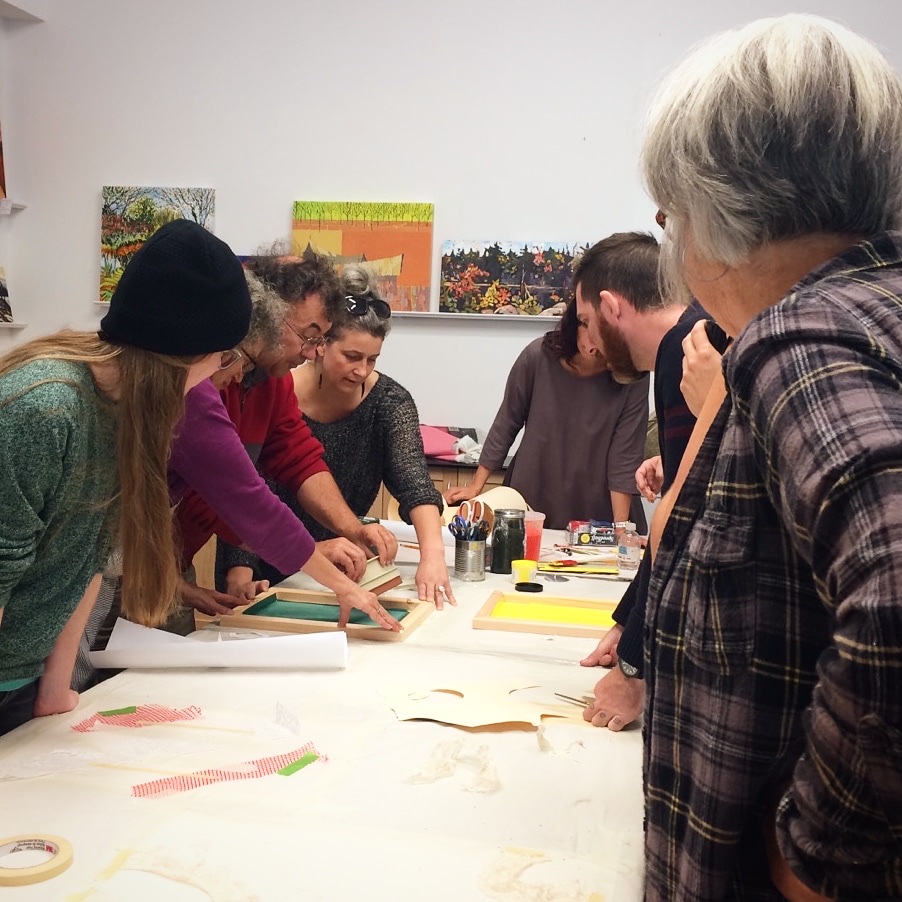
I created a studio above a shop, with a table that was twenty feet long and five feet wide. It had a darkroom and a kind of kitchenette and laundry area. I started printing, teaching classes, and bringing in other textile artists to teach various techniques. I also rented out studio time to artists who wanted to use the facilities for their own work.
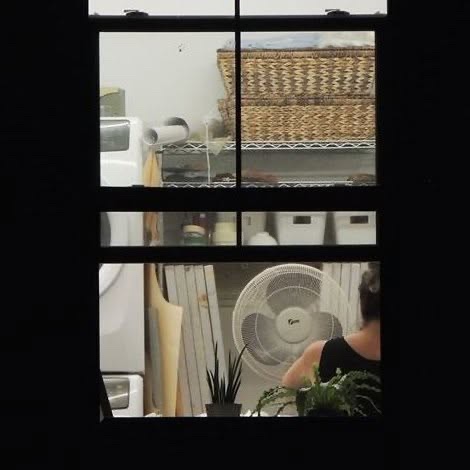
That was the beginning of Madderhouse.
How did it become a community project as well as a studio?
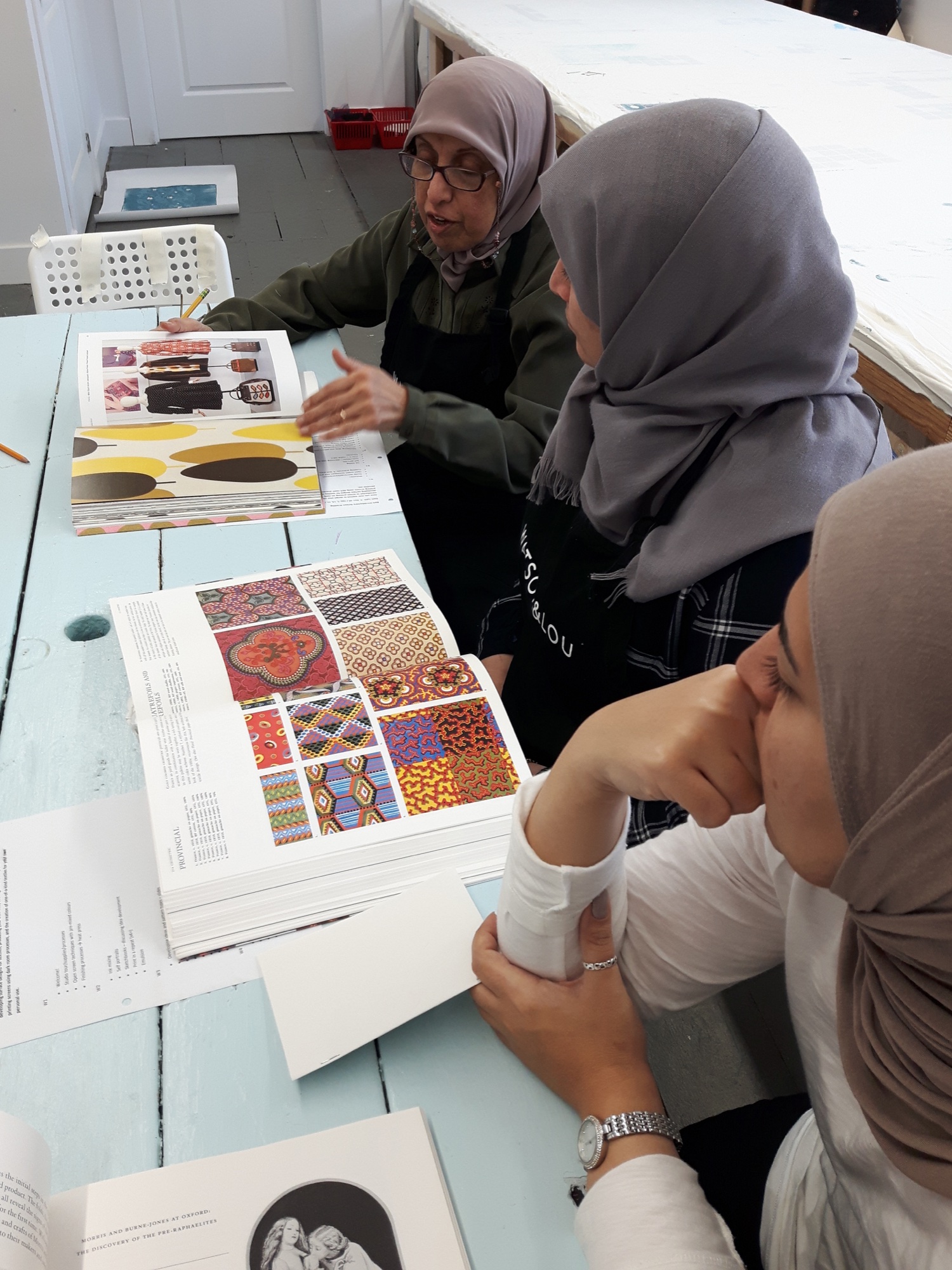
Through a friend working at the New Canadians Centre in Peterborough, I connected with a sewing group. We developed programming that brought the group into the studio to build skills around sewing and production. I could teach printing techniques, and we could collaborate on projects that created paid work for the participants.
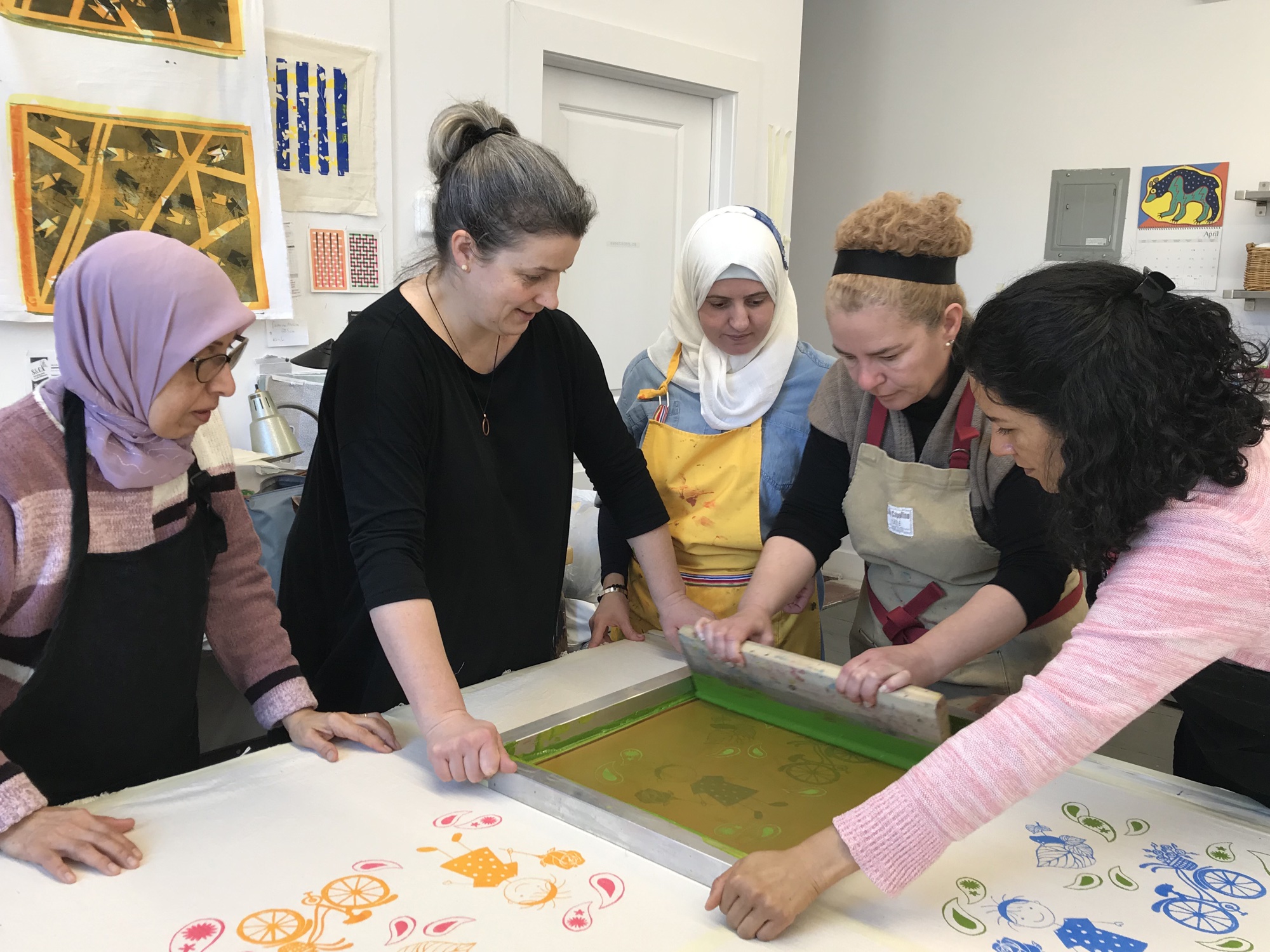
During the pandemic, that grew considerably. We made branded fabric masks for organizations placing larger orders. I would do the printing and send the fabric to teams of women working from home. When someone didn’t have a sewing machine, we would find one so they could participate. And I drove back and forth between Madderhouse and everyone’s homes, delivering fabrics and picking up finished products.
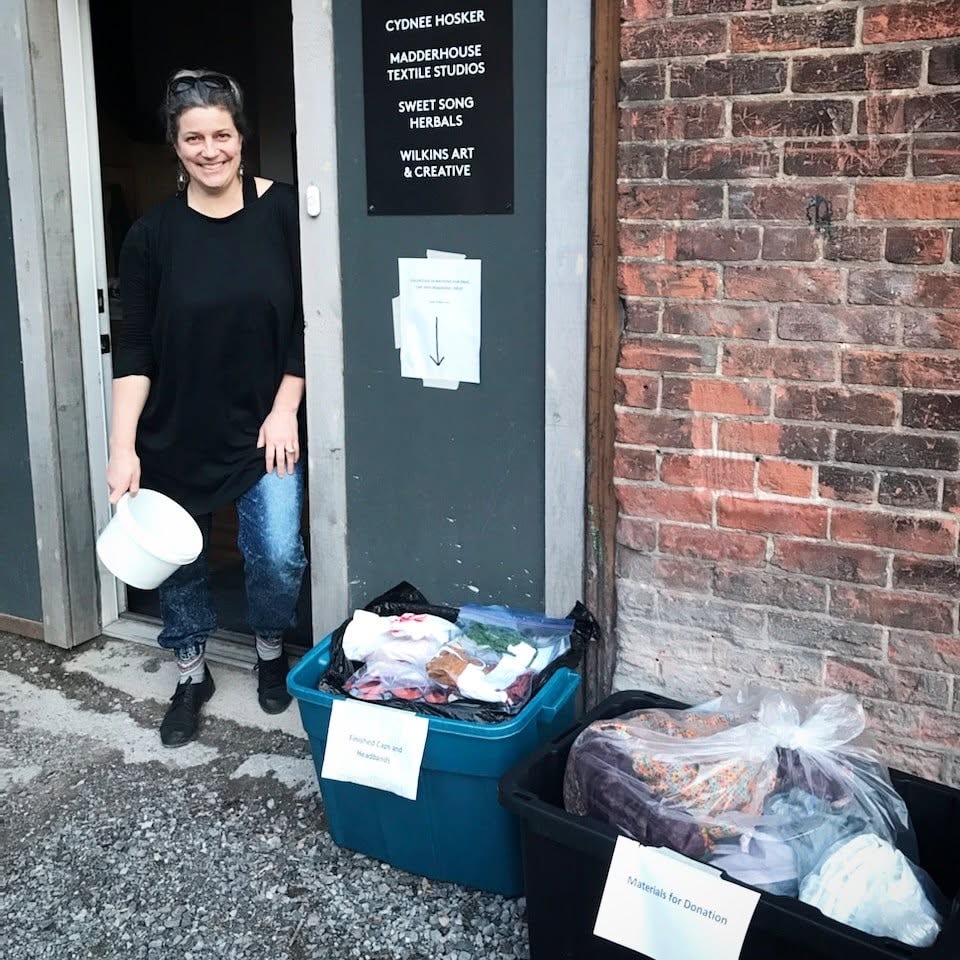
It didn’t make a profit, but it didn’t really need to. People loved the final product and loved supporting the projects. It brought people together, and it felt amazing.
Learning to lead an artist-run centre
What brought you to the director’s role at Artspace?
It was the summer of 2022, and the pandemic had somewhat subsided. I was ready for a new challenge and wondered what would come next. When the Artspace job became available, I knew it was an opportunity to develop my skills, and I felt I owed it to myself to apply.
I think I’m more of a risk-taker than I previously realized. I hear myself saying, “What if we did it this way?” more and more often. That experimental nature fits quite well with an artist-run centre.
What did you want to preserve, and what did you want to change?
I wanted to honour the organization’s long-standing reputation and its ability to attract really exciting contemporary artwork for exhibition, while making it more accessible and welcoming. I wanted to break down barriers to entry into the gallery, whether perceived or real. Galleries in general can be very intimidating and exclusionary, so I really wanted to address that.
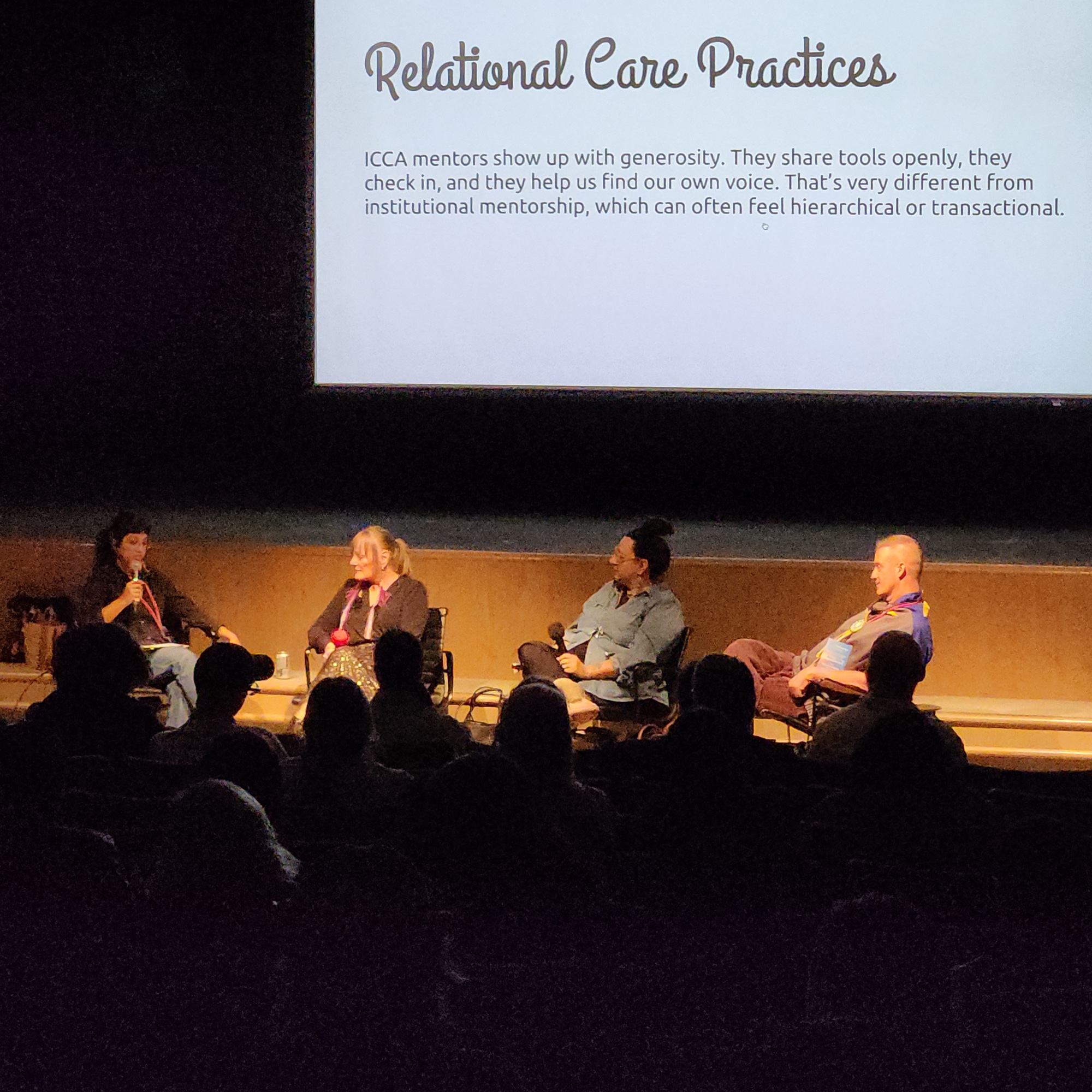
Artspace has also done really great work in the past featuring Indigenous artists. I have been eager to explore Reconciliation and decolonization practices, and I am very excited by the work of the Indigenous Curatorial Collective. I attend their conferences whenever I can.
For someone unfamiliar with artist-run centres, how do you understand their role?
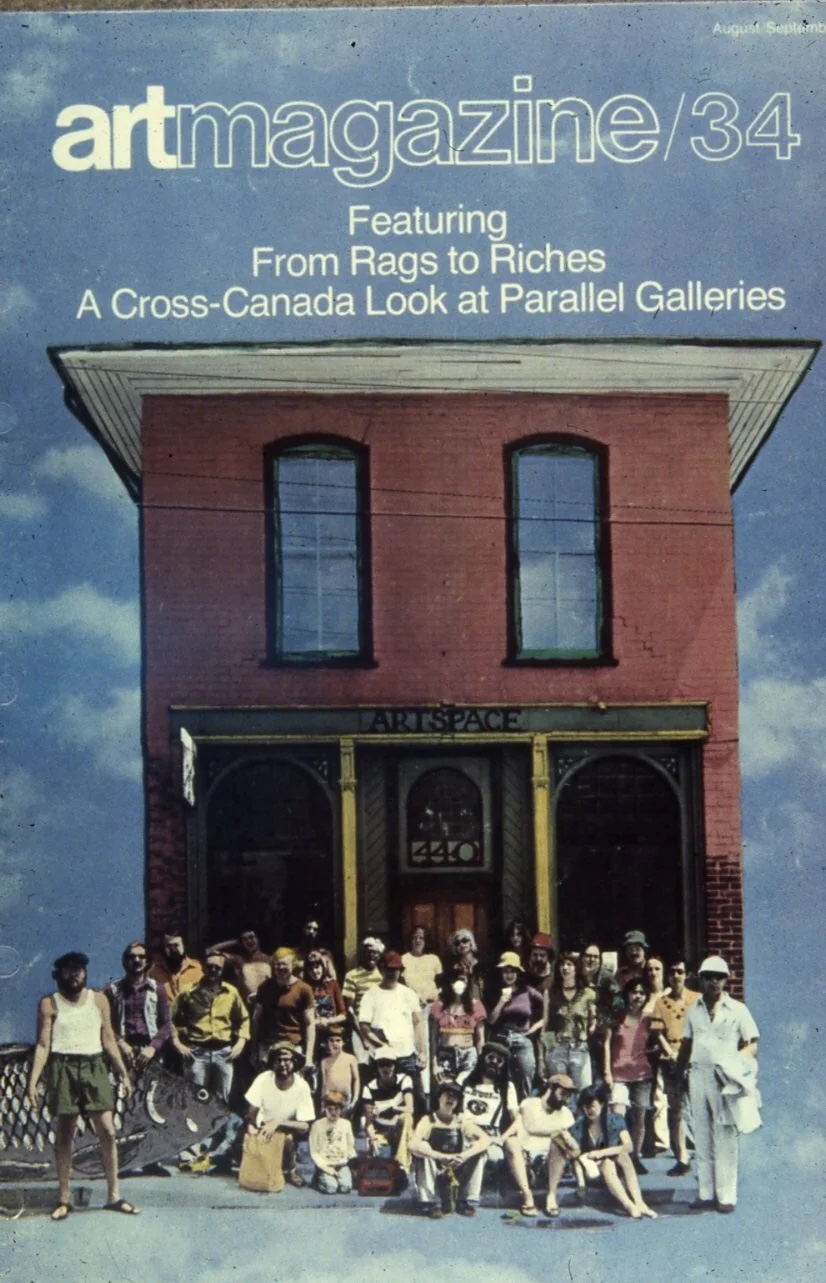
When they arrived on the scene in the late 1960s and early 1970s, artist-run centres helped fill a gap between large institutions and artists who were just starting out or coming out of school. And they had a huge community-building effect for artists of all kinds, at all career levels.
They were places where artists could be taken seriously, exhibit their work, receive feedback, and try new ideas. They had an incredible spirit of risk-taking and experimentation.
You’ve described Artspace as a place of learning—not only for the artists who come through it. What does that mean?
It’s not just a place for the professional development of exhibiting artists or members. I think it’s really important that it provides skill-building and professional development for staff and volunteers too. Everybody involved is learning.
Where relationships begin
What is distinctive about the artistic community in Peterborough?
There are so many people here working in music, theatre, and the visual arts. People have developed different explanations for why that is, and I can speculate too.
We’re surrounded by natural beauty. There are lakes, woodlands, farmland, places to take a canoe, places to hike and birdwatch, and many ways to connect with the land. I think that has an appeal for artists.
Historically, it also made economic sense for artists to settle here. It was affordable.
Then there’s Trent University and Fleming College, and the nearby First Nations communities. All these elements contribute to artists’ potential to thrive.
The Members’ Studio at Artspace gives artists access to shared workspace and equipment. What have you seen happen when those resources become available?
Relationship-building comes first. A new visitor arrived recently who’d been directed here by a friend. I told him that, as a member, he could come in whenever we were open and use the studio. He was surprised: “I can just come in here?”
He started spending time in the studio almost every day, developing a project. We have a camera, he brought in a light stand, and he connected with someone who could work with him on his project. Suddenly, he could do work he hadn’t anticipated being able to do.
Now he comes in, puts on an apron, and gets to work. When he hears me talking to a visitor about Artspace, he’ll join in: “Would you like to see what I’m doing?”
He ends up illustrating exactly what we are aiming for: connection. I’ll be sitting at my desk, overhearing it all unfold and grinning to myself.
What has the Book + Zine Fest taught you about bringing artists and audiences together?
Every year, I seem to have an impromptu conversation with someone who is excited because they’ve finally met a person they’ve wanted to meet for a long time.
They’ll say, “I’ve been following them on Instagram for five years, and they’re here!”
It’s a niche community. People are making, collecting, or deeply interested in this work, and they’re excited to be in the same room.
I think of the visitors and the vendor-artists as one community. The people looking through the vendors’ work are very often artists themselves, doing similar things. They have a lot to talk about, and they’re genuinely interested in one another.
More than an exhibition
How do you encourage artists to experiment when they exhibit at Artspace?
I make a point of asking artists to think about what they might do differently here.
How have they presented this work before? How will they install it differently, or explore a new idea or nuance? Afterward, artists will often say they were glad they explored new aspects of the work.
Sometimes they’ve had Artspace on their radar because of something particular about the gallery space: the light, for instance. I really try to invite them to respond to the space rather than simply repeat something they’ve already done.
What do you hope an artist leaves with beyond an exhibition or another line on their CV?
I hope they’ve felt hospitality.
I think about hospitality not only as something associated with a restaurant or a hotel, but as the practice of really seeing someone and providing the nourishment they need to realize a vision.
That’s the doula piece again. That really excites me.
I’ve had lovely conversations with artists as they leave, where we have a big hug and hope we’ll keep in touch. Or maybe they’ve connected really well with someone else. A seed has been planted.
I’m a big gardener, so that’s also how I like to think about relationships. I hope I’ve been able to fuel that growth and act as a relationship catalyst.
Opening the doors wider
Is there a partnership that has helped you see new possibilities for Artspace?
One of the partnerships the Board and I have prioritized is with One City Peterborough, which supports people experiencing homelessness, poverty, and other difficult social circumstances.
A friend and colleague had been running an arts drop-in with them for years. They’d used different locations, and finding a consistent space had been difficult. When I first started working at Artspace, my colleague asked whether they could run the weekly drop-in here. I didn’t really have to think about it. I said, “Of course.”
It is our longest-standing partnership, and a key one.
Consistency matters enormously. Some of their visitors don’t have access to a phone or a reliable way to find out that a location or time has changed. We’re committed to making sure they can run the program reliably.
It’s open to the general public, not only people already connected with One City. That has helped break down both literal and figurative barriers to coming into Artspace.
It’s enormously rewarding to be able to offer something that could be life-changing for people.
A residency as an invitation
What are you hoping Artspace’s SOAR residency program makes possible?
Residencies are one of my favourite things because they create an opportunity for mutual hospitality between a guest and a host. They give someone the chance to do something outside their usual context.
Residencies take many different forms. This one is very local, and we created it specifically to serve our membership.
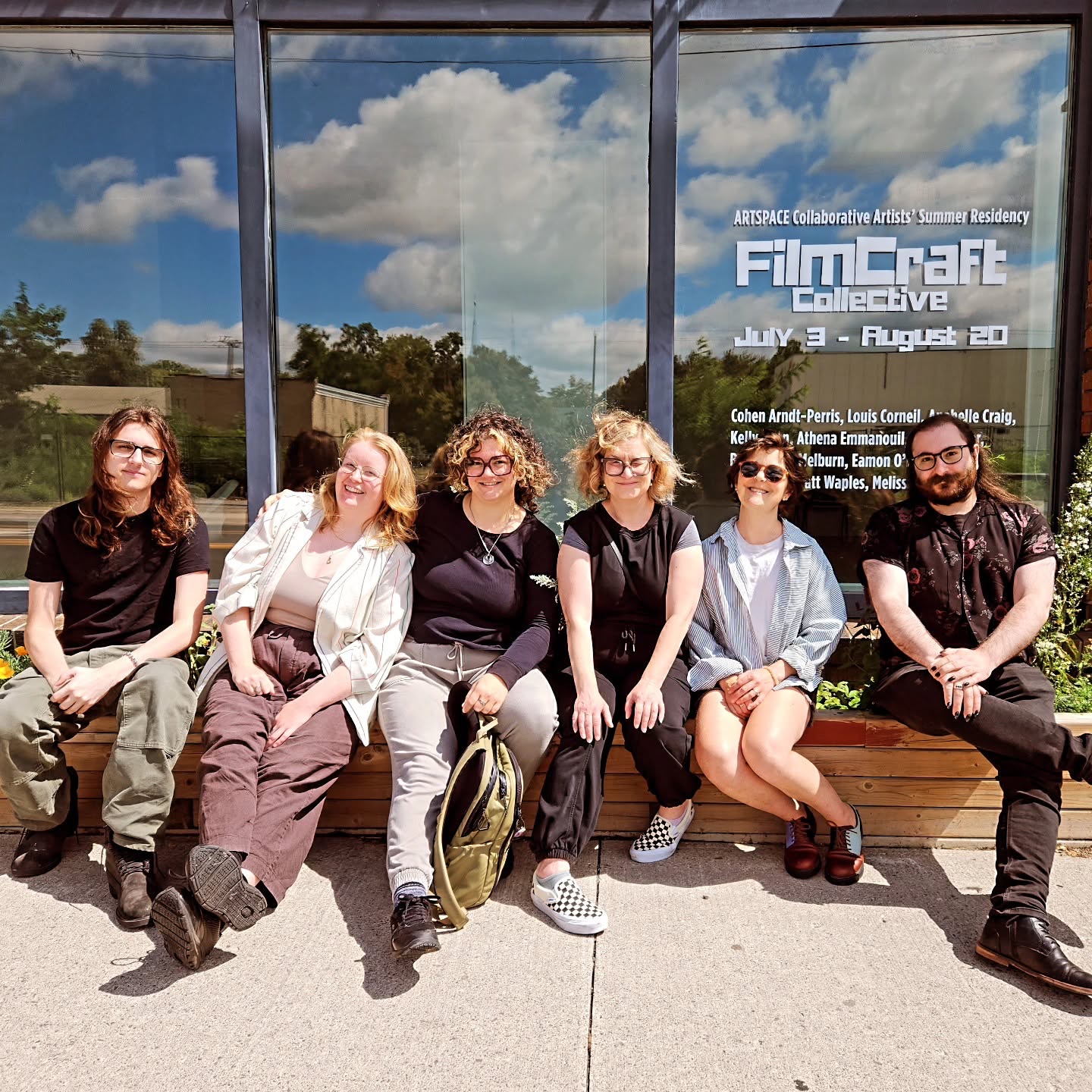
You need to be a member to apply, but you can also become a member in order to apply. Someone coming from outside the area would need to work out how they would live here for the two months of the residency.
I’ve been working on developing meaningful benefits for members, and being eligible for a residency is one of those opportunities.
What happens after someone submits an application?
The plan is to form a selection committee consisting of two previous residency participants and myself.
There’s a rubric available through Artsume, so applicants can see the criteria we’ll be using to assess the proposals.
The application also lets people indicate their preferred timeframe. There are three residency periods during the year, and applicants can tell us which ones work for them. Someone who is only available for one particular period can make that clear.
What advice would you give someone applying, especially an artist who hasn’t been selected in the past?
Don’t be afraid to call us or send an email and ask questions. Drop by to see the space.
I’d also encourage people to ask us what community engagement means. We’re asking artists to think about the windows and the relationship between the inside of the space and the sidewalk. How might their work connect with people at street level?
What keeps the work going
What kind of support would make the biggest difference at Artspace?
Money is the straightforward answer.
I’d like us to be able to afford another staff position securely and sustainably. That could come through more funding, more successful fundraising, or other sources of revenue.
Being able to make Artspace a sustainable two-person operation would make a tremendous difference.
What role do volunteers play in sustaining an organization like this?
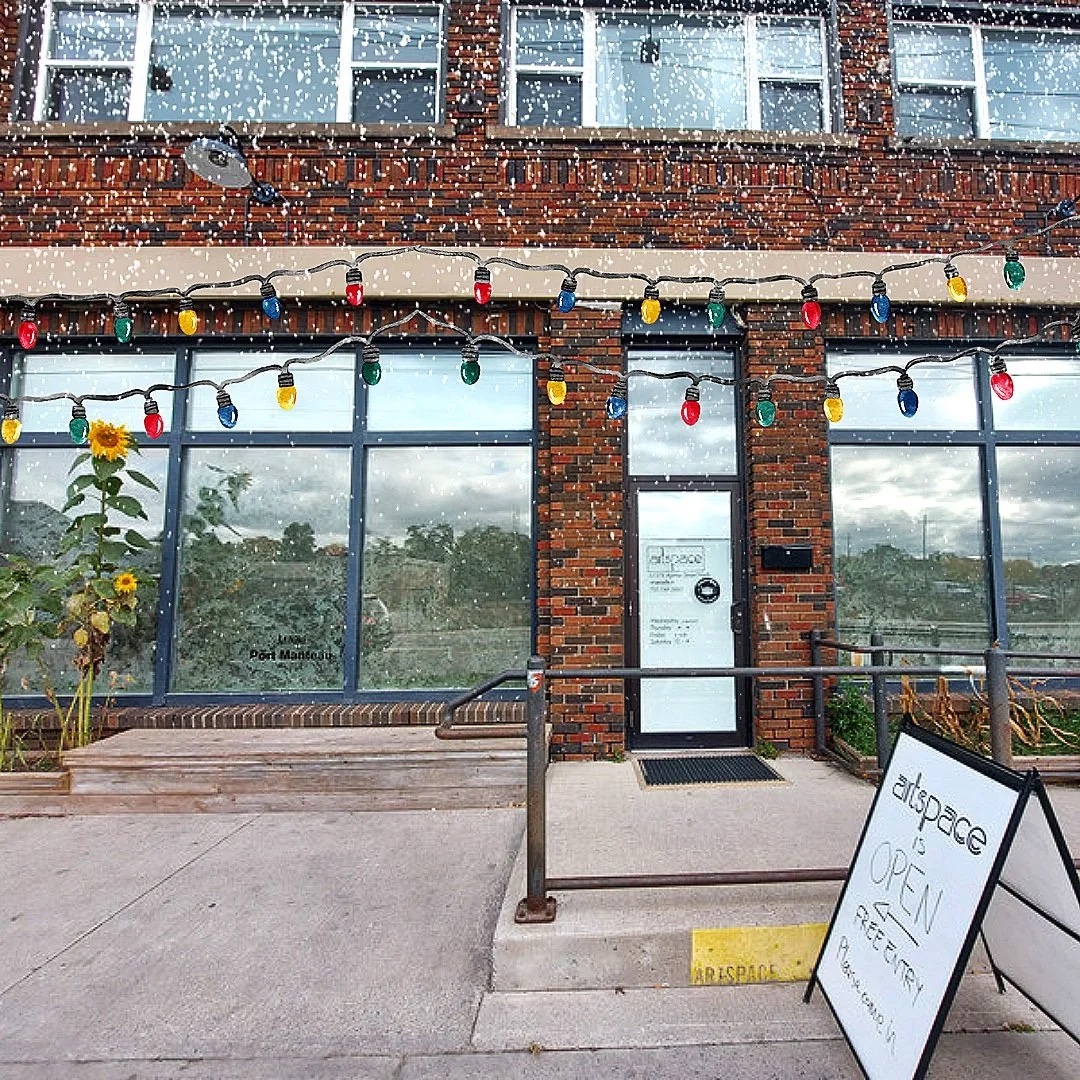
They’re vital. When you’re thinking about what makes a small nonprofit organization successful, volunteers are incredibly important.
And volunteering isn’t only about having spare time. It’s often about contributing very particular skills. Do you understand budgeting and accounting? Governance? Can you help work through a complicated problem? Do you know what good record-keeping looks like? And what is your commitment level? That’s huge.
Especially when it comes to board service, we’re asking people to bring knowledge, judgment, and consistency. Those contributions make an enormous difference.
A more flexible future
You’ve introduced an art-supply shop at Artspace. What has that changed?
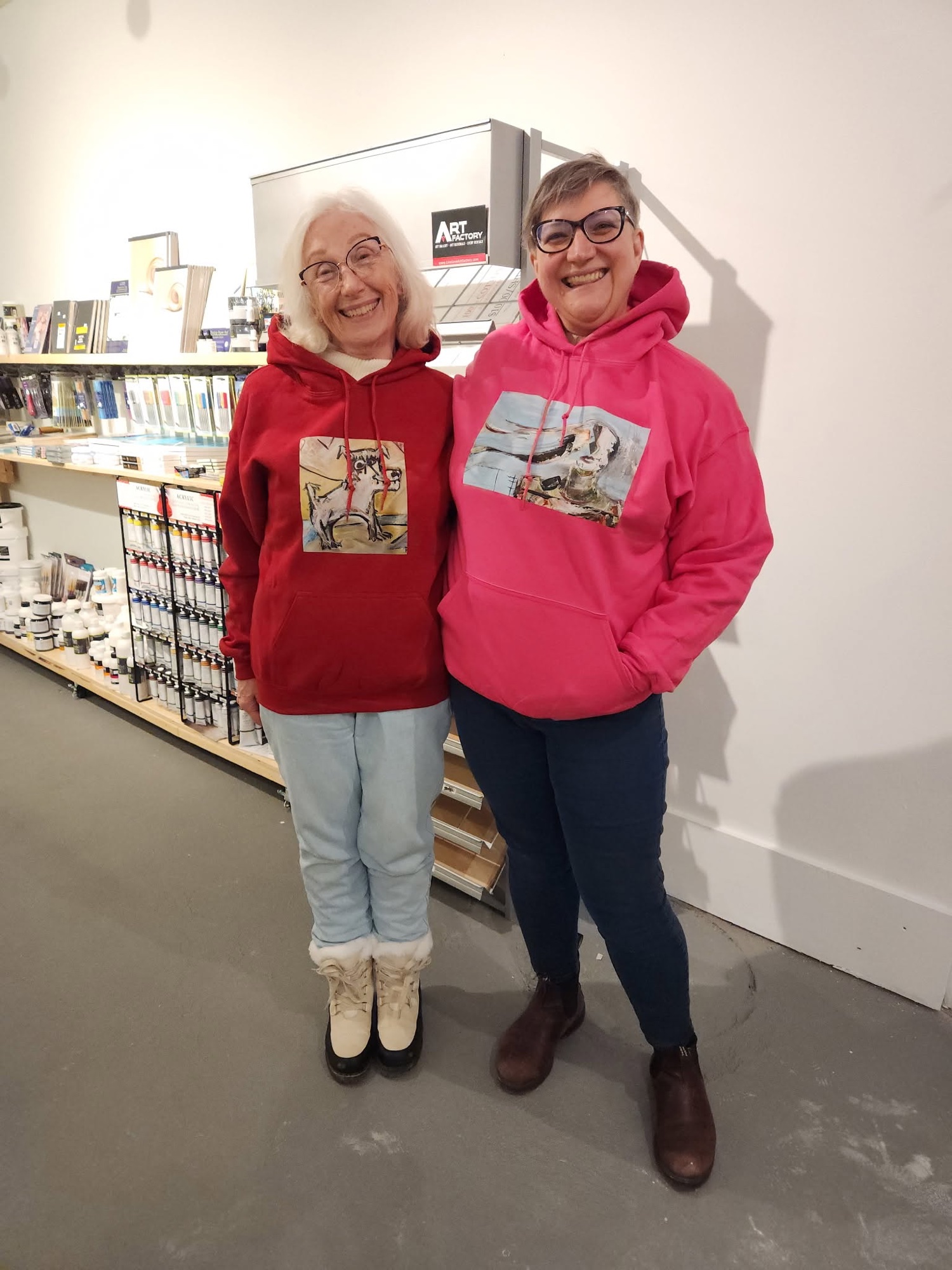
We’re now a satellite location for a business called Art Factory, and we earn a sales commission.
Having a retail space on site is a big change for us, and one of the exciting possibilities is that it could eventually help fund another position.
But there have been benefits beyond the revenue.
People are coming in to buy supplies who have lived or shopped in this region for years and didn’t know Artspace existed. Now they’re walking through the gallery and asking questions.
We’re meeting people across the community. Sometimes they’re hobbyists, but very often they are professional artists making their living through their work.
The shop is volunteer-operated, and I hadn’t anticipated how much volunteers would enjoy running it. They like having conversations with visitors and learning through those interactions.
How have the renovations changed what artists can do in the gallery?
Creating the shop meant giving up the smaller of our two gallery spaces, so we needed to rethink how the front of the facilities would function.
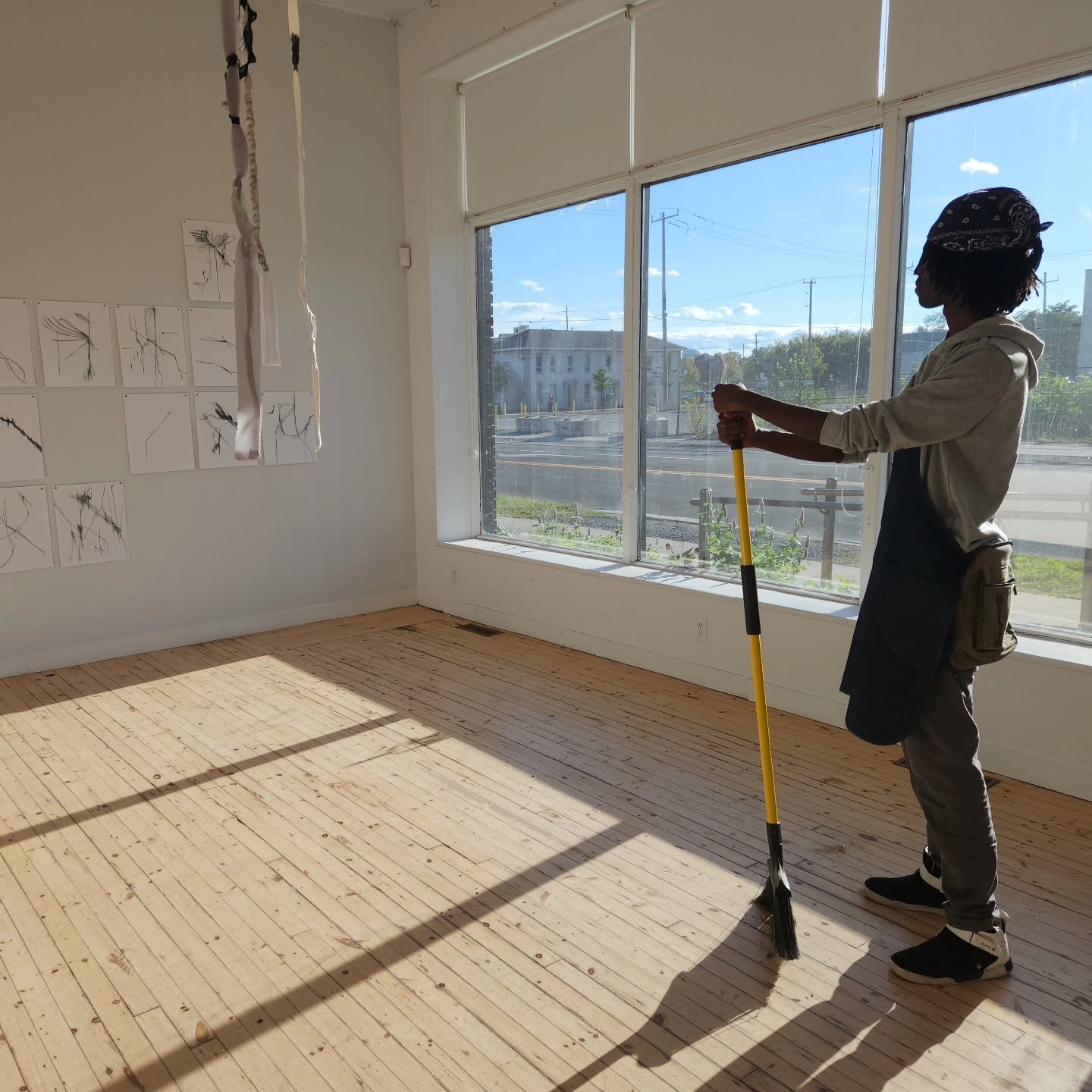
We created a series of movable walls that make the main gallery much more adaptable. Now, when exhibiting artists come in, we can ask what configuration will work best for their work.
That’s exciting. Artists can think not only about what they’re bringing into the space, but about how they want to shape the space itself.
The walls also contain storage for things like plinths, media equipment, chairs, and programming supplies. That has made the space more practical.
The renovations have also improved physical accessibility, although the space isn’t yet fully accessible.
After so much change, what are you most looking forward to?
Honestly, a period of stability.
Between the shop and the renovations, we’ve introduced a lot of change. I’m looking forward to finding our sea legs and wrapping up small finishing jobs.
I’m excited to settle into what we’ve created and enjoy how it functions.
When someone walks through Artspace’s doors for the first time, what do you hope they feel?
The first word that comes to mind is welcome. And right behind that is breathing space.
When you walk in, there is so much room to move. We’ve had music, dance, and other events in the space, and the movable walls allow us to keep changing how it works. I hope we can keep exploring that flexibility and discovering different ways to transform the space.
But there’s also something about the moment you walk through the door and it closes behind you. I feel it myself: there’s space. Physical space and inventive space, too. A sense of openness and freedom. A place where there’s possibility.
Connect with Artspace Peterborough on Artsume to explore its work, learn about its programs, and get involved with its community.
Artspace Peterborough is taking applications for its 2027 SOAR residency. Membership is required, and you can join in order to apply. Before you write your proposal, follow Leslie’s advice above and drop by to see the space. For more on preparing, see how to apply for artist residencies and what residency programs want to see on your CV.