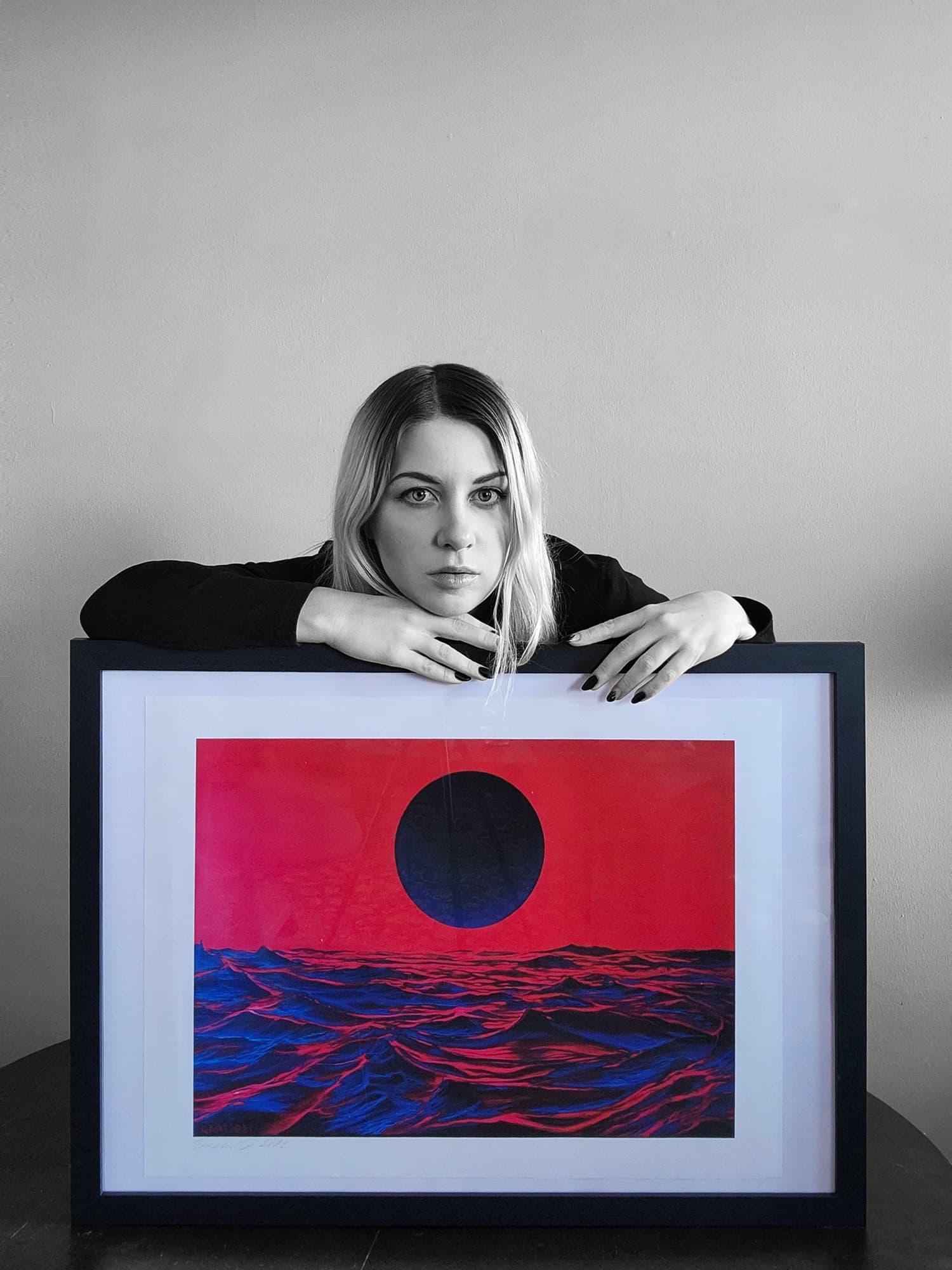
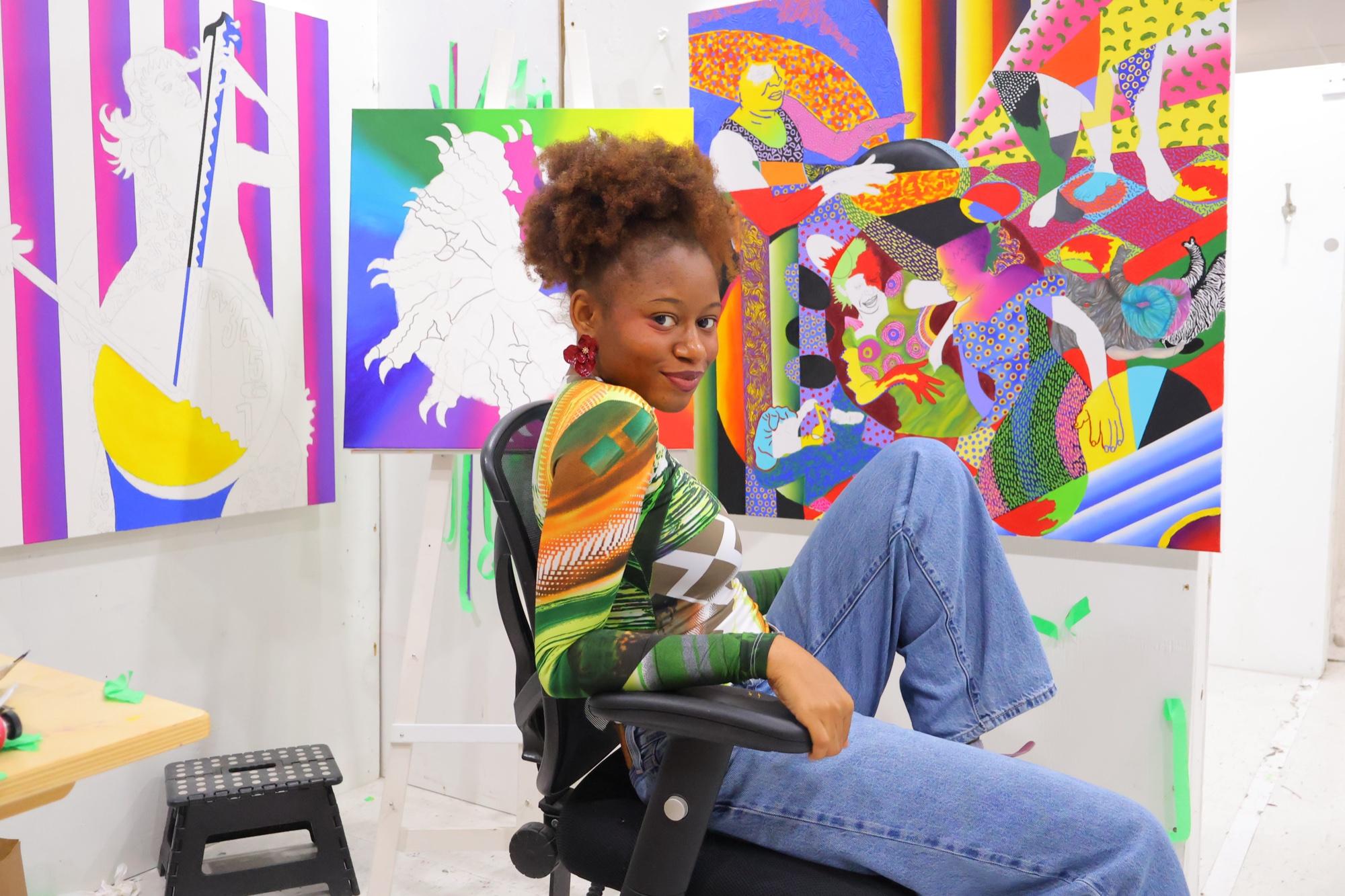
In conversation · Lisa Palmer
Lisa Palmer: Painting the Things We Don't Always Say Out Loud
For Bradford, Ontario-based artist Lisa Palmer, painting is an exercise in vulnerability, rebellion, and finding the courage to be unapologetically yourself.
Interview by David Rozenfeld
· 19 min read
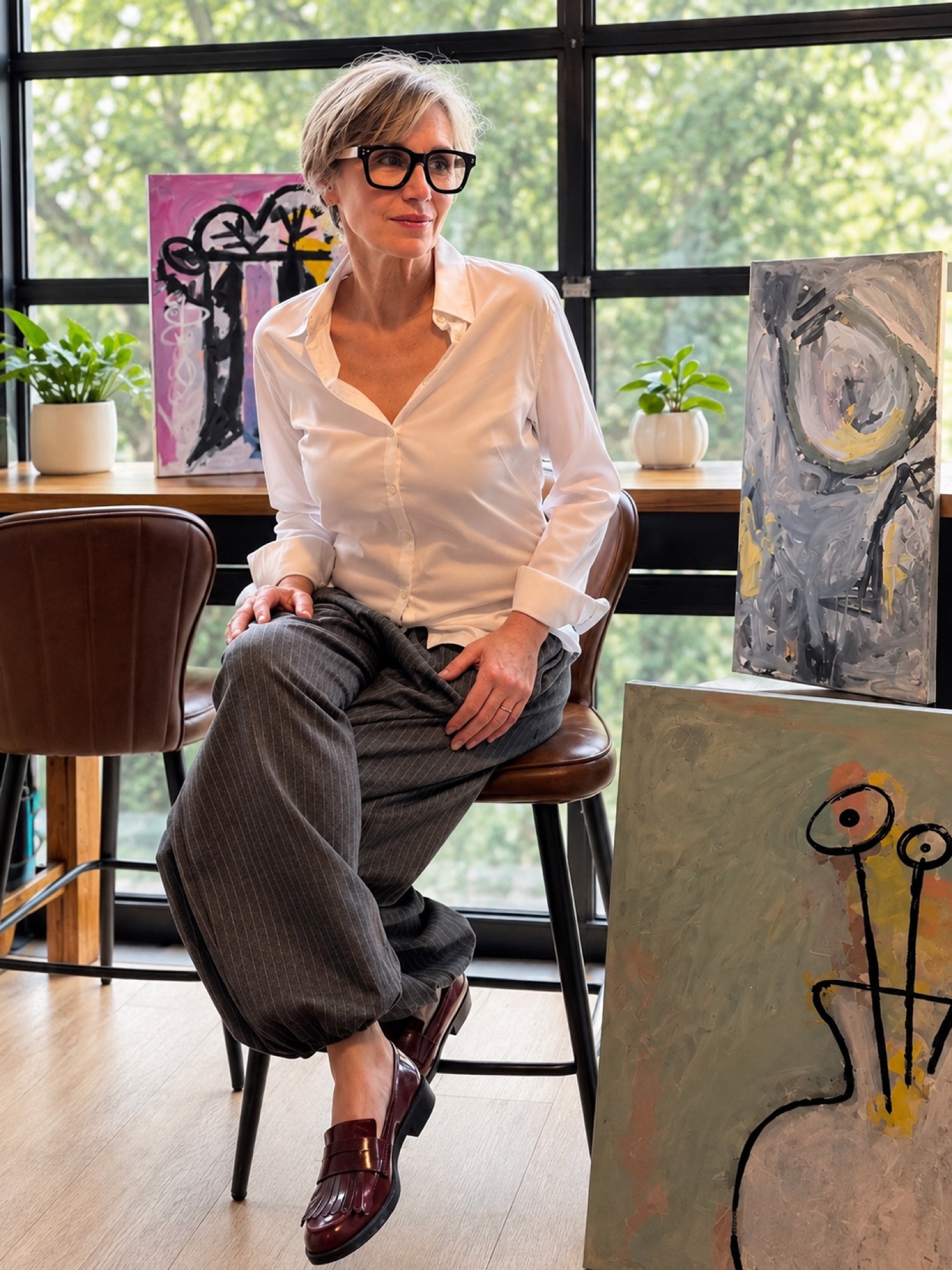
“Being an artist is like having open heart surgery in public all the time.”
For Lisa Palmer, this isn't simply a metaphor. It's how she approaches every canvas: with her experiences, frustrations, fears, humour, and vulnerabilities laid bare for anyone willing to look.
A former interior designer who discovered painting during the COVID-19 pandemic, Palmer has developed a practice that explores the emotional landscape of human experience. Her bold, colourful paintings tackle sexuality, mortality, trauma, feminism, and the everyday absurdities of being human. They're sometimes funny, sometimes uncomfortable, and rarely interested in playing it safe.
Although Palmer first picked up a paintbrush during the pandemic, her creative roots stretch back much further. As a child, she helped create window displays at her father's Toronto antiques store, an early introduction to art and design that would eventually lead her into a career in interior design.
Today, she's organizing her own exhibitions, developing increasingly ambitious work, and imagining a future where she creates full-time.
In this Artsume community conversation, we spoke with Palmer about finding a new creative identity, the people and experiences that shaped her, the stories behind her paintings, and what it means to build an artistic career on your own terms.
From interior design to painting
You spent much of your professional life as an interior designer. How did painting become such an important part of your life?
I was an interior designer for a long time. I had my own company, I loved my clients, and I was successful at what I did. But when COVID happened, I started rethinking my life. My priorities were shifting.
I'd always been a reader and a writer, but I'd never really painted. For some reason, I was terrified to start. I don't even know why, because now I can't imagine living without it.
One day, when things started opening up a little, I went to the dollar store wearing my mask and gloves and bought one of those little cheap canvases.
And that was it. I was hooked.
At first, I painted things like avocados and socks. But eventually, painting became something much more personal. It's almost like a diary now. I have a lot of thoughts, a lot of experiences, and things that I want to say.
Painting became the place where I could put all of that.
Was there someone early in your life who had a particularly important influence on your creativity or your interest in art and design?
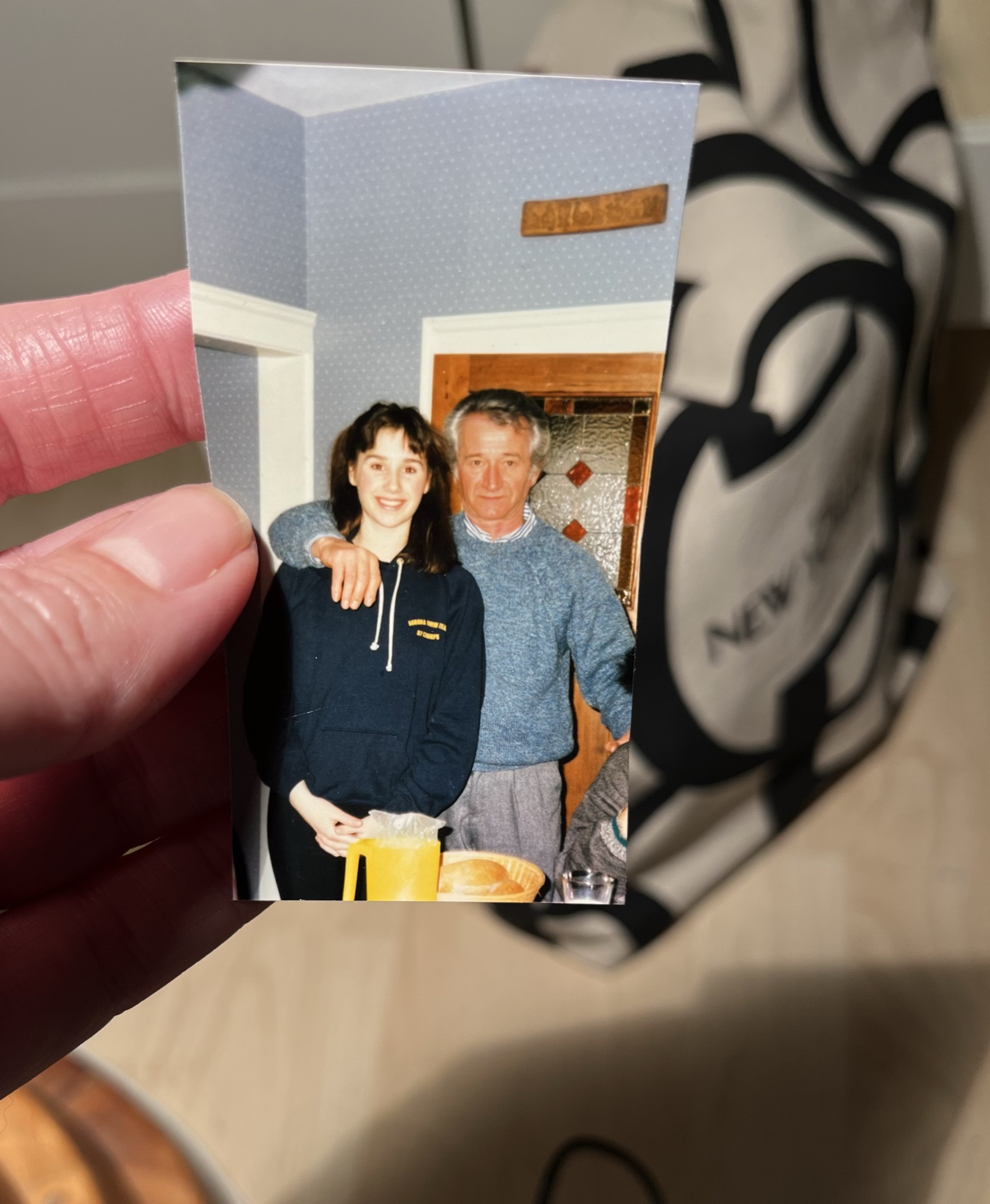
Absolutely. My father, Sergio Bernardi, was a huge influence on me.
He was a well-known antique dealer in Toronto, and his namesake store, Bernardi's Antiques, is still on Avenue Road today. He had an incredible knowledge of antique furniture and art, and he was a master at furniture refinishing and French polishing. He even had quite a few television personalities among his clients.
When I was a little girl, he would let me create the front window displays at his store. Looking back, that was such an important experience for me. He gave me the freedom to be creative and explore my interest in art and design from a young age.
That really pushed me toward becoming an interior designer.
My father has since passed away, but his knowledge, creativity, and appreciation for craftsmanship had an enormous influence on the direction my life took, and ultimately on my journey as an artist.
How different is your creative life today from your years working in interior design?
It's almost the complete opposite.
When I was designing interiors, everything had to be perfect. Projects had budgets, deadlines, deliveries, tradespeople, and clients to satisfy. Everything needed to work, and everything needed to look right.
Painting allows me to be perfectly imperfect.
I don't care about making something that matches someone's sofa anymore. I care about what's happening in the world, what's happening to people, and how I can capture those feelings.
It's like having a completely different identity.
I have no formal art training. I just live in this strange head of mine, and this is what comes out.
Fragments of lived experience
How would you describe your work to someone encountering it for the first time?
I like to say that I explore the emotional landscape of the human experience.
Something happens, or I read something, or I have an experience that really affects me. It's like a seed gets planted in my mind. It stays there, sometimes for a long time, until eventually I need to put colour and imagery onto a canvas.
I think of my paintings as fragments of lived experience.
There's often sexuality, vulnerability, mortality, trauma, or women's experiences in my work. And there's usually some humour in there, too.
I like making people feel a little uncomfortable. Not just for the sake of it, but because discomfort gets people talking.
Your paintings frequently explore subjects like vulnerability, sexuality, mortality, and women's experiences. What draws you to these themes?
A lot of it comes from lived experience. I have a background in women's studies, and these are subjects I've always cared deeply about.
I think as you get older, you become more passionate about certain things. You have experiences, you develop opinions, and you start to understand what really matters to you.
Painting gives me a way to put those feelings out into the world.
“Being an artist is like having open heart surgery in public all the time.”
That's honestly what it feels like. My chest is open, and people can reach right in, grab what's there, and squeeze it.
You're putting your most personal thoughts and experiences on display for everyone to see. And that's what makes it meaningful to me.
You describe painting as having open heart surgery in public. What do you hope people take away when you expose so much of yourself through your work?
I want people to react.
Maybe they laugh. Maybe they're uncomfortable. Maybe they recognize something from their own life, or remember something that happened to someone they know.
Whatever the reaction is, that's where the conversation begins.
I want someone to look at a painting and say, “Oh, that happened to me,” or “I know somebody who went through that.”
It's almost like I've painted a diary that other people can find themselves in.
And although a lot of my work explores women's experiences, I don't want it to be exclusive to women. Everybody belongs in my art.
If someone recognizes something about themselves in a painting, that's a huge win for me.
How a painting begins
How does a painting typically begin for you?
Usually, something triggers an emotional response.
It might be something I've experienced personally, or something I've read in the news. Sometimes I become completely absorbed in a story because it affects me so deeply.
For example, Jane Doe Says No and Free Pussy Upstairs came out of my response to a sexual assault case that I followed closely. I read the coverage, listened to interviews, and couldn't stop thinking about it.
Acrylic on canvas
Acrylic Abstract- 24” x 36” -piece #1 in response to that disgusting Cornell 7 rape.
Acrylic on canvas
24” x 30” - acrylic abstract - in response to the Cornell 7 rape. Because it triggered me. And it was massively fucked up
Those feelings stay with me until I need to paint.
And then colour comes first.
An emotion will trigger a particular colour in my mind. I start with that colour and build the painting around it, changing and developing it by introducing other colours.
Lately, I've been using a lot of pink. I don't know why. Maybe I'm in my pink era.
I work in silence. No music, no talking. Don't disturb me.
I need that space to let whatever is happening in my head find its way onto the canvas.
Do you usually know what the finished painting will look like?
Not necessarily.
I tend to work on one painting at a time, and I let it develop. I want there to be something recognizable that people can connect with, even when the work is abstract.
But if a painting starts feeling too safe or predictable, I get rid of it.
I'm the queen of primer. I'll paint over something I made two years ago if it no longer feels like me.
I've learned that I often make my best work when I stop worrying about the outcome. When I get to that point where I think, “Ah, whatever, let's just do it,” something interesting happens.
I'll come back the next day and realize I've made something I really like.
I don't want to keep making the same painting. I want to keep changing.
I always want to be an emerging artist in that sense. I want to keep exploring new periods, new subjects, and new ways of working.
I don't want people to recognize my work just because it always looks the same.
Maybe they'll recognize that enormous Palmer signature instead.
Speaking of your signature, it's a prominent part of many of your paintings. Was that intentional?
Very intentional.
I was part of a local art group, and someone was explaining all these rules about how we should present our work. We were told that our signatures should be small and shouldn't become part of the imagery.
And I thought, absolutely not.
My signature is part of who I am.
So I decided it was going to get bigger, louder, and crazier.
That's why it's there.
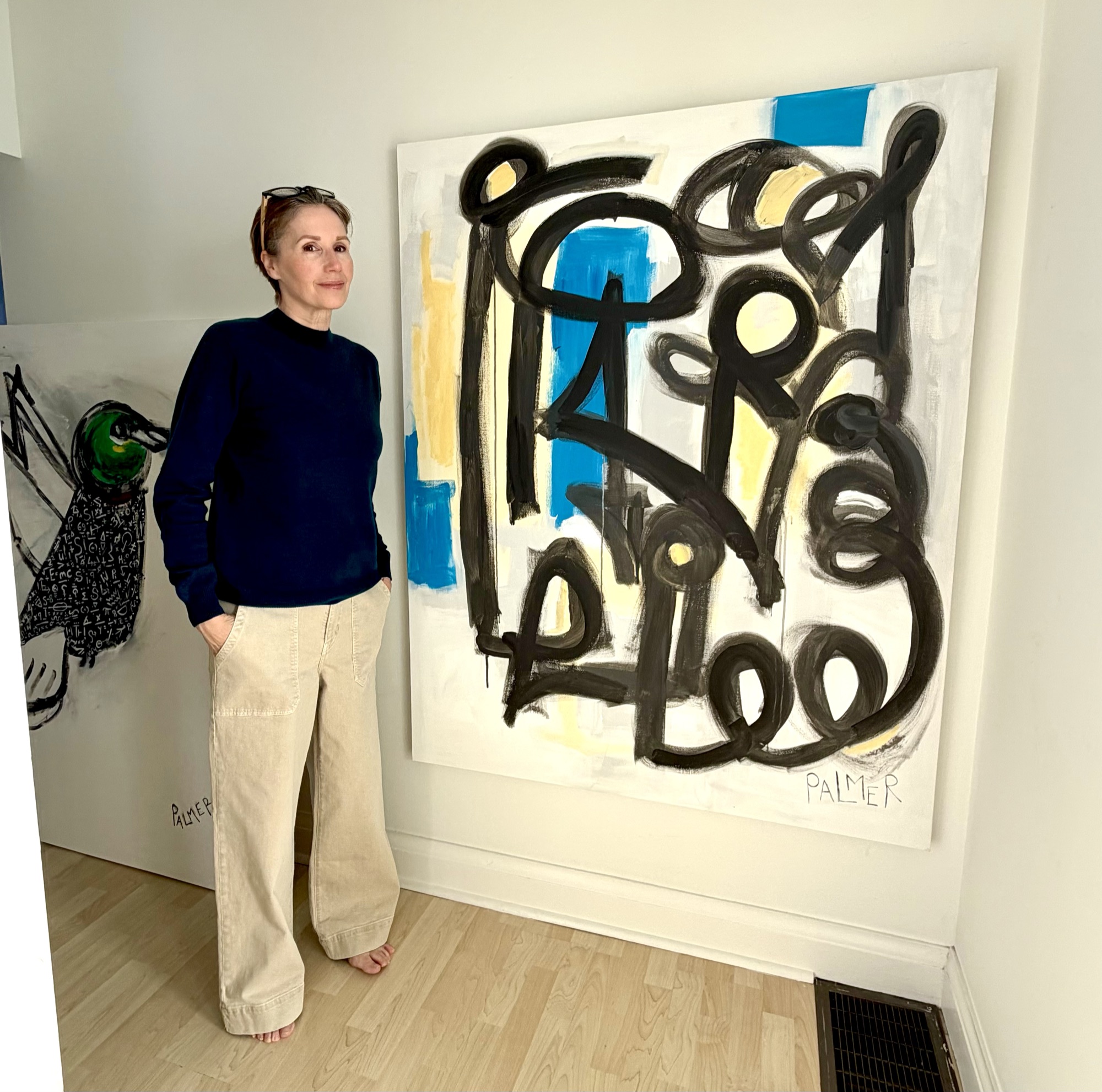
Peonies & Papsmears and putting on her own shows
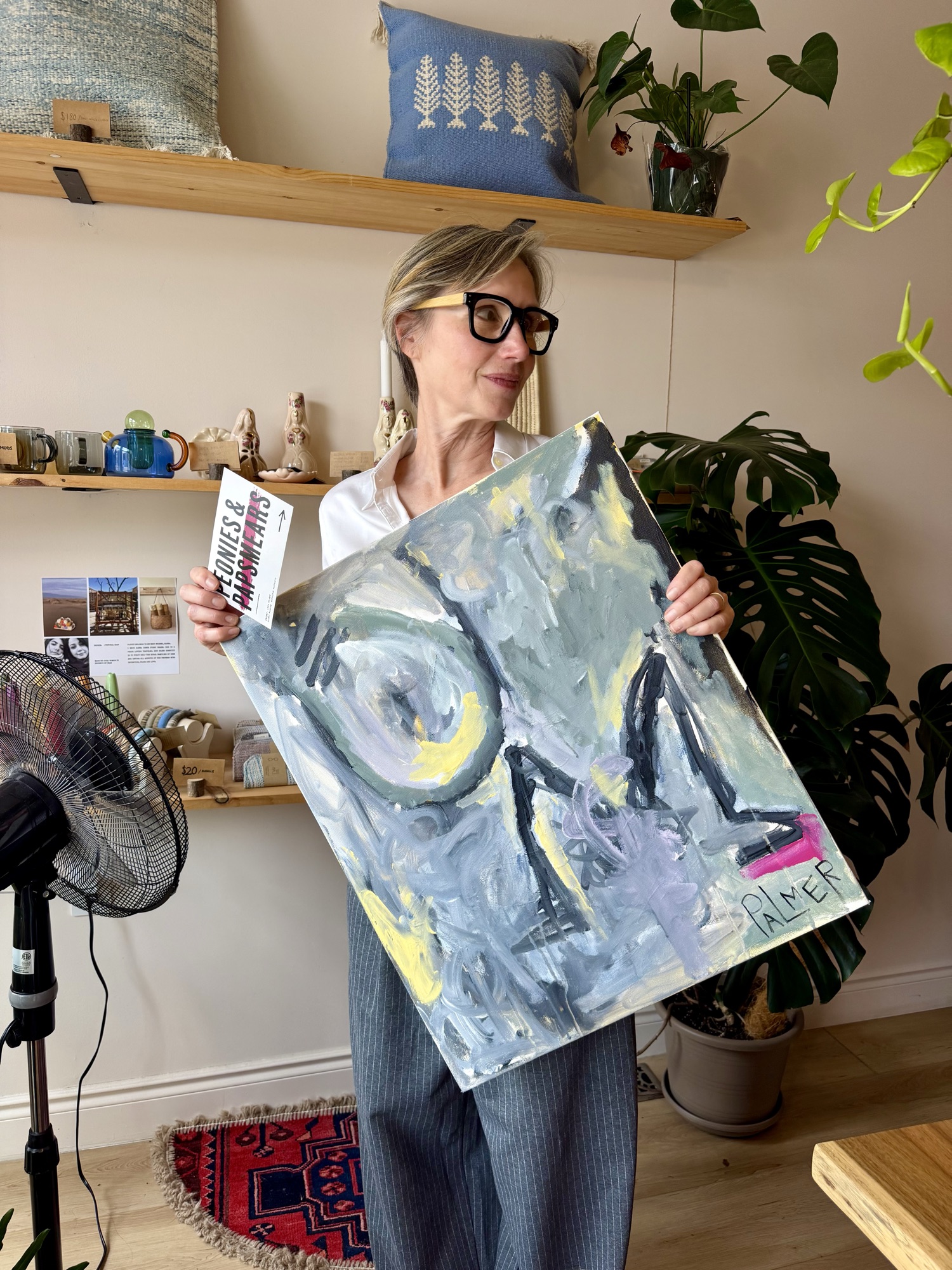
Your exhibition Peonies & Papsmears has a title that's difficult to forget. Where did the idea come from?
It started with an actual Pap smear.
I was thinking about how different those experiences can feel as you get older. I remember leaving an appointment and thinking about dignity, vulnerability, and women's sexual and reproductive health.
So I decided to paint a self-portrait of myself having a Pap smear.
It wasn't intended to be graphic. I wanted to make something honest about an experience that so many women have but don't necessarily talk about.
Acrylic on canvas
This is a self portrait of me having a papsmear in my ‘50’s. You gotta check your dignity at the door ffs. Anyhow, tampons should be free. Let’s make it happen
At the same time, my peonies were blooming. They're my favourite flowers, and I started incorporating them into the work.
There's something interesting about peonies because of their relationship with ants. It's symbiotic. They need one another, and I think that says something about human relationships, too.
Acrylic on canvas
Abstract - Neo Expression - a still life of peonies - 24” x 20”
When I shared the Pap smear painting, I had women reaching out to me about their own experiences and about issues surrounding reproductive health.
A colleague and I were talking, and the words Peonies & Papsmears came up. We thought it would make a great title, and it stuck.
I ended up organizing my own exhibition in Aurora, and it was a huge success.
People came, asked questions, and wanted to know what the work meant.
That's exactly what I wanted.
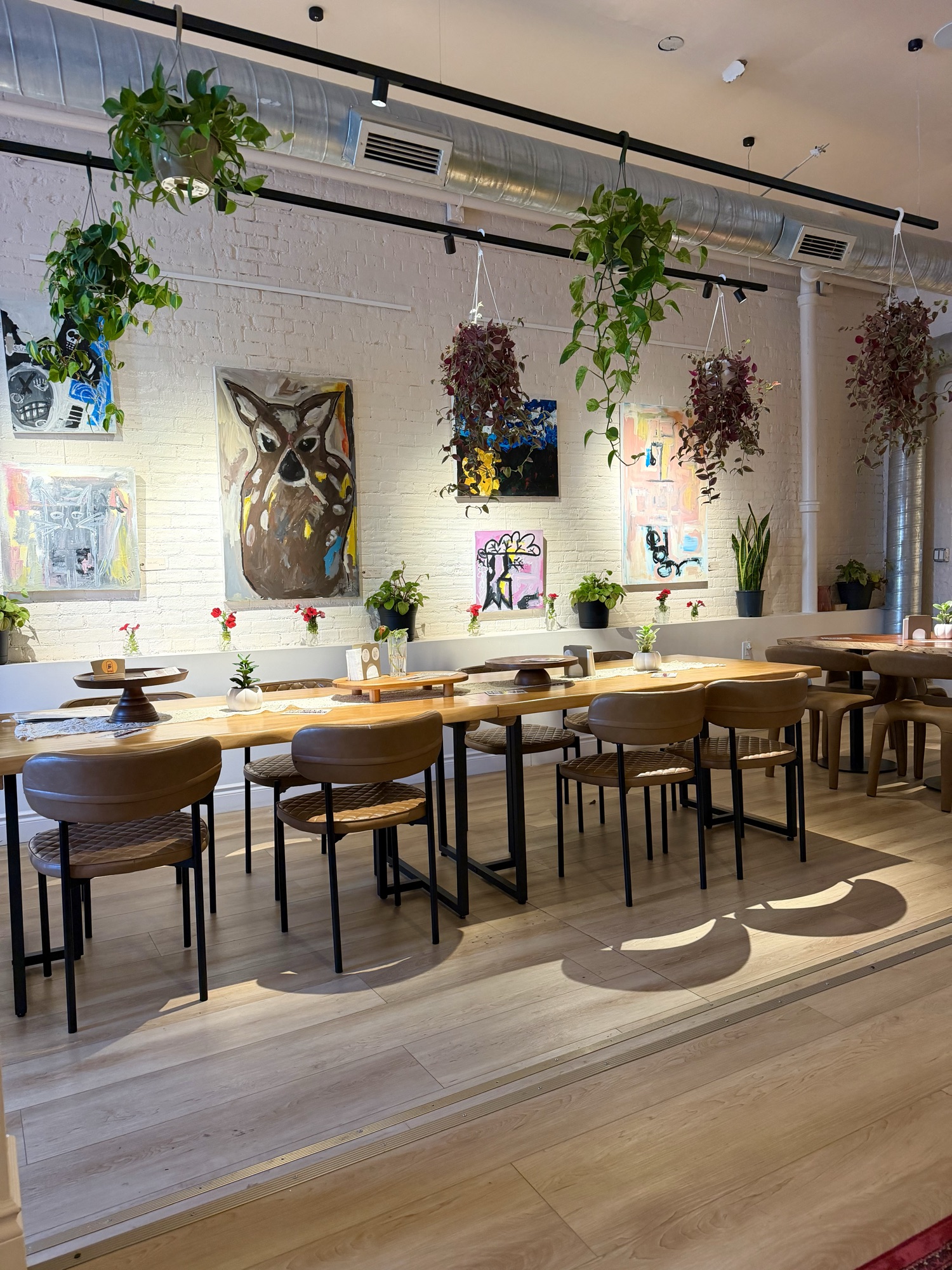
You've organized several of your own exhibitions. What led you to take that approach?
Rejection!
I've applied to so many exhibitions, and I've been rejected from practically everything I've applied to this year.
At some point, you have to stop waiting for somebody else to give you permission.
I decided to put on my own shows.
Small Talk Is Dead was a two-person exhibition with my friend Angela, who's an abstract artist. We were both tired of seeing the same kinds of landscapes everywhere, and we wanted to do something different.
And Peonies & Papsmears was another opportunity to create an experience around my own work.
You have to put yourself out there.
Nobody is going to discover you if you're sitting alone in your basement studio, posting paintings on Instagram and hoping something happens.
Instagram is a fantastic marketing tool, but I've found that I sell more paintings when people meet me in person.
When I can stand in front of a piece and explain where it came from, people connect with it differently.
You have to be willing to hustle a little.
The stories behind the paintings
Let's talk about some individual paintings. What is the story behind Shine When You Want To?
That's probably one of my most personal pieces.
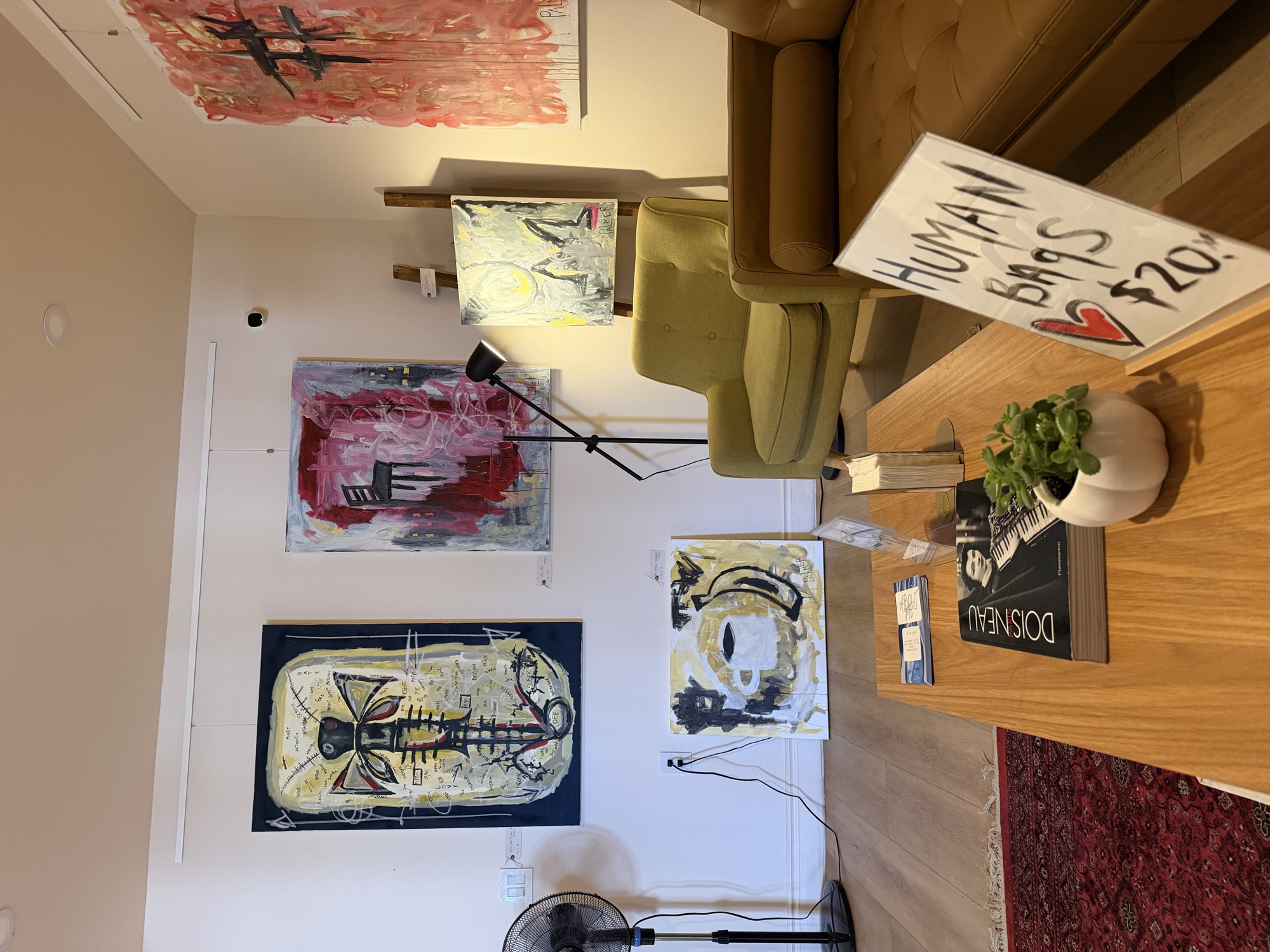
It's a painting of a lightning bug, and if you look closely, there are words written throughout it.
Those words are everything I've ever felt about myself. Being big, small, shy, outgoing, drunk, sober, and all the different versions of myself I've experienced.
I couldn't stop writing them.
Acrylic on canvas
Acrylic Abstract- fireflies shine when they want to. Not when we tell them to. This is a diary of my complete being, because i’m a deeply flawed human.
The painting hangs in my living room because it reminds me of something important.
A lightning bug shines when she wants to. Not when somebody tells her to.
And I think that applies to everybody.
You don't have to perform on command. You don't have to be everything to everyone all the time.
You shine when you want to.
Even the things we think of as flaws can become our secret weapons.
There's also an off button in that painting.
I used to be a complete workaholic. I answered every email within fifteen minutes, picked up every phone call, and was always available.
I've learned that sometimes shutting things down is just as important as starting them up.
Another memorable painting is Good Little Fly. What's behind that one?
I was thinking about Christmas.
I love the idea of Christmas, but the reality of the holidays can be incredibly awkward.
You have to visit family, host people, go to your in-laws, have conversations you don't necessarily want to have, and meet all these expectations.
I started thinking about what it would be like to be a fly on the wall, watching the whole thing happen.
And then I thought about what a fly actually does.
A fly lands on whatever is in front of it, takes what it needs, and flies away.
That's what the painting is about.
Sometimes you just have to take what you need from a situation and move on.
You don't have to participate in everything. You don't have to carry everything with you.
It's about surviving what you can't forgive, and giving yourself permission to fly away.
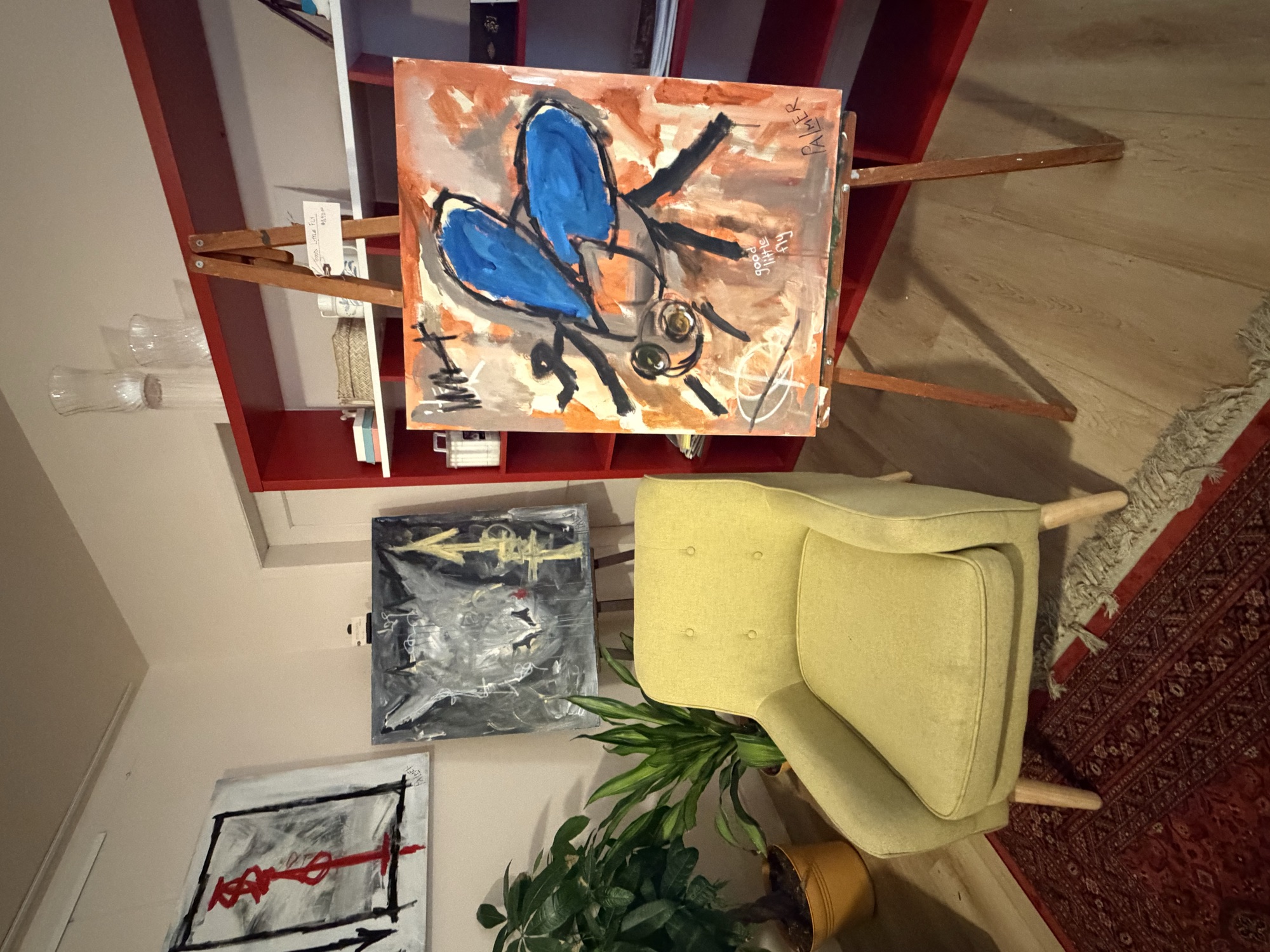
Acrylic on canvas
24” x 30” - Surviving what you can’t forgive
Even your painting of a little pink alligator has a personal story behind it. Can you tell us about that?
That one came from a childhood fear.
I was collaborating with a photographer friend, and we were working near this stone wall where there were snakes.
She was absolutely terrified of them, even though they were harmless.
Watching her reaction reminded me that when I was little, I was convinced there was an alligator living underneath my bed.
I was genuinely terrified that it was going to bite me.
My older brother eventually pointed out that alligators don't exactly live in Canada.
But the fear was real to me at the time.
So I decided to paint the cutest little pink alligator I could imagine.
It was my way of revisiting that childhood fear and making it something harmless, even sweet.
I like the idea that a painting can take something frightening and completely change our relationship with it.
Acrylic on canvas
24” x 30” acrylic abstract- Trying to make my childhood fear cute
Influences and what comes next
Are there artists whose work has influenced your own approach?
I love Jean-Michel Basquiat. I also love artists like Cy Twombly and the freedom of abstraction and mark-making.
But I try very hard not to look at other artists' work when I'm about to paint.
I want my mind to be clear of everybody else's imagery.
I don't want to channel somebody else's style. I want whatever comes out to be mine.
I admire artists who were willing to take risks and do things differently, but I don't want to recreate what they've already done.
I'm interested in finding out what I haven't done yet.
You've mentioned that your next painting explores the life of Françoise Gilot and her relationship with Picasso. What interests you about that story?
I've been reading about Picasso's personal life and his relationship with Françoise Gilot, including her book Life with Picasso.
It's a story that really affected me.
I started thinking about power, relationships, and what happens to women whose lives become entangled with powerful men.
The painting uses the image of a queen chess piece tipping toward a staircase.
The queen is such a powerful piece on a chessboard, and in my painting she's right at the edge.
But she hasn't fallen.
I like that moment of uncertainty.
It's a new piece, and I'm still figuring out exactly what I want to call it.
What are your ambitions for the next few years?
I want to create bigger work.
Right now, I paint in a little studio in my basement. I want to make paintings so enormous that I can't get them out the door.
I want to develop new collections and keep exploring different subjects. I've already worked on a series dealing with sexual assault, and I know there are more ideas I want to pursue.
I also want to continue reinventing myself.
I never want to be stuck making one kind of painting because people expect it from me.
I'd love to exhibit internationally. Showing at Gagosian would be an absolute dream.
And ultimately, I want to be a full-time working artist.
Right now, I have a job at Home Hardware in Bradford. I work at the back desk selling plumbing supplies, electrical equipment, pipes, and all sorts of things.
I enjoy it, but what I really want is to spend my time creating.
Painting, poetry, maybe pottery. I have so many things I want to explore.
I just want to make art.
How do you see the future of original art in a world where technology can generate images so easily?
I read something recently that said, “Handmade is the new luxury,” and I really believe that.
I think original art is going to become increasingly important.
People can use technology to generate all sorts of things now. I could redesign a kitchen in seconds using AI, which is remarkable when I think about the years I spent working in interior design.
But there's something different about owning a piece of original art.
It's made by a person. There's an experience behind it, a story, an emotional connection.
I think people are going to value that more and more.
And I think it's especially important to support emerging artists. There is so much talent out there that hasn't had the opportunity to be seen.
What advice would you give to an emerging artist trying to find their own voice and build a career?
Create only for you.
If other people like it, great. And if they don't, that's okay too.
Create what comes out of your heart, your mind, your stomach, your experiences, and your imagination.
Create what keeps you awake at night and what gets you out of bed in the morning.
Just do you.
There's no perfect method to any of this.
You can't fail at expressing yourself.
Every piece of art is valid and worthy and beautiful, and somebody, somewhere, is going to connect with it.
That's what matters.
Finding her people on Artsume
You mentioned how difficult it can be for emerging artists to find their people and get their work noticed. You've recently joined Artsume. What has that experience been like for you?
When I first joined Artsume, I thought it felt like a big universal coffee shop where like-minded people could come together, sit down, have a coffee, and talk.
And I really mean that.
There are so many art groups out there, but sometimes it's hard to find where you belong. I'm just looking for my people, and that's what Artsume feels like to me.
It feels local, welcoming, and personal, even though there's an opportunity to connect with people from all over the world.
And I was genuinely surprised when you showed me how many people were viewing my artwork. I had no idea! To learn that people were discovering my paintings, including people outside Canada, was incredible.
There's so much talent out there that struggles to find even a small window of opportunity.
I think Artsume is doing something important for artists like me. There's so much involved in getting your work out into the world, especially when it comes to technology and finding the right opportunities. Having a platform that helps artists do that is incredibly valuable. You're doing work for us, and I'm really grateful for that.
I'm genuinely excited to see where Artsume goes.
About Lisa Palmer
Lisa Palmer is a modern artist from Ontario Canada. Her work is deeply personal, unapologetically honest, and sometimes deliberately uncomfortable. Through abstraction, symbolism, humour and provocation, she explores a range of emotion personal to the human experience. Her paintings are fragments of lived experience translated through colour, gesture, words and symbolism.
I don’t create to provide comfortable answers. I create to provoke a reaction. For me, discomfort is not the destination. It’s where the conversation begins.
Her exhibitions include Peonies & Papsmears, Brewed to Provoke, and Small Talk Is Dead.
Explore Lisa Palmer’s work and professional profile on Artsume.
Meet the artist
More from Lisa Palmer
Painter. Poet. Lover of cats, books, & kindness.
View Lisa Palmer’s profile