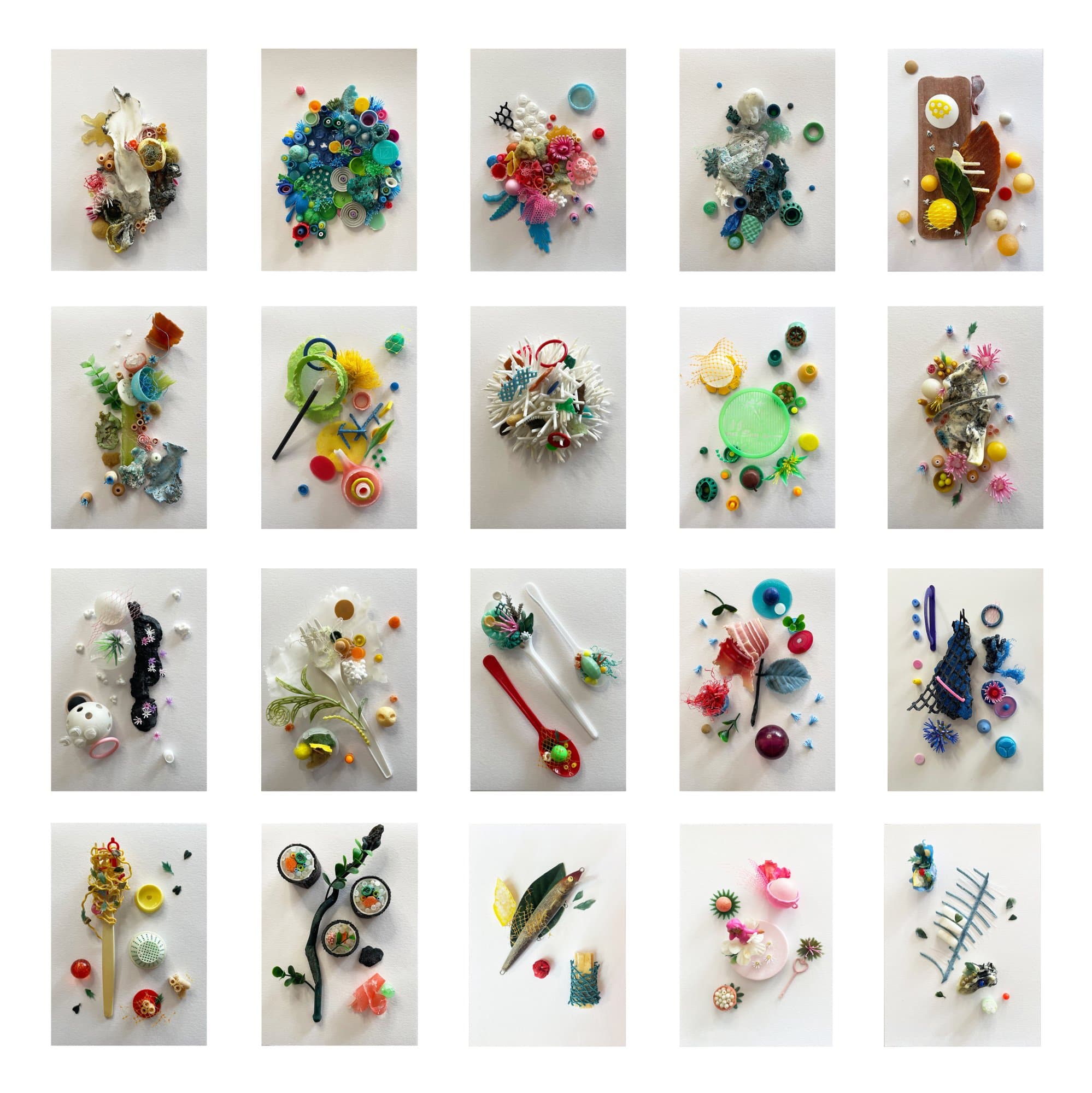
Bon Appetit Series
2023 · Beach Plastic210mm w x 297mm h
The issues of plastic waste and food waste are both significant environmental concerns, and they each have their own set of challenges and impacts. Plastic Waste: - Plastic pollution poses a threat to ecosystems and wildlife, as plastics can take hundreds of years to break down. - Microplastics, tiny plastic particles, are now found in water sources, impacting aquatic & marine life and as recently discovered have entered into the food chain. - Reducing plastic waste involves refusing single-use plastics, increasing recycling/upcycling rates, and developing alternative more sustainable materials. Food Waste: - Food waste contributes to greenhouse gas emissions when organic matter decomposes in landfills, releasing methane, a potent greenhouse gas. - It squanders valuable resources like water, energy, and land used for food production. - Food waste is also an ethical issue as many people go hungry while perfectly good food is discarded. - Solutions include better food management, reducing consumer waste, and redistributing surplus food to those in need. Both issues are interconnected as plastics are used in packaging and preserving food, contributing to both problems. Addressing these challenges requires a combination of consumer awareness, industry innovation, and government policies to promote sustainable practices and reduce waste in both food and plastic sectors.
Beach plastic, reshaped into something that looks almost good enough to eat, plays on attraction and discomfort, beauty and toxicity held in the same moment.
#Foodwaste#Sustainability#Plasticwaste#Beachplastic#Mishvania#Southafricanartist
