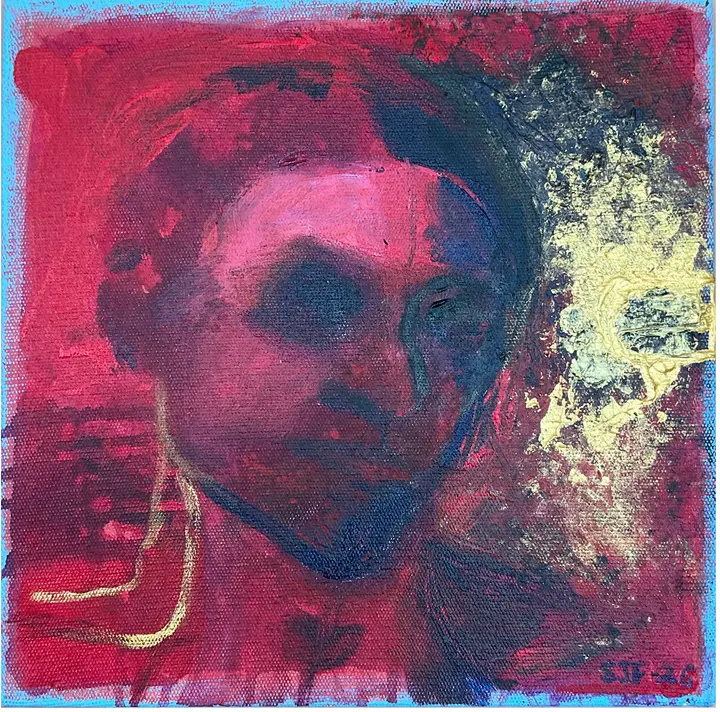
Persistence of Memory, 2026
Acrylic on canvas
Details
- Dimensions
- 12 x 12 inches
Description
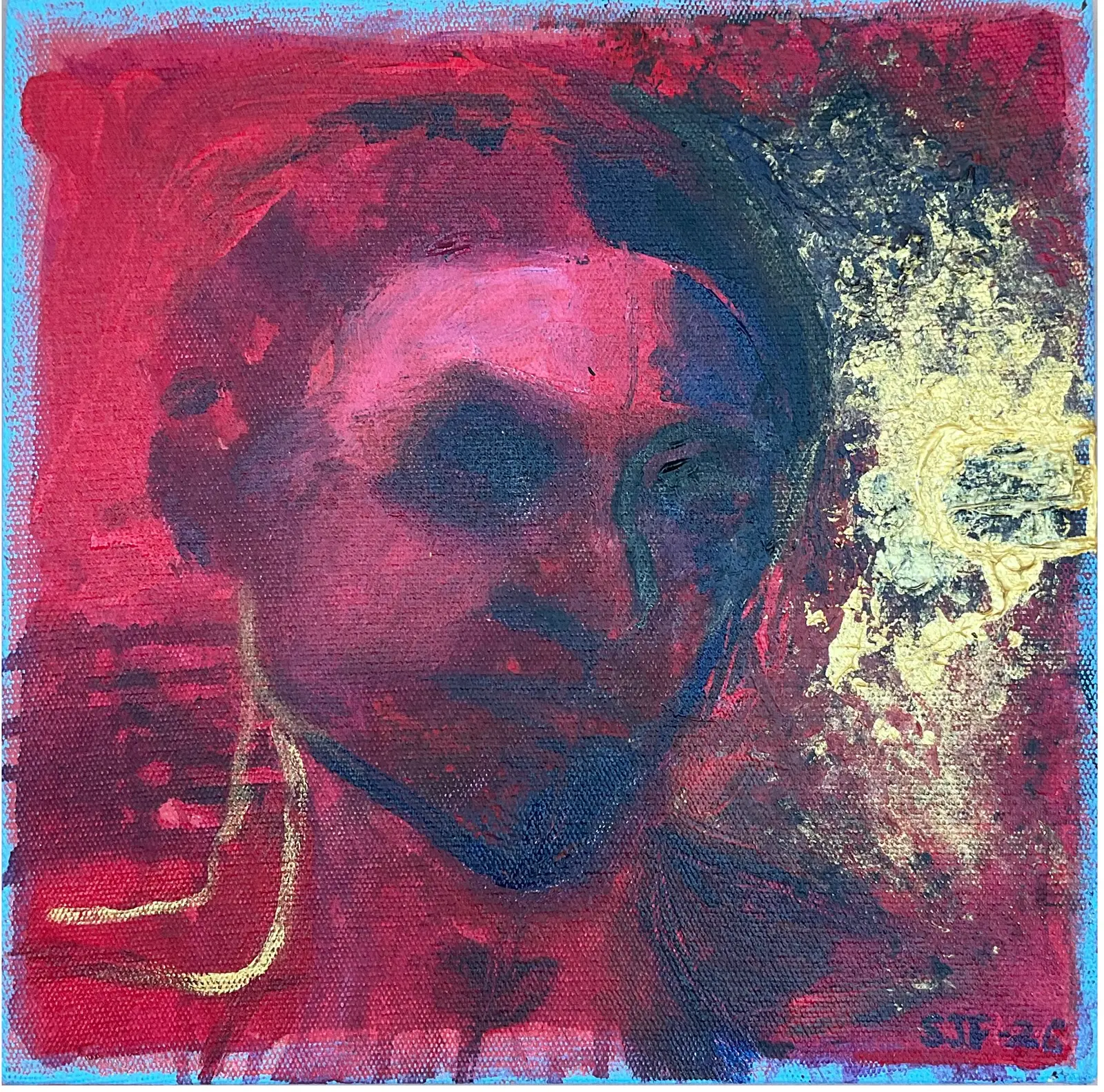
A semi-abstract portrait emerging from deep reds and shadow, the face half-surfaced — as one seen in a dream, familiar yet dissolved at the edges. Gold drips and pools around the figure like melting time, an echo of Dalí's famous clocks: memory not as fixed record but as something fluid, subject to the slow distortion of years. The basis of this portrait started in my mother's painting group in Durban, on a recent visit to my family home growing up, where my matric art still hangs on the walls. A face I initially read as Michelangelo-inspired – his figures populating some of my high-school art in homage —gradually revealed itself as someone else entirely: an early boyfriend from that time, who died not so long ago. I hadn't seen him in a decade. The gold, painted intuitively, settled into something like a lock or seal around the image —binding it like an old tome, preserved and held, while locking it away in memory for many years. There is a particular quality of memory that only surfaces when you return to the place it was made. Walking back into my childhood home, surrounded by the paintings of my teenage self, something in me went looking —not deliberately, but the way the unconscious does. This face emerged without my fully knowing whose it was. It came the way grief sometimes does: quietly, and only once you've stopped bracing for it. Dalí understood that memory is not a photograph. It bends, pools, runs at the edges. The gold here is both adornment and elegy —a gilding of what is gone, and a reminder that what persists in us has already been transformed by the keeping.