In conversation · Michelle Beattie
Michelle “MISHVANIA” Beattie on Ocean Plastic Sculpture
Beach-found plastic becomes coral reefs, anemones, and imagined underwater worlds. Inside Michelle Beattie’s practice on the Cape Town coast.
Interview by David Rozenfeld
· 9 min read
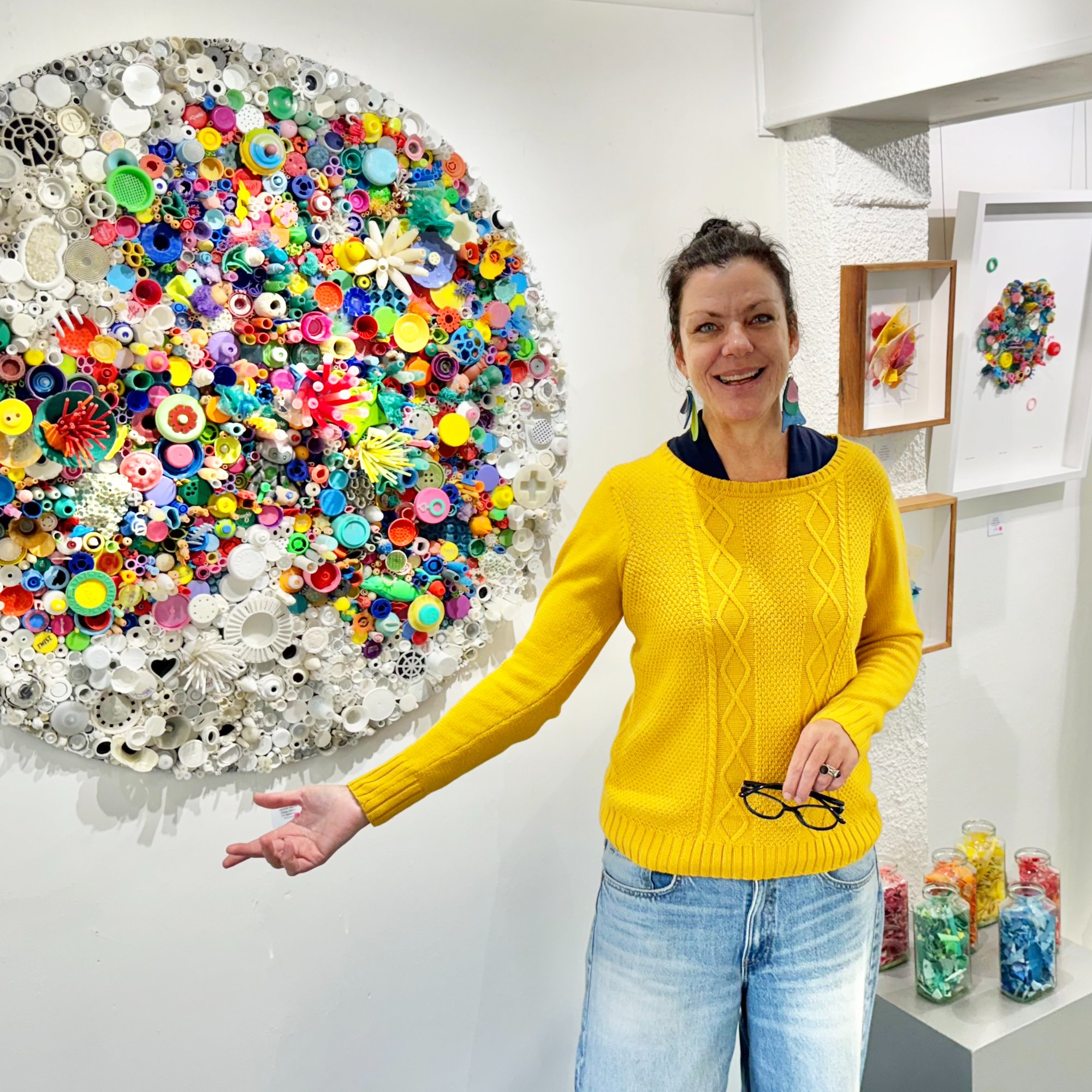
“If I don't show you, you will not see.”
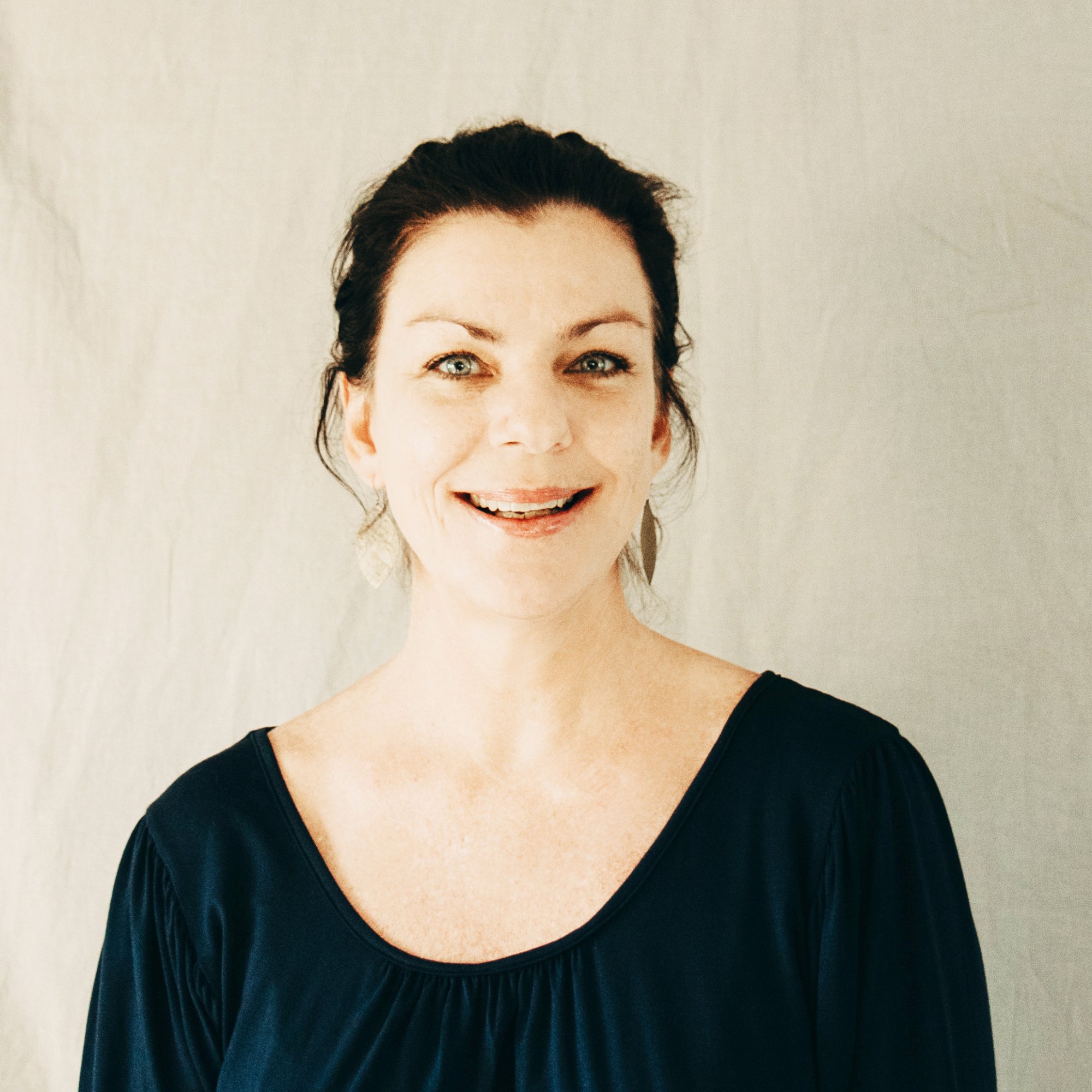
Originally from Plettenberg Bay, a small fishing village on the south coast of South Africa, Michelle Beattie (MISHVANIA) is now based in Kommetjie, Cape Town. With a background in sales, marketing, and graphic design, Michelle pivoted to fine art in late 2020 after years of collecting ocean plastic and advocating for marine conservation. Her practice centers on sculptural compositions and fine art assemblage made entirely from unaltered beach-found plastic. She has presented two solo exhibitions, is represented by four galleries in Cape Town, and has work on long-term rental at NinetyOne's offices in London.
The Full Interview: Michelle Beattie
Mermaid Tears and a Childhood by the Sea
David: Michelle, tell me about yourself. How did you get into the art world?
Michelle: I grew up in Plettenberg Bay, a small fishing village in the very south of South Africa. I spent most of my days playing on the beach, and I used to collect these tiny little pellets called "Mermaid Tears." I didn't know what they were as a kid. I'd just pick them up and keep them in little jars.
Years later, when I had my own kids and moved to Kommetjie, I saw those same pellets again. This time I had Google. I looked them up and a whole new world opened up to me about plastic in the ocean: the Pacific Gyres, plastic washing up on beaches, and how it was impacting marine life and the environment. I was like, this is awful.
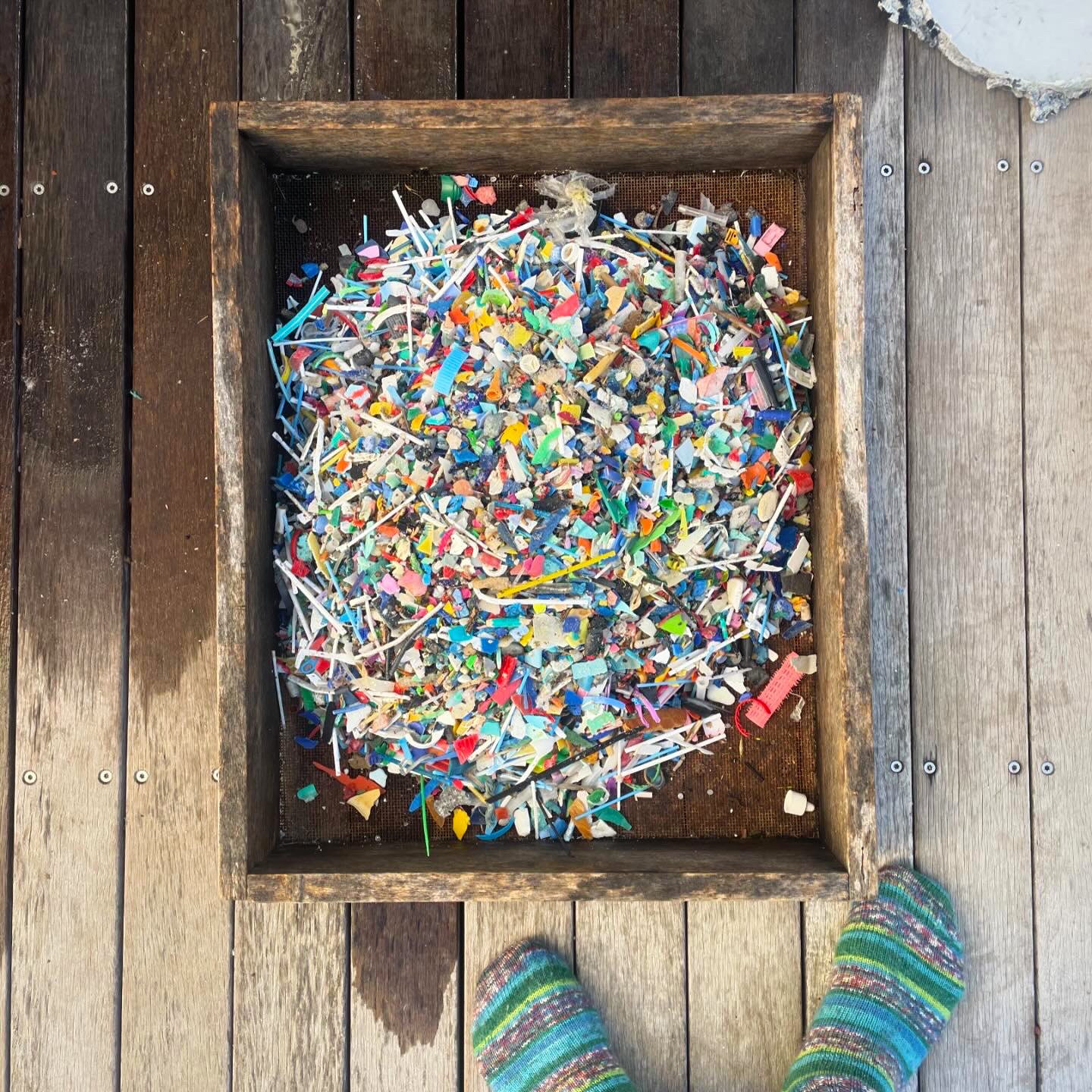
I started collecting plastic off the beach and sharing piles and piles of it on social media, trying to get people's attention. But shock and horror only gets you so far. Nothing gave enough impact.
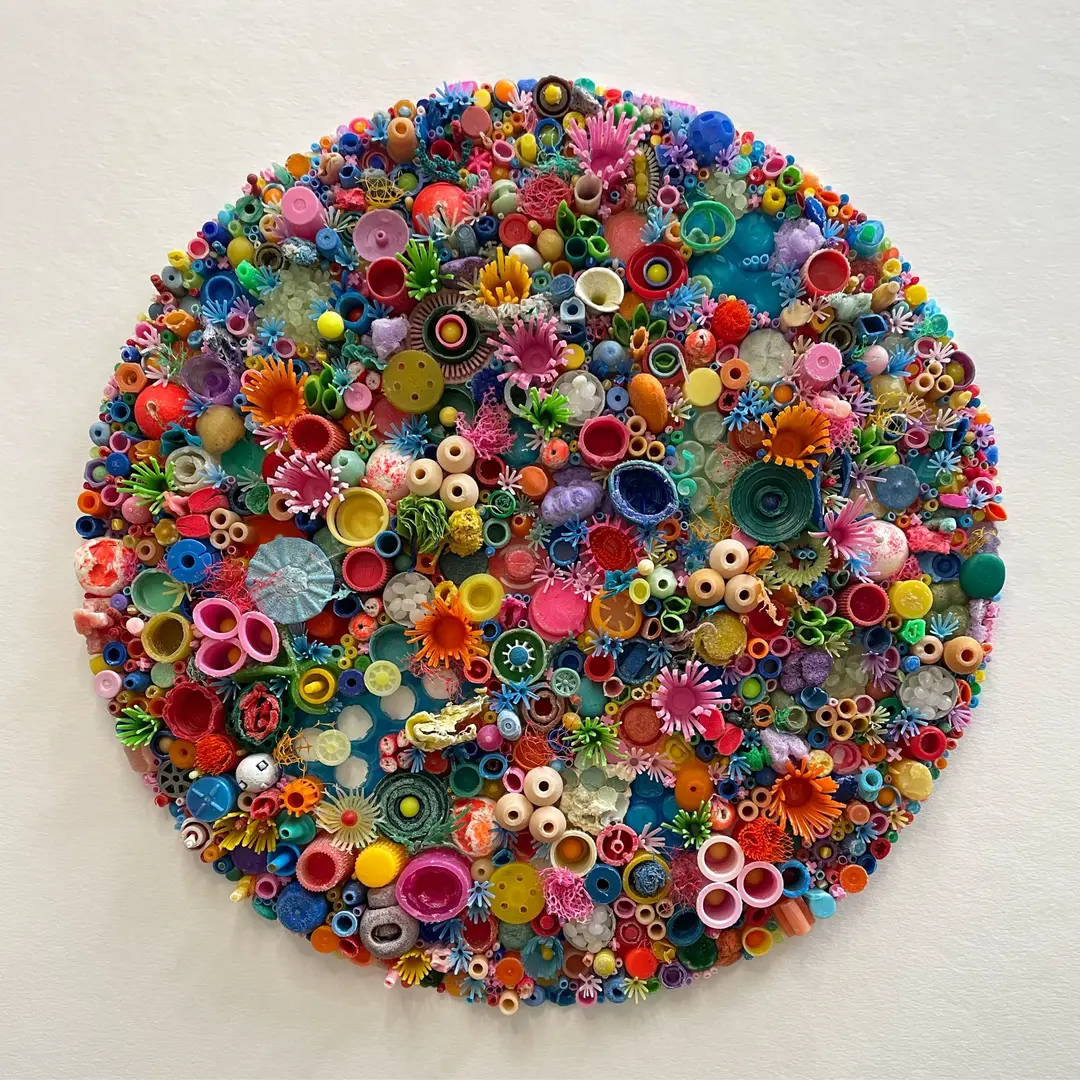
Beach Plastic · 420 x 594mm
Beach plastic reimagined into a coral reef. The burning of fossil fuels drives climate change, warming our oceans and causing coral reef bleaching. Plastic production adds to this burden. Turn off the tap to plastic production.
From Pandemic Pause to Creative Breakthrough
David: So what changed?
Michelle: I'm also a graphic designer. I worked closely with my husband, who's in the events industry. During the pandemic, everything shut down. I had no work, but I was sitting with massive amounts of plastic, and I thought, I'll make some art.
The response was immediate. Family, friends, total strangers. The conversations that opened up, the whole dialogue that came from it. Goodness me! This is the voice I need for the ocean, and it's through art. That was October 2020.
This work is no longer available.
When an open call for a local exhibition came up, I framed a couple of pieces and put them forward, and sold two. That was the turning point. I realised how deeply I loved what I was doing, where my passion for the ocean and my work aligned. I haven't stopped since. Since then, galleries have approached me, I've opened my studio to the public, and I've connected with remarkable people from around the world.
Sculptural Compositions from Unaltered Beach Found Plastic
David: How would you describe your work? Is it sculpture, mixed media?
Michelle: That's a tough one. I'm still figuring out the exact word. I do relief sculptures, very 3D. But I also work in what I'd call sculptural compositions, or fine art assemblage. Because I use mostly unaltered beach found plastic, the process is very organic. I don't necessarily know what I'm going to find, and when I do, I don't always know what the outcome will be. It's like building a puzzle where the pieces show up over time.
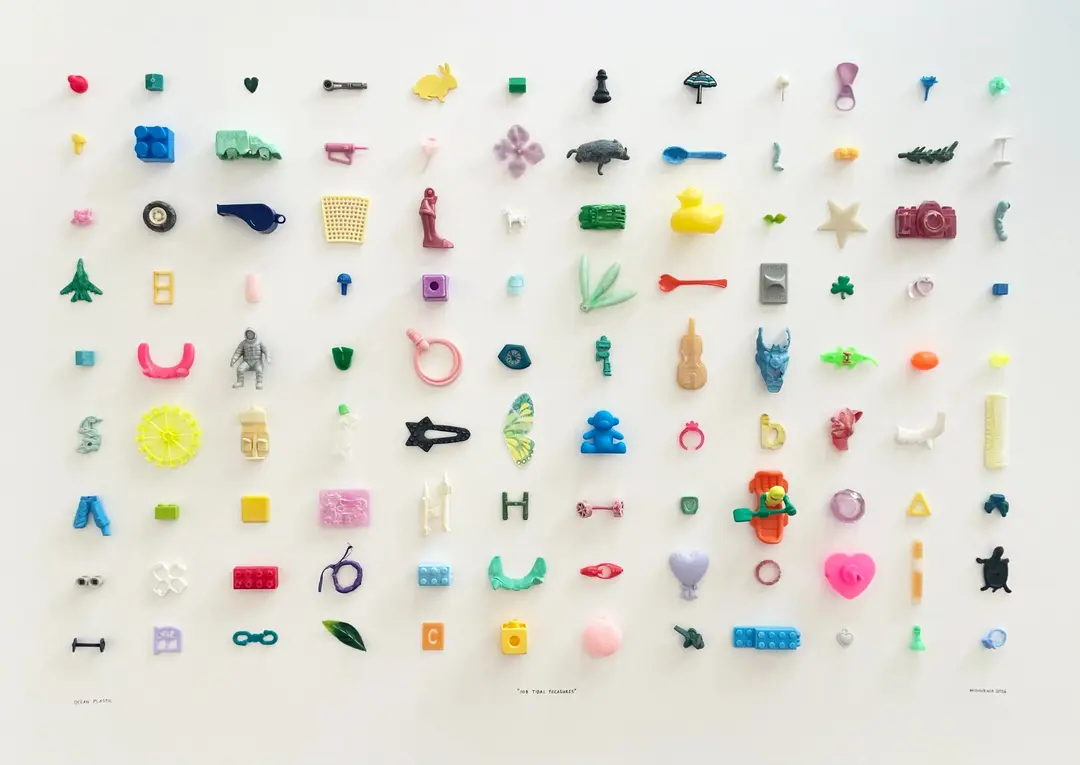
Beach Plastic · 840 x 594mm - landscape
108 plastic treasures found and collected on the beach in the high tidelines. Every now and then, amongst the kelp in the high tide line, I find a little treasure. Here is my most recent collection (2026).
David: Your sculptures are incredibly intricate. From afar they're visually satisfying, and then up close, you realize they're made entirely of ocean plastic and microplastics. It's something I've never seen before.
Michelle: Thank you. That's exactly the intention.
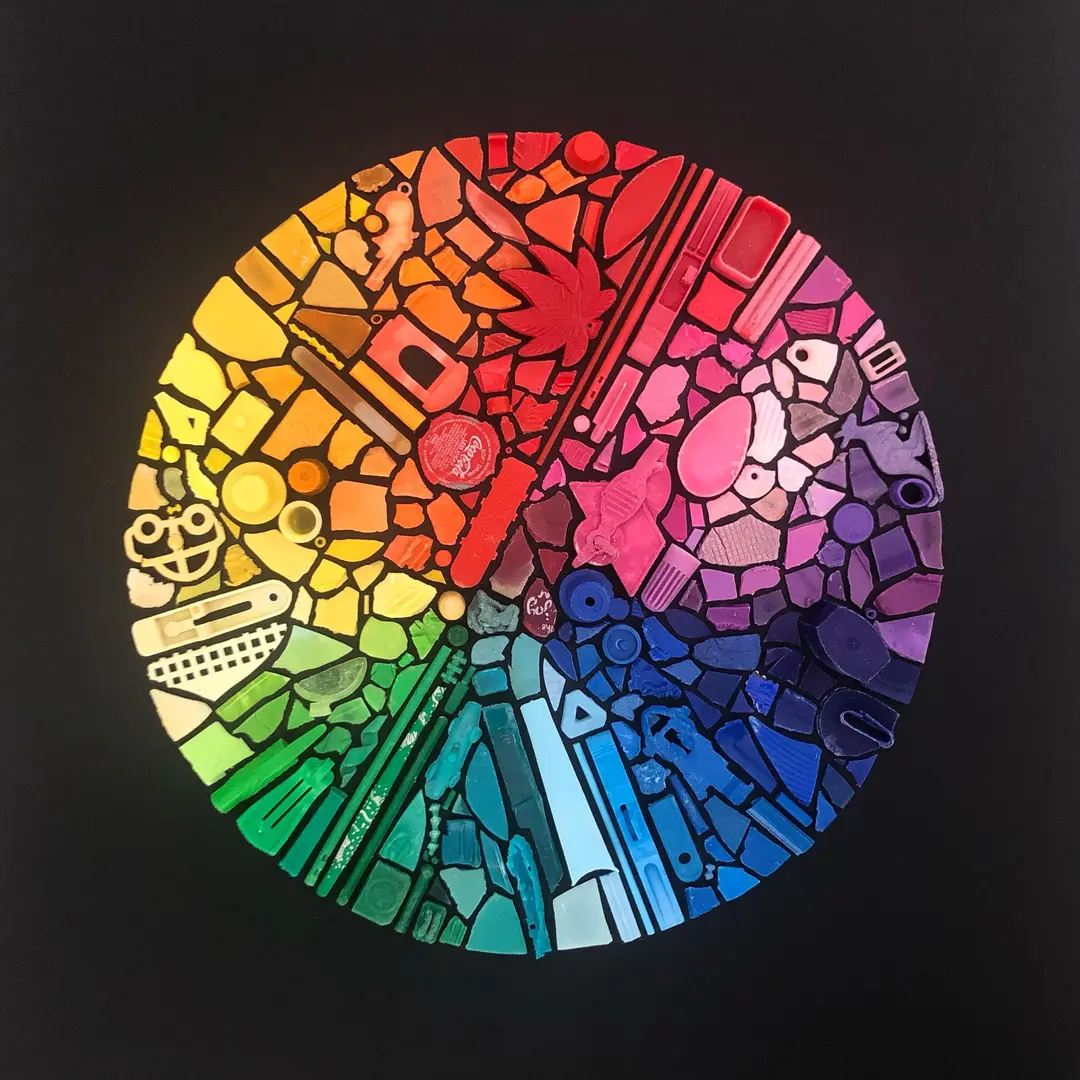
Beach Plastic · 420 x 594mm
Unaltered beach found plastic Using unaltered beach-found plastic, this colour wheel grows organically as each piece is placed, like a puzzle without a fixed picture. I don’t always know what the final form will be. It is built to draw…
The Foraging and Building Process
David: Walk us through your creative process, from the beach to the finished piece.
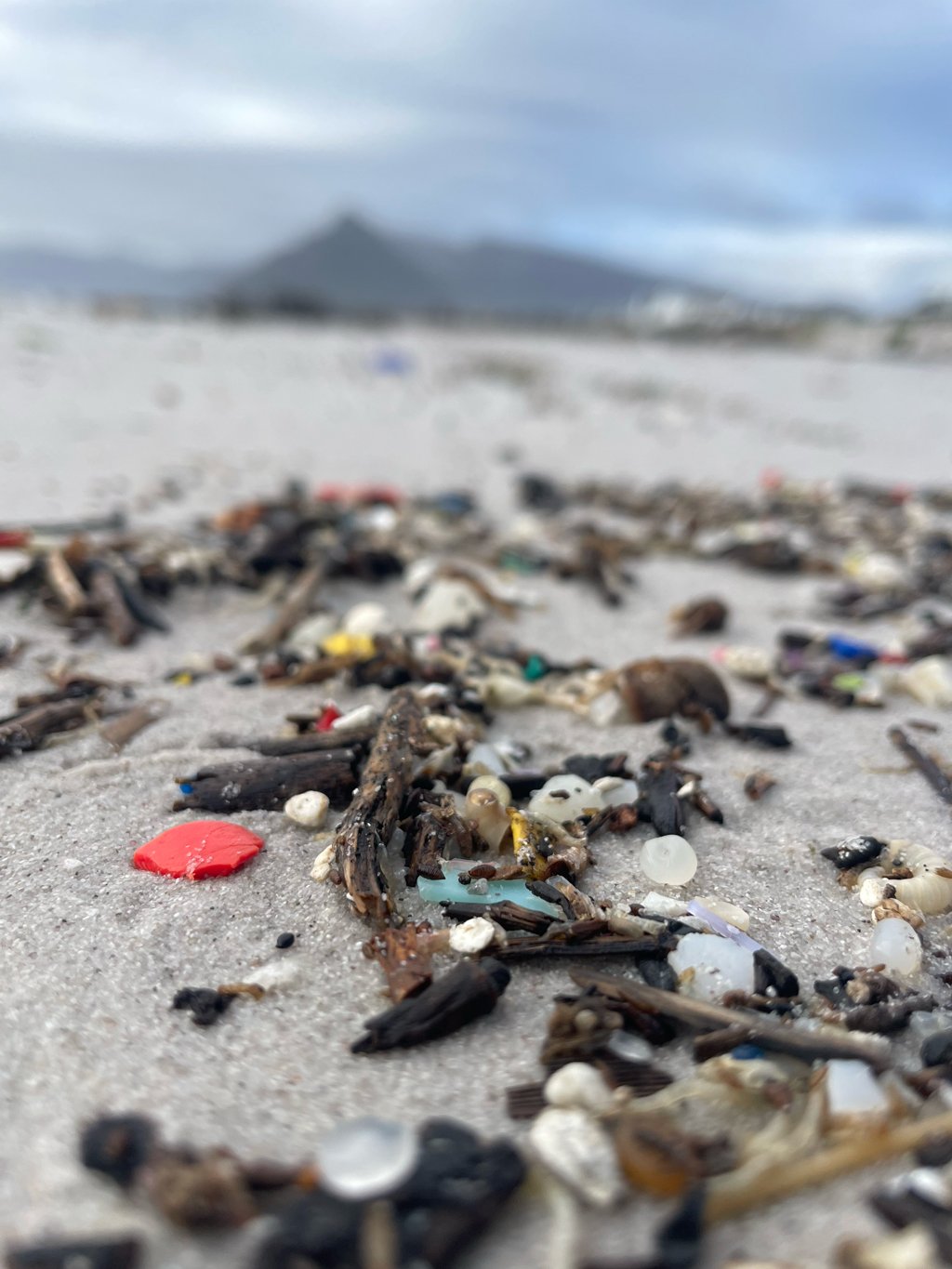
Michelle: Most of my collecting happens in winter. Big storms wash plastic down rivers from landfill sites, stormwater drains, and canals where it has been illegally dumped. The ocean also brings in debris from fishing boats and distant countries, carried by strong currents. After a high tide, there can be up to five tidelines of plastic along the beach.
I head down with my gum boots and buckets and begin collecting. It's during this time that ideas start to form.
Once home, everything is washed and scrubbed, then left outside for a couple of weeks before coming into the studio, where it's sorted into jars by type and colour. Here, the conceptual process continues to evolve.
My intention is to create something visually beautiful. I've found that many people switch off when confronted with messages about plastic pollution and its impact on turtles and marine life. So I draw them in through beauty. From a distance, the work invites you in, but as you look closer, you begin to recognise familiar objects.
That moment of recognition can shift perspective. It encourages people to reflect on their own consumption, and when the work lives in their home, it continues to invite conversation.
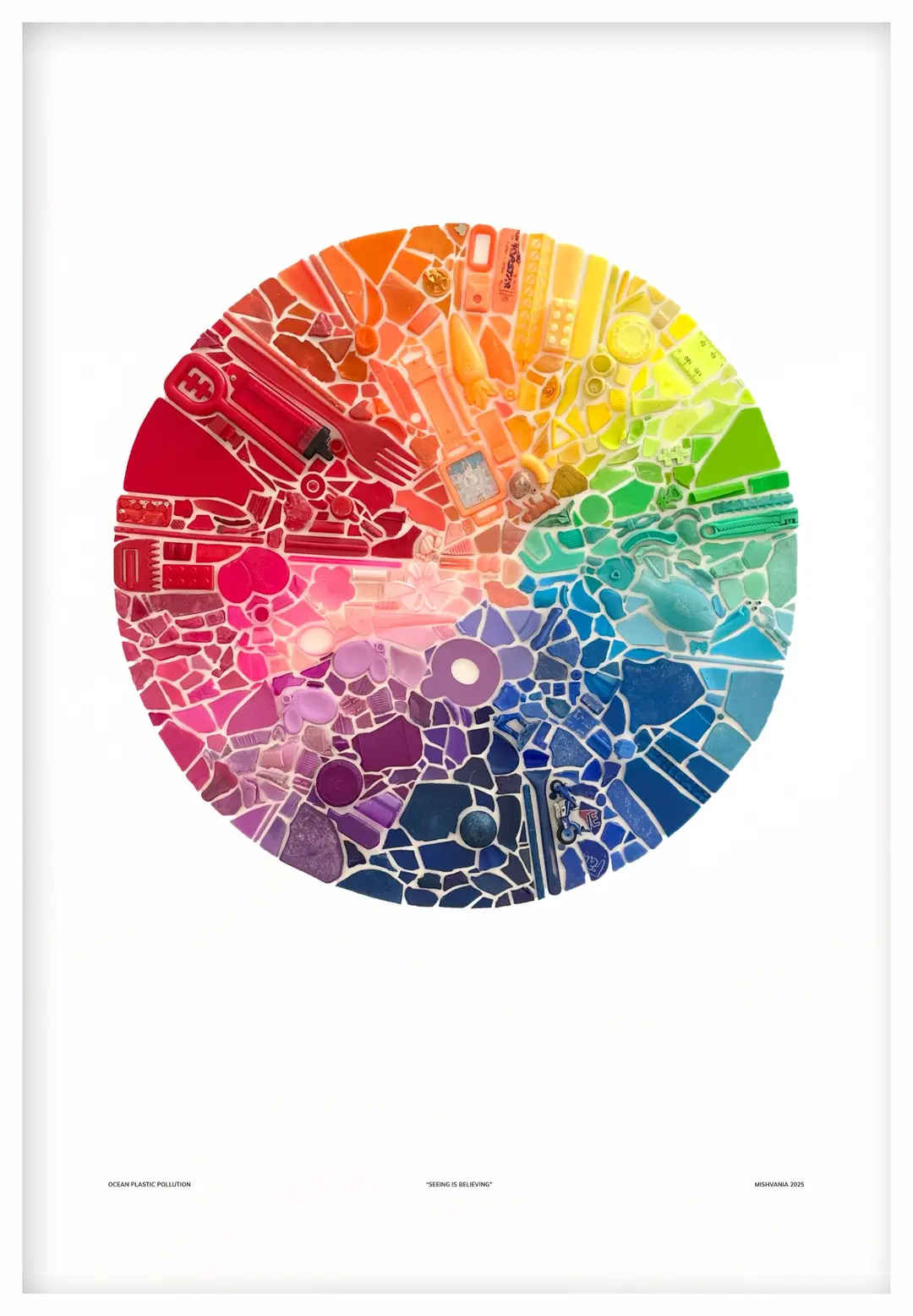
Beach Plastic · 594 x 840mm
A composition created with unaltered beach found plastic. It is unreal how many different colours of plastic I find on the beach. Creating these colour wheels organically, like building a puzzle. Finding the perfect piece to fit its place.
Favourite Piece: Coral Reef Bleaching
David: Of everything you've made, what's your favourite piece?
Michelle: It has to be Coral Reef Bleaching. It was my first large-scale piece, about A1 in size, and it took me around three months to complete. Every piece of plastic in it is unaltered, exactly as I found it on the beach.
The colours reflect what a healthy coral reef should look like, yet the work speaks to the impact of global warming and coral bleaching. There are so many small details that draw you in, and I love how the colours sit together and merge.
That piece has a very special place for me.
It's currently hanging in the offices of NinetyOne in London, who have been renting five of my works for the past four years.
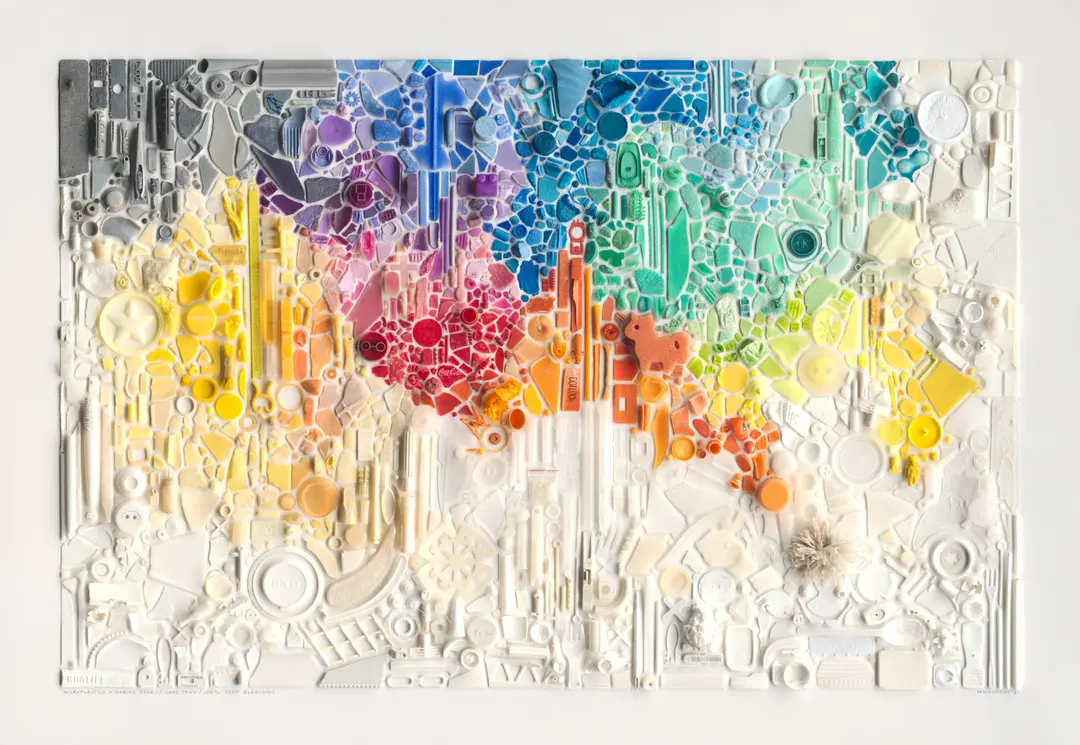
594 x 840mm
Created with unaltered BEACH PLASTICS used to illustrate and raise awareness around the coral reef bleaching phenomenon affected by GLOBAL WARMING. Coral reefs known as the rainforest of the sea are the most biodiverse marine ecosystems…
The First Step Is the Smallest One
David: What's the first step you recommend people take toward a more earth-friendly lifestyle?
Michelle: Don't get overwhelmed. Just start with single-use plastic. Say no to glitter, balloons, plastic straws, plastic bags. The stuff that has literally one use and then you toss it. Swap your dish sponge for a sisal scrub. Get a refillable water bottle. These are small steps. I did it over 15 years, eliminating things one at a time and challenging myself to make an alternative choice. If we all individually do that, bigger change will happen.
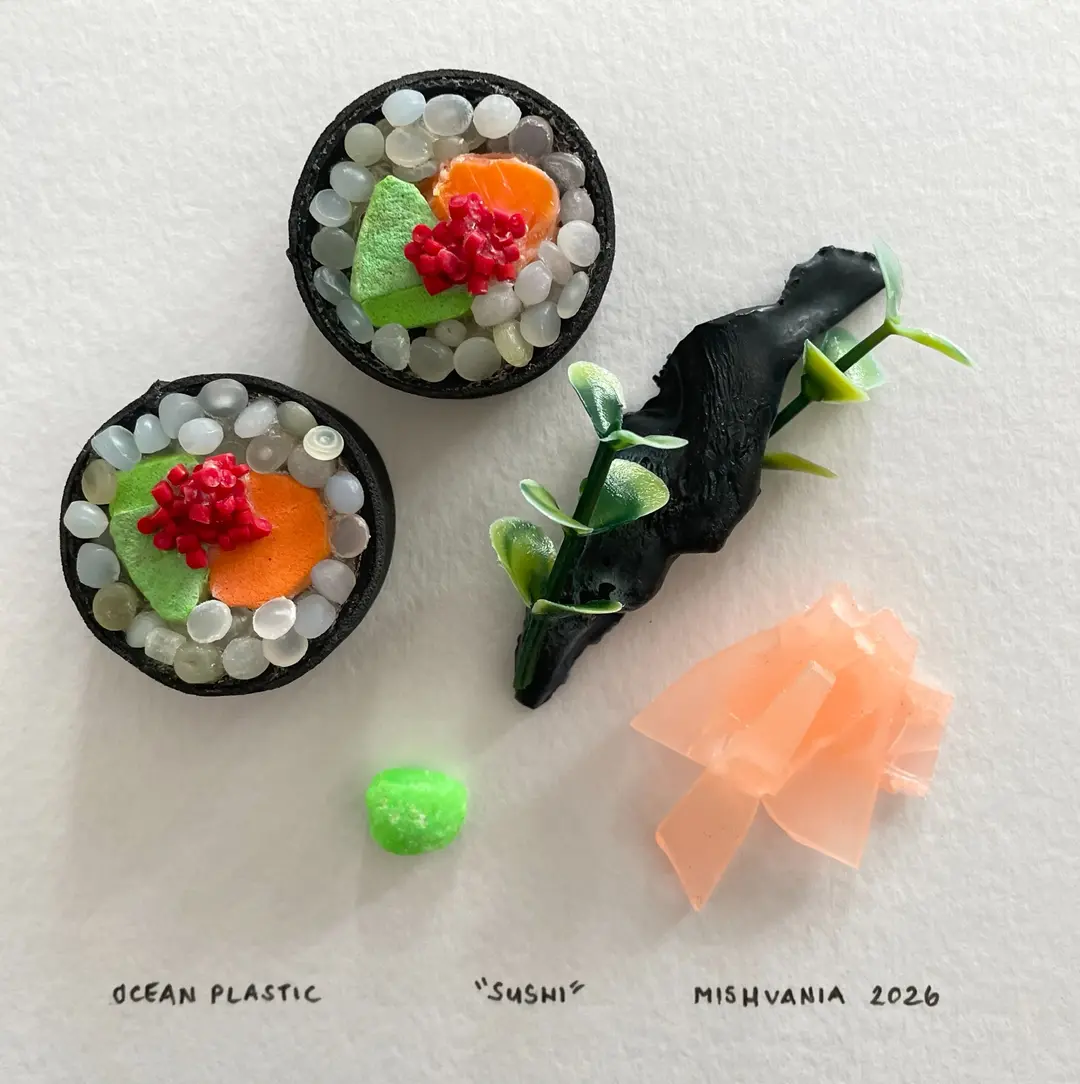
Beach Plastic · 140 x 140mm
Plastic Sushi is made from an assortment of beach plastics: nurdles, a shoe sole, aquatic plastic plants, melted plastic, condom rings (likely used by poachers to waterproof their phones), and other found items. This piece reflects the…
The 5-Year Vision: Speaking Up and Stepping Out
David: How do you see MISHVANIA evolving in the coming years?
Michelle: I want to reach more people. My mission is to keep making art and step out of my comfort zone, because I'm quite shy. I'm terrified of public speaking, but my challenge to myself is to really get out there and talk to people. I see myself on stages one day. More galleries, more exhibitions, and just keep sharing the message.
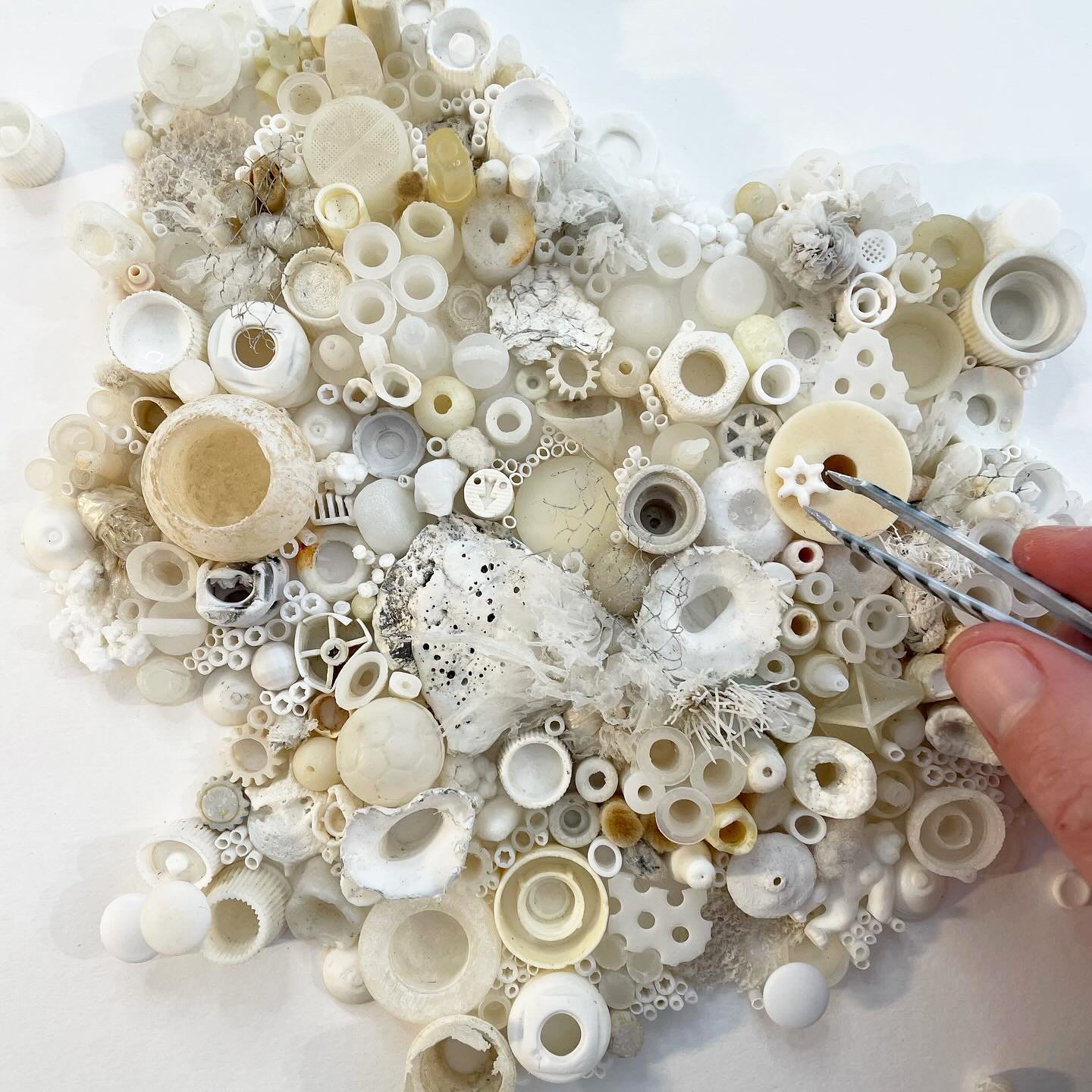
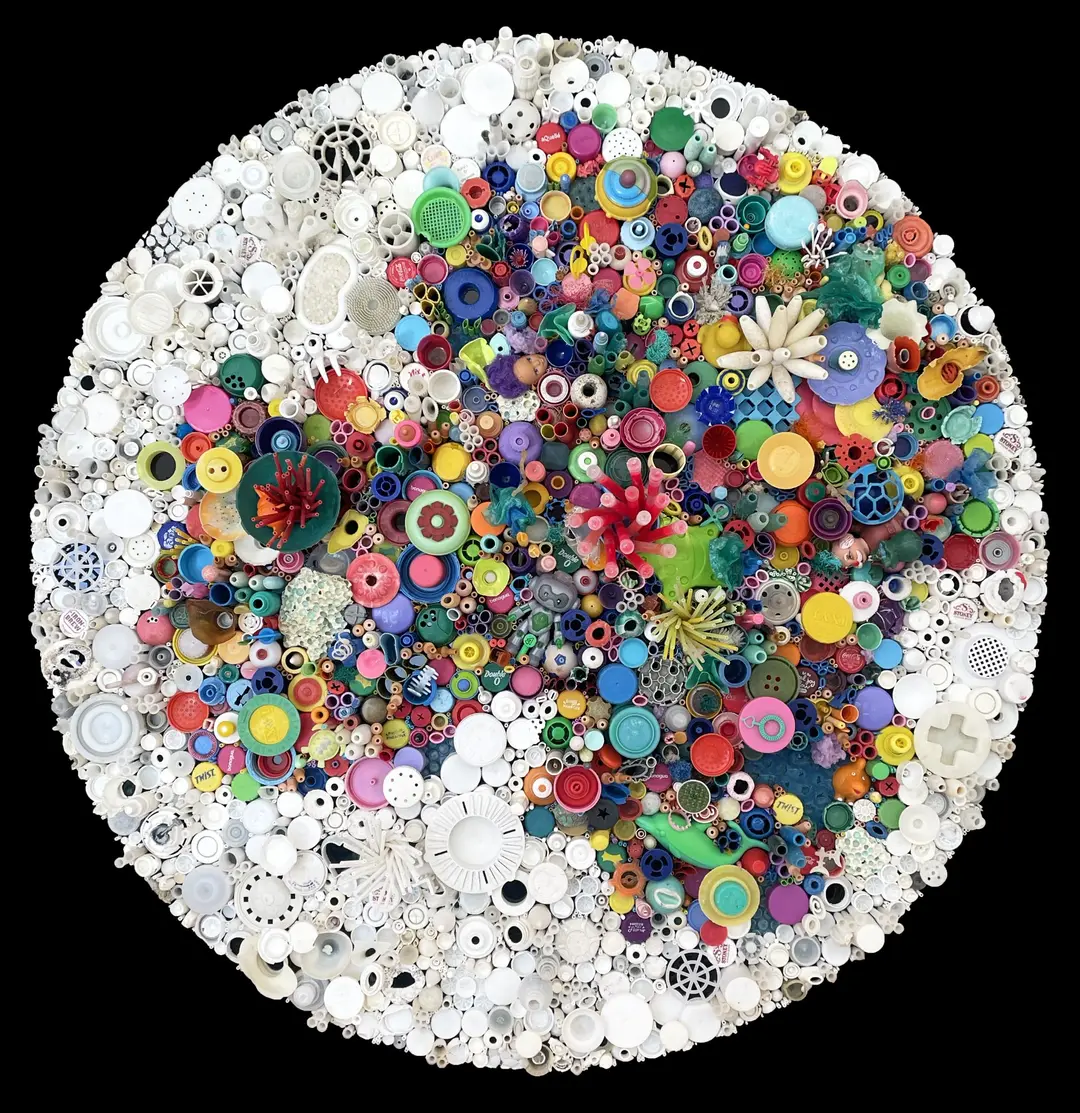
Beach Plastic · 1m diameter
A coral reef displaying the effects of bleaching impacted by global warming and climate change. A magnificent piece due to its size and visual impact. A sculpture that draws you in to look closer.
Conservation Close to the Heart
David: Do you work with any conservation organisations?
Michelle: I have been involved in some exciting fundraising initiatives for the Two Oceans Aquarium's Turtle Rehabilitation Centre. They take in stranded turtles found along our local beaches, from tiny hatchlings through to adults. Due to the cold temperatures of our oceans, many arrive in a state of hyperthermia, or with their stomachs full of plastic, having mistaken it for food in the sea. What they do to rehabilitate these turtles is very close to my heart.
I also have a passion project called The Tiny Art Gallery, which is used as a platform to raise funds for various initiatives. Local artists each donate a tiny original artwork towards the fundraiser. TAG sells tickets, and entry gives one the chance to win the entire tiny art collection. Proceeds from the ticket sales are donated to the selected fundraiser beneficiary.
This work is no longer available.
A Message for Artists
David: What would you tell an artist just getting into the space today?
Michelle: Make art for yourself. Trust your intuition and just do it fearlessly. Keep learning, keep exploring. I believe every piece of art has an owner out there.
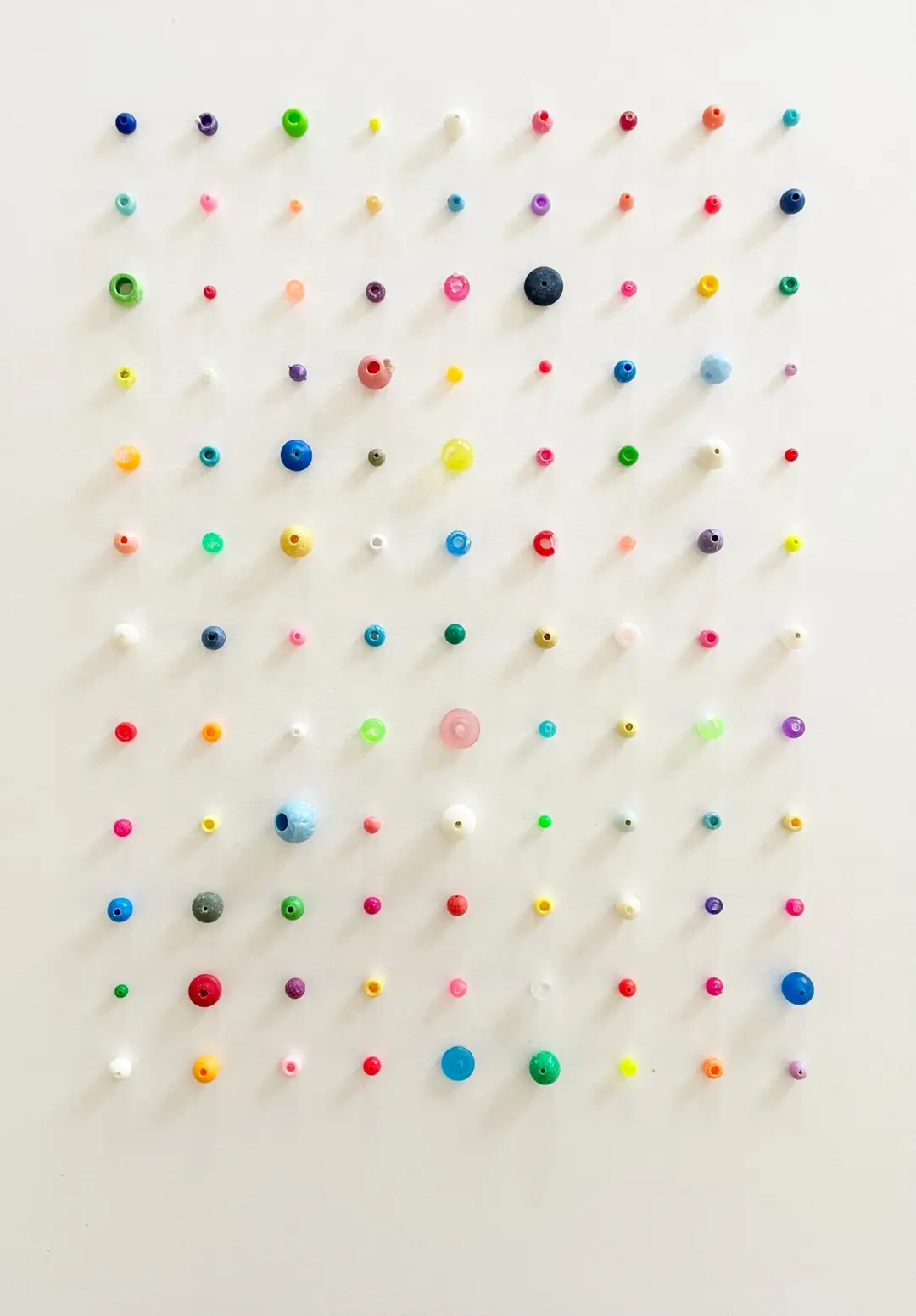
Beach Plastic · 420 x 594mm
108 beads collected during a single beach clean-up on Muizenberg Beach, all in one morning. Ocean Mantra, a prayer for the ocean, formed by 108 beads inspired by the tradition of rosaries and prayer necklaces.
Explore Michelle's Work
See her full portfolio, including her ocean plastic compositions and more, on her Artsume profile. For work that is hard to photograph flat, the guide to documenting artwork covers lighting and angles for three-dimensional pieces.
From Beach Cleanups to a Professional Profile: Artsume Spotlight
During the interview, Michelle and David talked about one of the biggest pain points for artists: maintaining an online presence without becoming a full-time web developer.
Artists like Michelle don't have the time to manage a personal website, keep it up to date with what's sold and what's available, write meta descriptions, and handle SEO. As Michelle put it, she's an artist, not an administrator.
Michelle discovered that the Artsume profile is designed to be indexed by search engines and AI platforms like ChatGPT, Grok, and Gemini. The more complete the profile, the higher it ranks. It gives her a professional, always-current presence without a standalone website.
The part she loved most was CV-to-portfolio linking. David showed Michelle how to connect specific artworks to their corresponding CV entries, so exhibitions, collections, and gallery placements are all tied together in one place. The share function for individual works also lets her send a direct link to a single piece without handing over her entire profile.
She's joining Artsume Pro as a beta user. Pro reads an artist's profile, understands their practice, and then searches for matching opportunities from around the world, drawing on Artsume listings and on the other sources organizations use, from Google Forms to Submittable. For an artist whose work sits at the intersection of environmental art, sculpture, and conceptual practice, targeted matching saves real time.