In conversation · KE Wu
Ke Wu: Finding Meaning Between Abstraction and Recognition
The Chinese-born, Finland-based painter on growing up surrounded by art, letting images emerge through the creative process, and why a painting can mean something different to everyone who sees it.
Interview by David Rozenfeld
· 12 min read
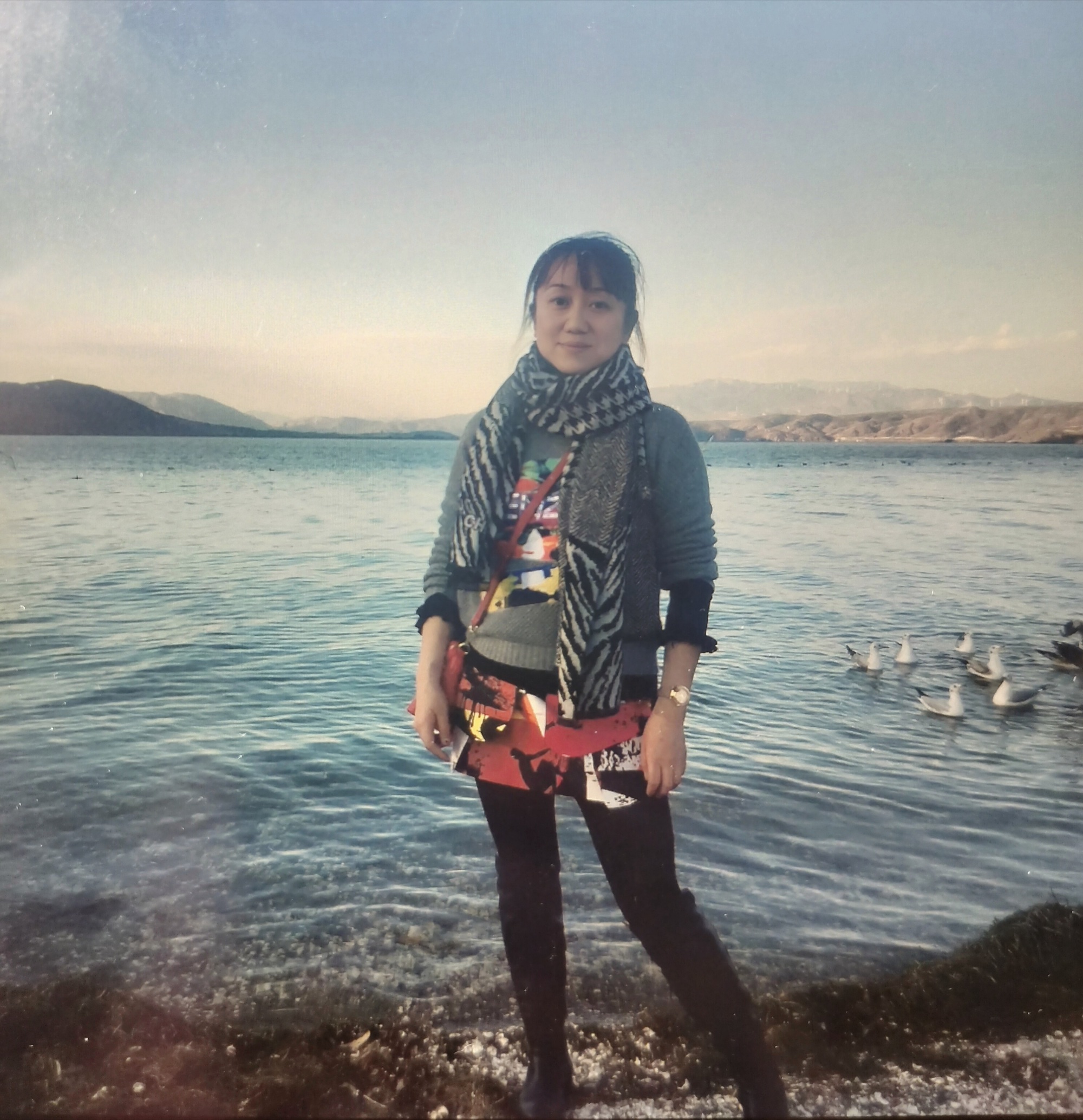
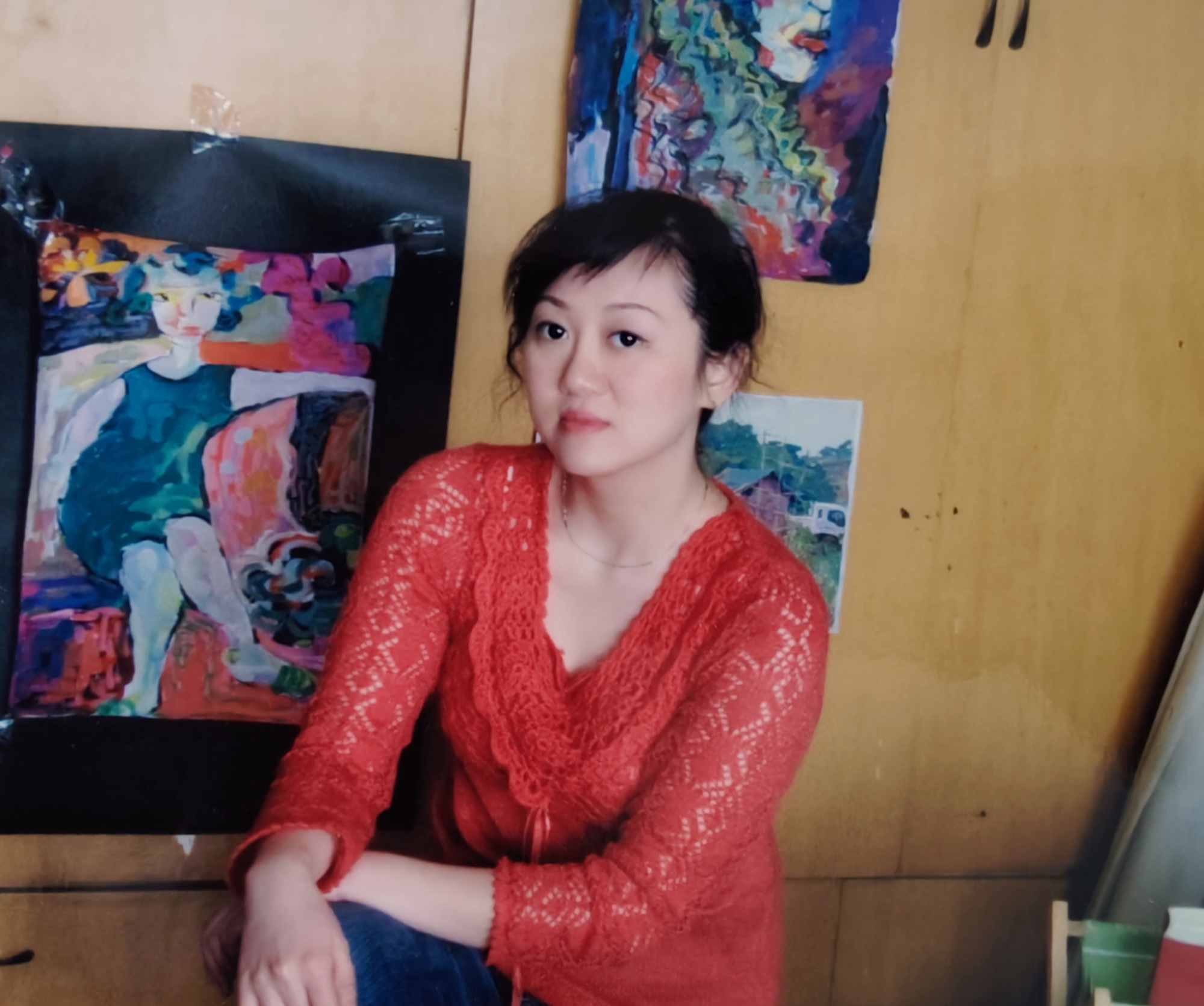
For Ke Wu, a painting doesn't always begin with an idea of what it should become. Sometimes it starts with a colour, a line, or a mark on the canvas. As she works, forms begin to emerge. A face might appear, an animal might take shape, or something recognizable might disappear beneath another layer of paint.
She is interested in what happens in those moments of uncertainty, when an image is almost recognizable but remains open to interpretation.
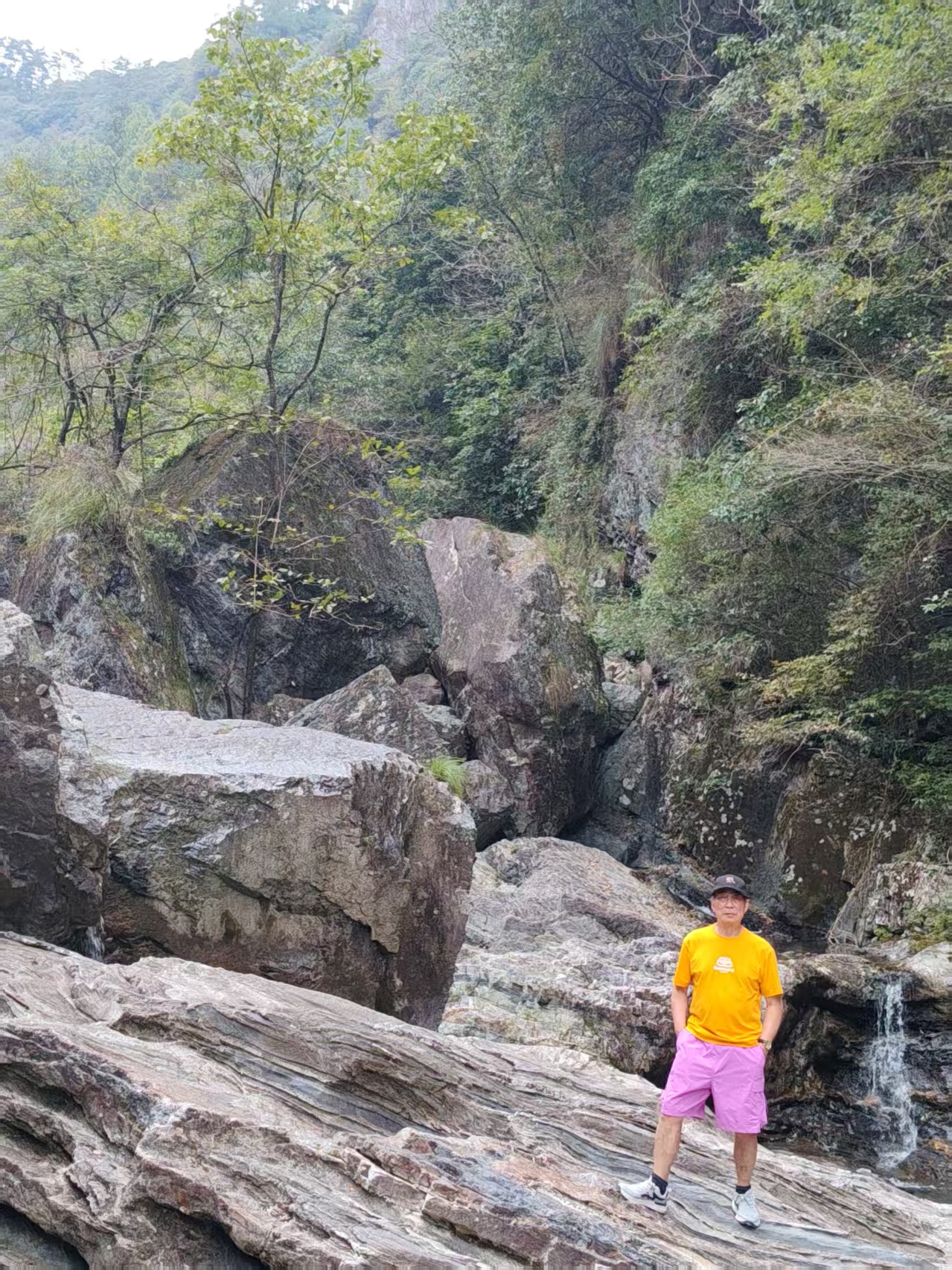
Born in China and now based in Helsinki, Finland, Wu grew up surrounded by art. Her father, a painter and professor, introduced her to a wide range of artistic traditions and encouraged her to develop her own sense of beauty rather than imitate any particular style.
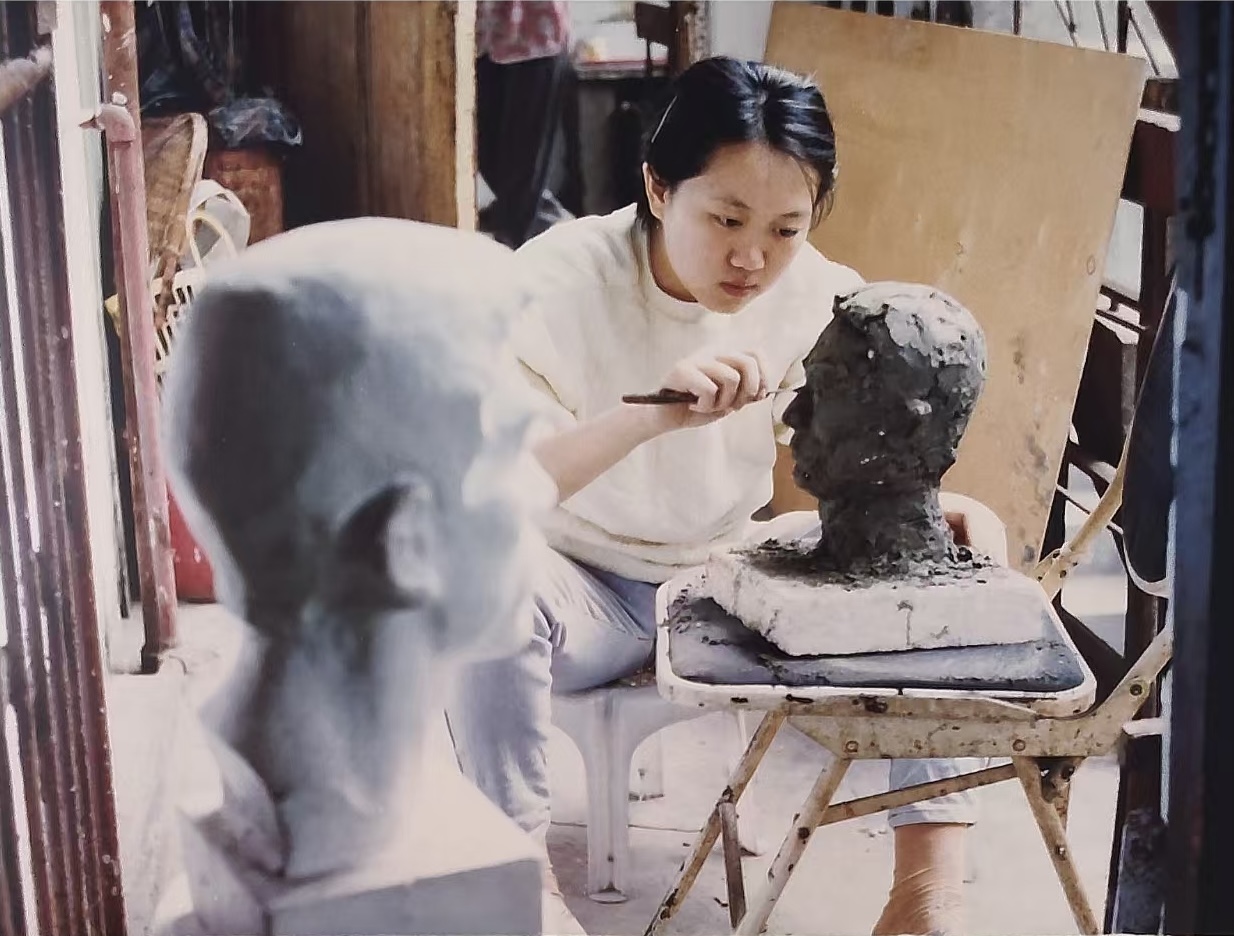
After studying at Sichuan Fine Arts Institute, she developed a painting practice that explores colour, abstraction, perception, and the relationship between personal experience and visual expression. Her work has been exhibited in China and internationally, featured in publications, and acquired by collectors.
Her ongoing 漫 (màn) series, whose title evokes the idea of roaming, explores the movement between abstraction and recognizable imagery. Works such as 漫 No.1 (2021) and 漫 No.7 (2024) develop through the interaction of colour, line, texture, and intuition, allowing familiar-looking forms to emerge and dissolve without settling into a single interpretation.
In this written conversation with the Artsume community, Wu reflects on the influence of her upbringing, the importance of developing an artistic eye, and why she believes art's lasting value lies in its ability to connect with human experience.
This interview was conducted in writing and has been edited, condensed, and arranged by theme for clarity.
Growing up surrounded by art
You grew up in a family closely connected to art. What was that environment like, and how did it shape your decision to become an artist?
My father was a painter and professor, so art was always part of my life. He recognized my sensitivity to visual forms when I was very young and encouraged me to develop it.
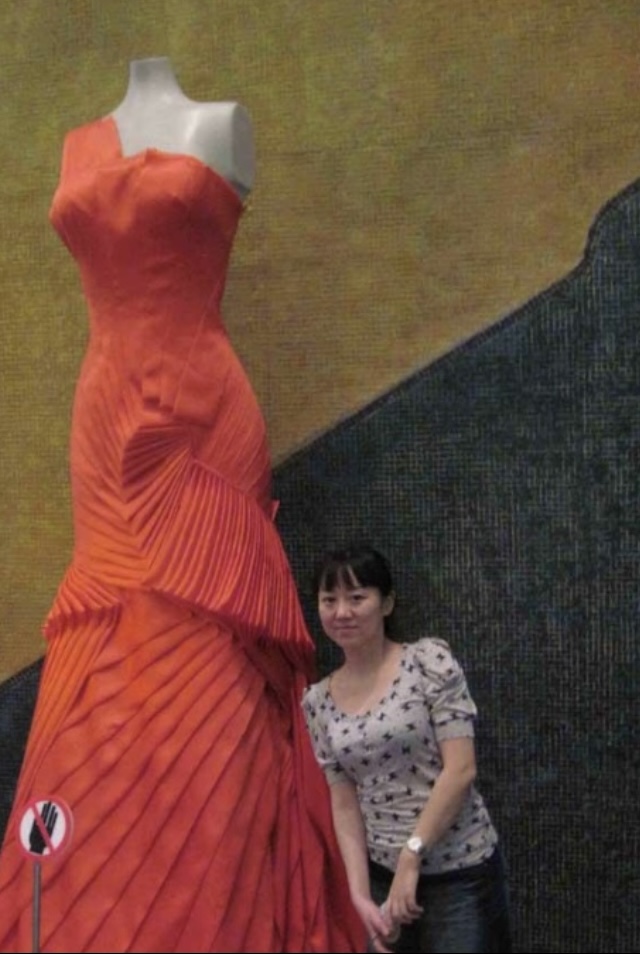
Our home was filled with different kinds of art and design. I remember African wood carvings, abstract paintings, and beautifully designed clothing. These were all part of my earliest visual experiences.
I can't point to one particular artwork that made me want to become an artist. Art was simply part of how I grew up and learned to understand the world.
Becoming an artist wasn't a sudden decision I made as an adult. It was something that developed naturally over time.
Your father introduced you to artists with very different styles. What did you learn from studying their work?
He encouraged me to look at great artists and experience different kinds of beauty.
I studied artists such as Picasso, Matisse, Francis Bacon, Klimt, and Dalí. Their styles were very different, but each had developed a powerful visual language of their own.
That taught me something important: there is no single correct way to make art.
What matters is how an artist brings together colour, form, composition, and emotion to create something that feels alive.
I learned to appreciate the strength of different artistic languages rather than trying to imitate one particular style. That has stayed with me throughout my career.
Learning to see
You place a lot of importance on developing aesthetic judgment. What advice would you give someone just beginning their artistic journey?
I think the first step is learning how to see.
Before worrying about what to paint or which style to develop, I believe an artist should spend time experiencing great art and understanding what makes it powerful.
My own work tends toward abstraction, but I can spend an entire day looking at figurative paintings by Rembrandt or Klimt. I appreciate their work not because I want to paint like them, but because of the beauty and vitality they communicate.
I also find inspiration in sculpture, dance, film, music, and literature.
You don't have to work in a particular style to appreciate it. The more different forms of art you experience, the more you develop your own sense of what moves you and why.
For me, that is where finding your own artistic direction begins.
Letting the painting find its form
Your paintings often move between abstraction and recognizable imagery. Can you walk us through how a painting develops?
I usually begin without a finished image in mind.
A painting might start with a colour, a line, a texture, or simply a visual feeling that I want to explore.
As I work, I build up layers, cover areas, erase marks, and introduce new forms. Each change affects what is already on the canvas and creates new possibilities.
Sometimes something recognizable begins to appear. It might resemble a face, a body, an animal, or a fragment of nature. But as I continue painting, that form may change or disappear completely.
I find this process of discovery very exciting.
There is always a relationship between freedom and judgment. I want to remain open to unexpected possibilities, but I also have to decide which elements belong in the painting and how they work together.
I move constantly between looking at individual details and stepping back to consider the composition as a whole.
The finished painting often looks very different from anything I could have imagined at the beginning.
How do you know when a painting is finished?
For me, it comes down to the relationships between the different elements.
I look at how the colours, forms, textures, and composition work together. I want the painting to have a sense of unity, but also enough tension and movement to remain interesting.
There comes a point when continuing to change something might weaken what the painting has already established.
I also don't want to resolve every image or possibility within the work.
A painting can feel complete to me while still leaving room for viewers to discover something new.
The meaning of 漫
One of your ongoing bodies of work is titled 漫. What does that Chinese character mean to you?
The character 漫 (màn) conveys a sense of roaming or wandering, which reflects how I approach painting.
I don't begin with a fixed destination. I allow images to develop through exploration, and each painting follows its own path.
Within the series, forms move between abstraction and recognition. Something familiar may emerge, change direction, or become part of another image.
I think of this process through three ideas: roaming, deviation, and emergence.
Roaming means remaining open to possibilities. Deviation happens when an image moves away from its original form. Emergence is when something new begins to appear.
These ideas connect the paintings in the series, even though each work develops differently.
Your 漫 series includes works created across several years, from 漫 No.1 in 2021 to 漫 No.7 in 2024. What do you hope someone experiences when looking at these paintings?
Oil on canvas
漫 Series The 漫 Series explores the emergence of form, perception, and consciousness within a state of continuous flux. Rather than beginning with predetermined images or narratives, the works gradually take shape through the interaction of…
Oil on canvas
漫 Series The 漫 Series explores the emergence of form, perception, and consciousness within a state of continuous flux. Rather than beginning with predetermined images or narratives, the works gradually take shape through the interaction of…
I hope they feel free to explore.
Someone might recognize a figure or an animal, while another person might see something entirely different. They might discover a connection through colour or texture, or the painting might remind them of a personal memory.
I don't want to tell viewers exactly what they should see.
I want the painting to have its own visual character while leaving room for people to bring their imagination and experiences into it.
A cloud, a horse, and the meaning of art
You've described your approach as a "self-verifying artistic practice," where meaning develops through the viewer's experience. Has anyone ever seen something in your work that surprised you?
Yes. I remember two people looking at the same area of one of my paintings.
One person saw a cloud in the sky. Another saw a horse.
They were looking at exactly the same form, but they experienced it in completely different ways.
That moment stayed with me because it showed how much our personal experiences influence what we see.
We all bring different memories, emotions, cultural backgrounds, and ways of thinking to an artwork.
I may create a painting through my own experiences, but I can't determine everything another person will discover in it.
For me, that's one of the most interesting things about art. The meaning of a painting doesn't become fixed when I finish working on it.
It continues to develop through the people who encounter it.
Does that change how you think about your role as the artist?
I think my responsibility is to create a strong work with its own visual language.
But once the painting is finished, I don't believe my interpretation should be the only one that matters.
A viewer may recognize something I didn't consciously intend. Their interpretation doesn't necessarily change the painting itself, but it can reveal possibilities I hadn't considered.
I find that very meaningful.
Art creates a connection between the artist's experience and the experiences of other people. And those connections can be different for everyone.
What makes art valuable?
Your work is deeply concerned with perception and human experience. What do you think gives an artwork lasting value?
I once came across a sentence that left a deep impression on me: "Beautiful things never disappear."
I believe truly powerful art can continue to move people across different periods of time.
A painting might affect you one way when you first see it. Years later, after you've experienced more of life, you might return to the same painting and discover something entirely different.
The artwork hasn't changed, but you have.
I think lasting art has both strength and openness. Its colours, forms, and composition create something powerful, but it also leaves room for people to find new meanings.
That is why I believe the value of art isn't determined only by how much attention it receives at a particular moment.
A meaningful work can continue to offer something to people long after it was created.
With artificial intelligence becoming increasingly capable of producing images, what do you believe makes an artist's work unique?
AI can generate sophisticated images, explore different visual styles, and offer new possibilities for artistic creation.
But I don't believe the complexity of an image alone determines its artistic value.
Every person develops a unique way of seeing the world through their upbringing, culture, memories, emotions, and life experiences.
For me, an artist's individuality comes from those experiences and how they transform them into a personal artistic language.
Technology can be a useful tool, but the artist still makes choices about what matters, what to develop, and what to express.
I also think there's an important difference between describing an emotional experience and actually living through it.
Art is connected to human emotion, memory, and the inner life. It can help people recognize feelings that are difficult to put into words, and sometimes make them feel understood.
That ability to connect one person's experience with another's is something I find deeply valuable.
Continuing the exploration
Alongside your oil paintings, you've also been developing smaller works on paper, including your Emergent Form No.1 (2024). What are you interested in exploring next?
Ink on paper
Research Drawings These drawings constitute an independent body of research that extends Wu Ke's artistic practice beyond painting. Created after relocating to Finland, they investigate the emergence of form through line, rhythm,…
I see my artistic practice as an ongoing process of exploration.
I want to continue investigating the relationships between colour, abstract forms, perception, memory, and lived experience, while experimenting with new materials and ways of expression.
My work has developed through different stages, including exhibitions, publications, and having paintings enter private collections and the art market.
These experiences have been meaningful, but I don't see artistic development as something that reaches a final destination.
I want to keep deepening my understanding of painting and finding new possibilities within my own visual language.
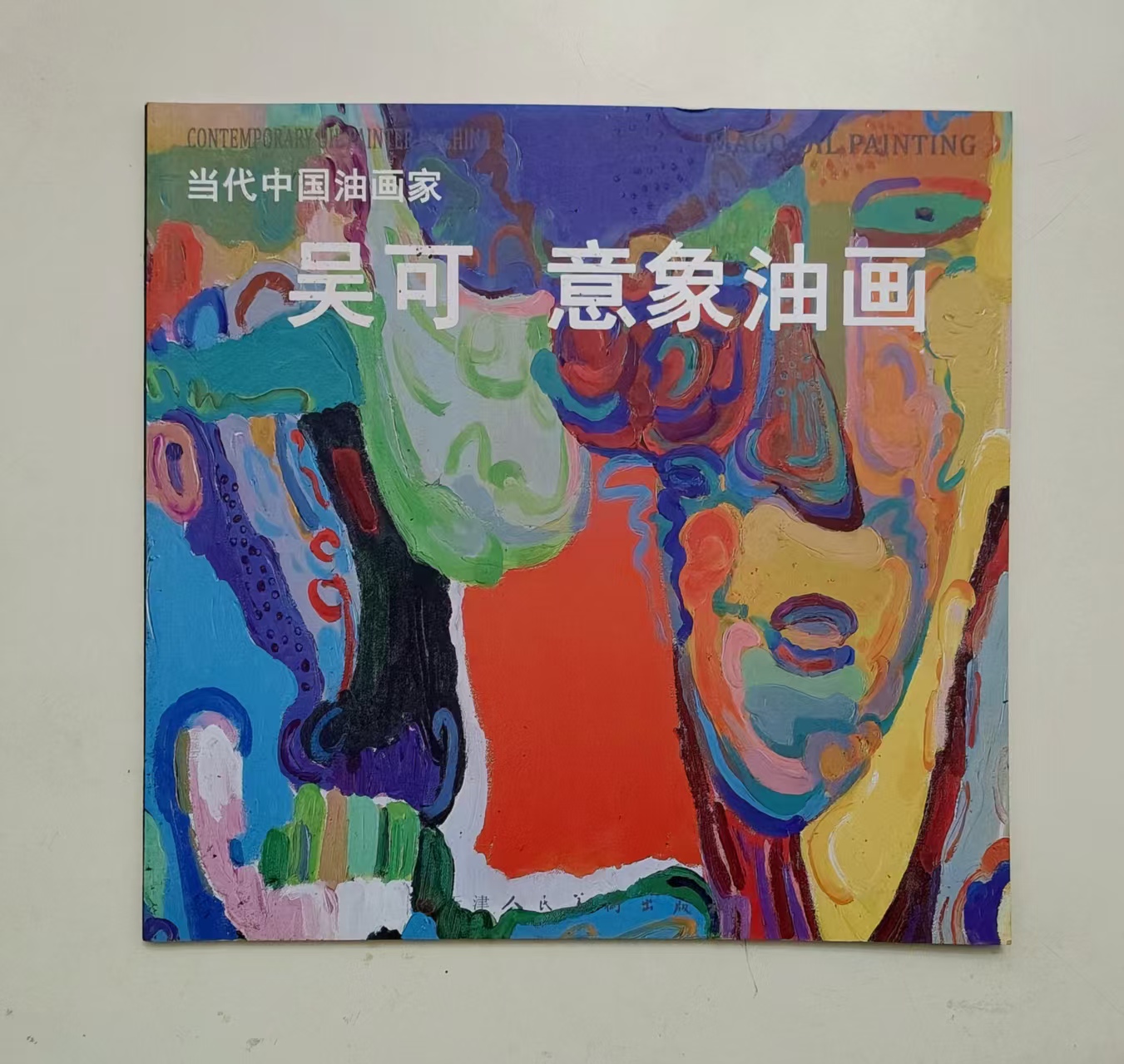
Your career has also included exhibitions, publications, and works entering collections and auctions, including Afternoon Tea for Idols (2021). What do you hope to gain from future artistic collaborations and opportunities to share your work?
Oil on canvas
In October 2021, this artwork was sold for RMB 74,750 at the China Hanhai Autumn Art Auction.
For me, collaboration is about more than presenting artwork.
It's an opportunity for artists, curators, institutions, and audiences to understand one another and exchange ideas.
I've enjoyed the opportunity to reflect on my practice through this interview with Artsume and to share some of my thoughts about painting, perception, and artistic value.
I'm open to future projects and collaborations that create meaningful connections between artistic practices and the people who encounter them.
I think that's one of the most important things art can do: create a space where different experiences meet.
About Ke Wu
Ke Wu is a Chinese contemporary artist based in Helsinki, Finland. A graduate of Sichuan Fine Arts Institute, she works primarily in oil painting, exploring the relationships between colour, abstract form, memory, emotion, and perception.
Her practice moves between abstraction and recognizable imagery, allowing forms to emerge, transform, and dissolve through layers of paint. Her ongoing 漫 (màn) series explores this open-ended process, while works on paper such as Emergent Form No.1 extend her research into line, rhythm, and structure. She describes her approach as a self-verifying artistic practice, in which a work's meaning continues to develop through the experiences and interpretations of its viewers.
With more than two decades of artistic practice, Wu has exhibited in China and internationally. Her work has appeared in publications, including her 2012 monograph Wu Ke: Intentional Oil Paintings, and has entered private collections and the art market through auction sales.
Explore Ke Wu's work and professional profile on Artsume.
Meet the artist
More from KE Wu
A contemporary painter exploring memory, emotion, perception, and the ways painting becomes a space
View KE Wu’s profile